Story code: ST-001363
Part 1: The Wrong Word
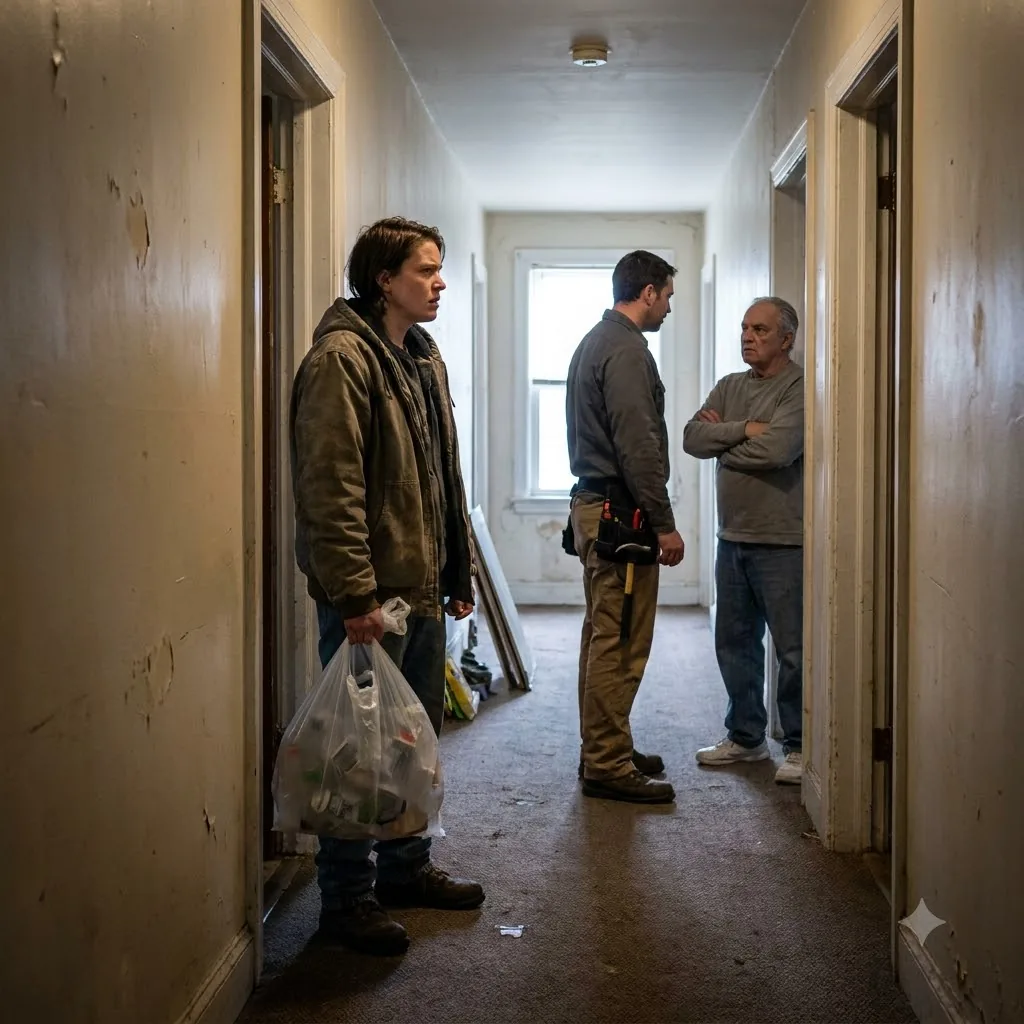
I stepped out of my apartment into the narrow, weathered hallway of our suburban building, carrying a bag of recycling, and froze. Leo Martinez, the young maintenance assistant who had only been hired three weeks ago, was already lifting my late grandmother’s heavy wooden storage box out of the alcove next to my door. When I called out his name, he didn’t even look up at me. He just wrapped his arms around the dark walnut chest, took a heavy step toward the service elevator, and recited in a stiff, mechanical voice, “All tenant property in the common areas must be disposed of immediately.”
The box was a solid, hand-carved piece of history, its surface marked by the warm patina of aged wood and fitted with a tarnished brass latch. Inside were decades of my family’s journals, old photographs, and handwritten letters. It had sat quietly in the recessed hallway alcove for over a year, completely out of the flow of foot traffic, with the explicit verbal approval of the previous building manager.
“Leo, stop,” I said, setting the recycling bag down on the worn carpet and stepping directly into his path. “What are you doing with my chest? It’s not abandoned property. You know exactly who it belongs to.”
Leo stood stiffly in his blue maintenance uniform, his eyes fixed on the red fire extinguisher box mounted on the wall behind me. He did not make eye contact. “All tenant property in the common areas must be disposed of immediately,” he repeated. His voice was oddly flat, his tone completely stripped of the friendly cadence he usually used when he greeted tenants in the lobby.
“Who gave you this order?” I pressed, looking down at his hands. “Did the management office issue a building-wide clean-out notice? I checked my email ten minutes ago, and there was absolutely nothing. There isn’t even a warning tag on the latch.”
Leo shifted his feet, his work boots squeaking against the linoleum trim of the hallway. He clutched his metal clipboard tightly against his chest, but as I glanced down, I noticed the metal clip was empty. There was no official printed work order sheet, no pink carbon copy, and no signature line from the main office.
“Leo, look at me,” I said, my voice hardening as the frustration began to mount. “You’ve helped me move groceries before. You know what is inside this box. Why are you acting like a robot?”
He swallowed, his throat moving convulsively. He looked down at the brass latch of the chest, then back at the empty clipboard. The hallway was completely silent except for the low hum of the vending machine down the hall. When he spoke again, his nervous posture faltered, and his rehearsed script fell apart by a single, telling word.
“All tenant contraptions in the common areas must be disposed of immediately,” he muttered.
I froze, the air suddenly feeling very cold. The word “contraption” was completely foreign to standard building management notices. But it was the exact, sharp term my neighbor across the hall, Mrs. Gable, had used when she sneered at the chest in the hallway last week.
I stepped out of my apartment into the narrow, weathered hallway of our suburban building, carrying a bag of recycling, and froze. Leo Martinez, the young maintenance assistant who had only been hired three weeks ago, was already lifting my late grandmother’s heavy wooden storage box out of the alcove next to my door. When I called out his name, he didn’t even look up at me. He just wrapped his arms around the dark walnut chest, took a heavy step toward the service elevator, and recited in a stiff, mechanical voice, “All tenant property in the common areas must be disposed of immediately.”
The box was a solid, hand-carved piece of history, its surface marked by the warm patina of aged wood and fitted with a tarnished brass latch. Inside were decades of my family’s journals, old photographs, and handwritten letters. It had sat quietly in the recessed hallway alcove for over a year, completely out of the flow of foot traffic, with the explicit verbal approval of the previous building manager.
“Leo, stop,” I said, setting the recycling bag down on the worn carpet and stepping directly into his path. “What are you doing with my chest? It’s not abandoned property. You know exactly who it belongs to.”
Leo stood stiffly in his blue maintenance uniform, his eyes fixed on the red fire extinguisher box mounted on the wall behind me. He did not make eye contact. “All tenant property in the common areas must be disposed of immediately,” he repeated. His voice was oddly flat, his tone completely stripped of the friendly cadence he usually used when he greeted tenants in the lobby.
“Who gave you this order?” I pressed, looking down at his hands. “Did the management office issue a building-wide clean-out notice? I checked my email ten minutes ago, and there was absolutely nothing. There isn’t even a warning tag on the latch.”
Leo shifted his feet, his work boots squeaking against the linoleum trim of the hallway. He clutched his metal clipboard tightly against his chest, but as I glanced down, I noticed the metal clip was empty. There was no official printed work order sheet, no pink carbon copy, and no signature line from the main office.
“Leo, look at me,” I said, my voice hardening as the frustration began to mount. “You’ve helped me move groceries before. You know what is inside this box. Why are you acting like a robot?”
He swallowed, his throat moving convulsively. He looked down at the brass latch of the chest, then back at the empty clipboard. The hallway was completely silent except for the low hum of the vending machine down the hall. When he spoke again, his nervous posture faltered, and his rehearsed script fell apart by a single, telling word.
“All tenant contraptions in the common areas must be disposed of immediately,” he muttered.
I froze, the air suddenly feeling very cold. The word “contraption” was completely foreign to standard building management notices. But it was the exact, sharp term my neighbor across the hall, Mrs. Gable, had used when she sneered at the chest in the hallway last week.