Story code: ST-001363
Part 4: The Cost of Silence
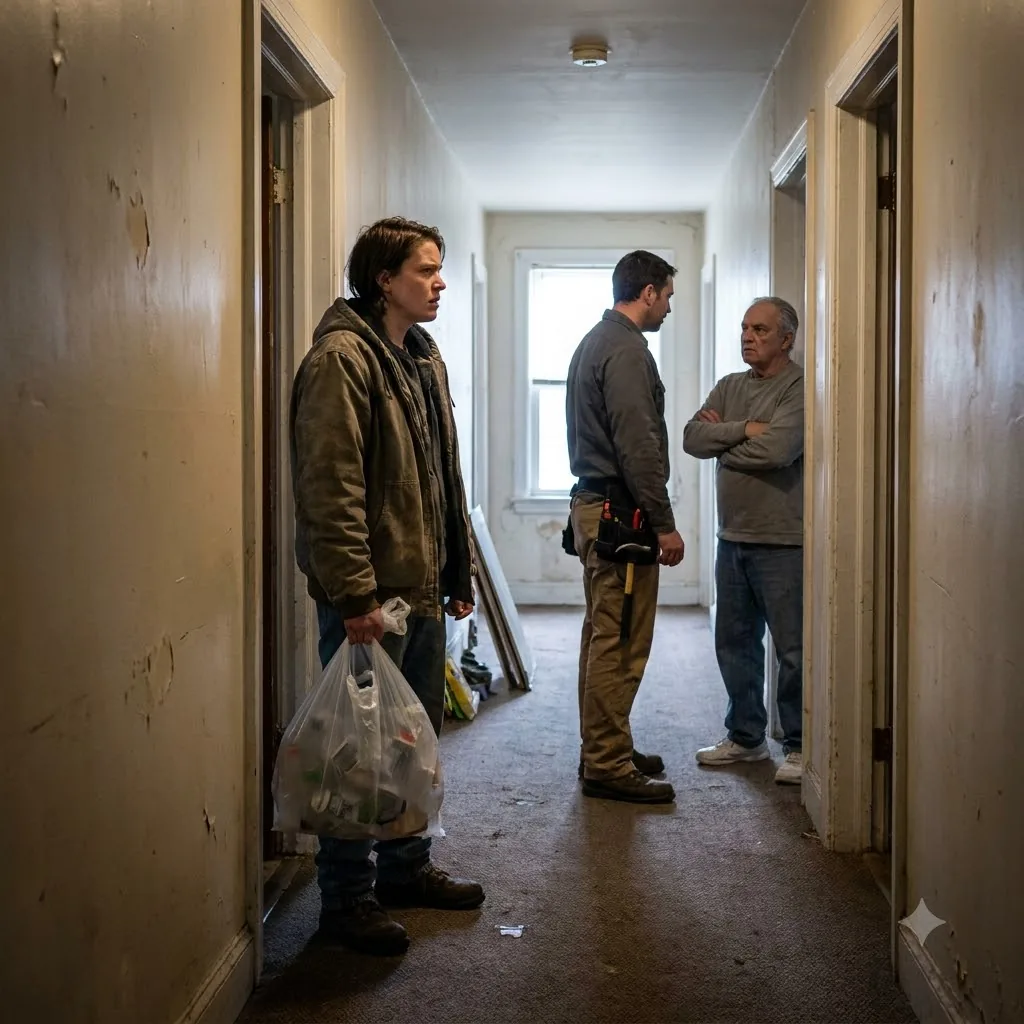
The basement utility room fell silent, except for the low, rhythmic hum of the compactor’s cooling fan. I walked slowly to the edge of the metal hopper and looked down. A few torn fragments of old paper lay scattered on the concrete floor-pages of my grandmother’s diary from 1952, shredded and smeared with black grease. I reached down and picked up a single scrap. The handwriting was barely legible through the oil stain, a fragment of a recipe in her familiar script. Leo stood frozen against the brick wall, clutching his empty metal clipboard like a shield. His eyes darted from Marcus to the ruined wood inside the machine. “I’m sorry,” Leo whispered, his voice trembling. “She told me… she said it was an official order. She said if I didn’t clear the hallway today, she’d report me to the head office for neglecting safety hazards. I didn’t want to get fired.” “You don’t take directives from tenants, Leo,” Marcus said, his voice flat and hard. “You know the protocol. You wait for a digital work order from the management portal. Pack up your things in the break room and go up to the manager’s office. You’re suspended pending a formal review of this incident.” Leo didn’t defend himself. He kept his head bowed, turned slowly, and walked out of the utility room, his boots squeaking against the wet concrete. I carried the few torn scraps of paper back up to the third floor. The hallway was completely empty. The alcove next to my door looked strangely wide and stark, the wall behind it showing a clean, rectangular patch of paint where the chest had sat for over a year. Mrs. Gable’s door remained shut tight. The next morning, the formal consequence of her actions was visible to the entire building. A bright orange lease violation notice was taped directly to the center of Mrs. Gable’s door. The bold black letters cited unauthorized direct command of building staff, property damage facilitation, and harassment of tenants. It was a public mark of shame that she couldn’t easily explain away. A week later, I saw Mrs. Gable through the peephole as she retrieved her morning mail. She moved quickly, her head bowed, avoiding even looking toward my door or the empty alcove next to it. The polite, superficial greetings we once shared in the lobby were gone, replaced by a cold, heavy silence that filled the corridor every time one of us stepped out. I went back inside and sat at my kitchen table, looking at the small stack of salvageable photographs I had managed to pull from the basement floor before they were completely destroyed. They were stained, torn, and smelled of oil, but they were all I had left. The empty space in the hallway remained bare, a quiet monument to a neighbor’s vindictive manipulation and a young worker’s fear. I felt a muted sense of relief that the truth had been documented, but it did nothing to bring back the history that was now gone.