Story code: ST-000008
Part 1: The Dry Pipe
Luz gripped the brass handle of the garden spigot, twisting it hard to the left, but instead of the familiar rush of cool water, the pipe let out a hollow, rattling hiss. She turned it back, forcing the corroded metal right, then wrenched it open again. Only a warm breath of air puffed against her knuckles. The sudden, chilling silence of the dry pipe settled over the yard. No steady drumming of droplets on the hosta leaves. No trickling run-off. The silence felt heavy, settling over the wilting hydrangeas and the drooping tomato vines her late husband, Mateo, had coaxed from this soil just last spring. The leaves were already curling, crisp and brown in the merciless afternoon heat. She tapped the faucet with her trowel. Nothing echoed back but a dull thud. The entire irrigation line was dead.
She knelt in the dirt, her fingers brushing the brittle stem of a heritage rose bush. Mateo had grafted this one himself, spending hours out here with his tape and shears. It was a physical piece of him, a living anchor keeping his memory tethered to the yard. She could almost see his calloused hands packing the soil around the base. Without water, it would not survive the weekend. The heat wave had been punishing, cracking the earth into jagged pieces. She pressed her palm against the baked dirt, feeling the desperate lack of moisture. The city’s strict drought schedules allowed residential watering on Tuesdays and Thursdays. Today was Thursday. She had the timer set perfectly. She paid her utility bills on the first of every month. There was absolutely no reason for the lines to be bone dry.
Luz wiped her soil-stained hands on her denim apron and stood up. The silence felt deliberate, lacking the distant hum of neighborhood sprinklers. A knot of unease tightened in her chest. She followed the green rubber hose back toward the side gate. She unlatched the heavy wood panel and stepped into the narrow gravel alleyway running behind the houses.
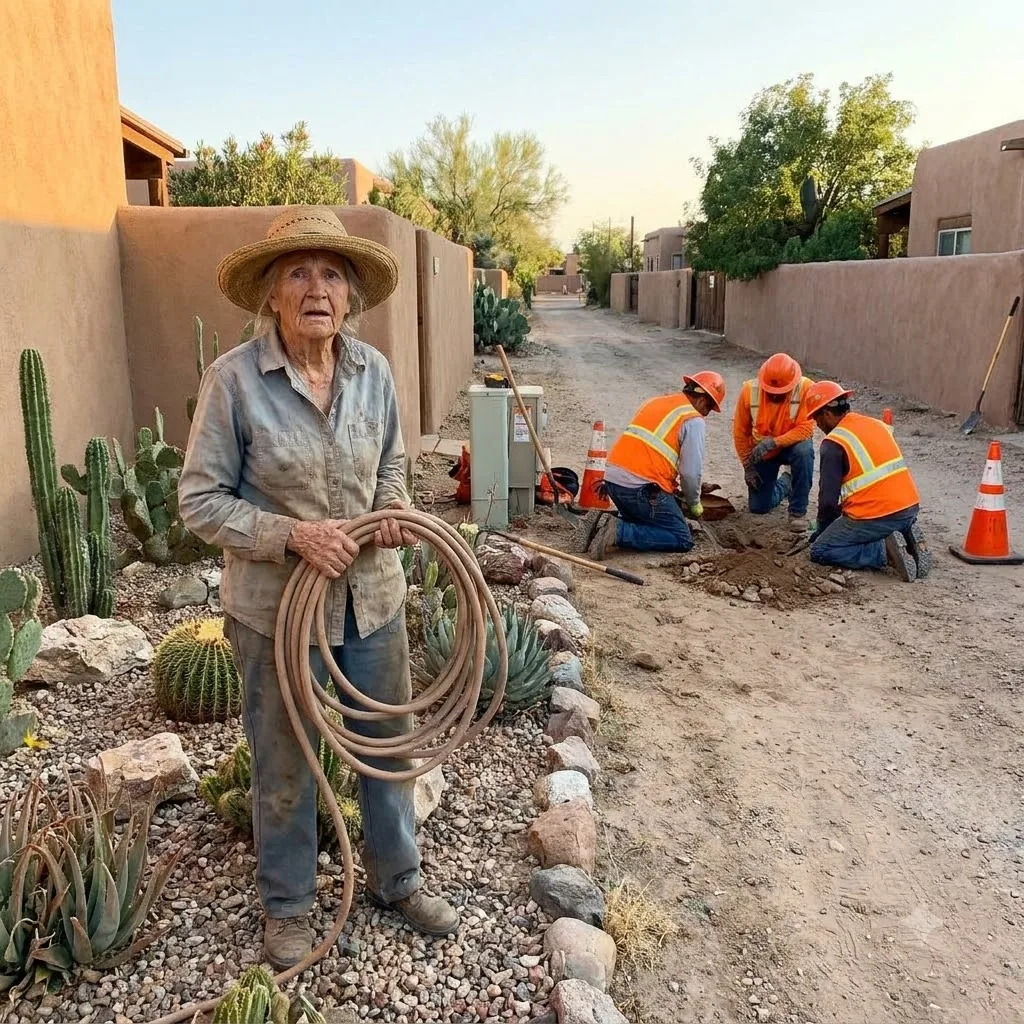
Two men in neon yellow utility vests crouched in the dirt over her property line. One held a heavy steel wrench, ratcheting down a thick bolt with a loud, metallic clack. The other held a bulky iron contraption shaped like a clamshell. It was a lockout boot, a heavy-duty industrial clamp designed to choke off a residential water meter. Luz froze, her boots crunching on the gravel.
The man with the wrench looked up, pausing mid-turn. He nudged his partner, who quickly stood and wiped his grease-stained hands on a rag. Behind them, leaning casually against the side of a white city utility truck, stood a third man. He wore a crisp beige suit that seemed out of place in the dusty alley, a clipboard tucked under one arm.
Luz stepped forward, her eyes darting from the iron boot clamped over her meter to the man in the suit. His gold tie clip caught the harsh sunlight as he pushed himself off the truck and walked slowly toward her. He stopped a few feet away, adjusting his sunglasses before checking his paperwork.
He pointed a silver pen at the garden wall behind her. He stated that her property had been flagged for severe drought violations, citing unauthorized agricultural usage. Luz looked at the heavy iron boot again. The metal was painted a bright warning red and secured with a specialized padlock that gleamed with fresh brass. Mateo’s garden was on the other side of that wall, suffocating in the heat. It was not a farm. It was a memorial.
The man in the suit cleared his throat. He handed her a bright yellow slip of paper bearing the official seal of the Water Commission. The top read Notice of Immediate Shutoff and Fine in bold black letters. The number printed at the bottom of the page was staggering. It was thousands of dollars, far more than her monthly pension, more than her mortgage.
The commissioner tapped his pen against his clipboard. He told her she had exactly forty-eight hours to pay the sum in full at the county clerk’s office, using a certified cashier’s check. He leaned closer, his voice dropping to a smooth, flat pitch. He explained that if the payment did not clear by Monday morning, the iron boot would stay forever. He stated that the city would initiate a lien on the house to recover the fines.
Luz looked up from the paper, her breath catching as he reached out and tapped the yellow slip in her hand.
“I do not have that kind of money,” Luz said, clutching the paper against her apron.
The commissioner adjusted his gold tie clip and offered a thin, tight smile.
“Then you have until Monday morning to vacate the premises,” he said, nodding to his crew as the heavy iron padlock on her water meter clicked shut with a final, deafening snap.
Luz gripped the brass handle of the garden spigot, twisting it hard to the left, but instead of the familiar rush of cool water, the pipe let out a hollow, rattling hiss. She turned it back, forcing the corroded metal right, then wrenched it open again. Only a warm breath of air puffed against her knuckles. The sudden, chilling silence of the dry pipe settled over the yard. No steady drumming of droplets on the hosta leaves. No trickling run-off. The silence felt heavy, settling over the wilting hydrangeas and the drooping tomato vines her late husband, Mateo, had coaxed from this soil just last spring. The leaves were already curling, crisp and brown in the merciless afternoon heat. She tapped the faucet with her trowel. Nothing echoed back but a dull thud. The entire irrigation line was dead.
She knelt in the dirt, her fingers brushing the brittle stem of a heritage rose bush. Mateo had grafted this one himself, spending hours out here with his tape and shears. It was a physical piece of him, a living anchor keeping his memory tethered to the yard. She could almost see his calloused hands packing the soil around the base. Without water, it would not survive the weekend. The heat wave had been punishing, cracking the earth into jagged pieces. She pressed her palm against the baked dirt, feeling the desperate lack of moisture. The city’s strict drought schedules allowed residential watering on Tuesdays and Thursdays. Today was Thursday. She had the timer set perfectly. She paid her utility bills on the first of every month. There was absolutely no reason for the lines to be bone dry.
Luz wiped her soil-stained hands on her denim apron and stood up. The silence felt deliberate, lacking the distant hum of neighborhood sprinklers. A knot of unease tightened in her chest. She followed the green rubber hose back toward the side gate. She unlatched the heavy wood panel and stepped into the narrow gravel alleyway running behind the houses.
Two men in neon yellow utility vests crouched in the dirt over her property line. One held a heavy steel wrench, ratcheting down a thick bolt with a loud, metallic clack. The other held a bulky iron contraption shaped like a clamshell. It was a lockout boot, a heavy-duty industrial clamp designed to choke off a residential water meter. Luz froze, her boots crunching on the gravel.
The man with the wrench looked up, pausing mid-turn. He nudged his partner, who quickly stood and wiped his grease-stained hands on a rag. Behind them, leaning casually against the side of a white city utility truck, stood a third man. He wore a crisp beige suit that seemed out of place in the dusty alley, a clipboard tucked under one arm.
Luz stepped forward, her eyes darting from the iron boot clamped over her meter to the man in the suit. His gold tie clip caught the harsh sunlight as he pushed himself off the truck and walked slowly toward her. He stopped a few feet away, adjusting his sunglasses before checking his paperwork.
He pointed a silver pen at the garden wall behind her. He stated that her property had been flagged for severe drought violations, citing unauthorized agricultural usage. Luz looked at the heavy iron boot again. The metal was painted a bright warning red and secured with a specialized padlock that gleamed with fresh brass. Mateo’s garden was on the other side of that wall, suffocating in the heat. It was not a farm. It was a memorial.
The man in the suit cleared his throat. He handed her a bright yellow slip of paper bearing the official seal of the Water Commission. The top read Notice of Immediate Shutoff and Fine in bold black letters. The number printed at the bottom of the page was staggering. It was thousands of dollars, far more than her monthly pension, more than her mortgage.
The commissioner tapped his pen against his clipboard. He told her she had exactly forty-eight hours to pay the sum in full at the county clerk’s office, using a certified cashier’s check. He leaned closer, his voice dropping to a smooth, flat pitch. He explained that if the payment did not clear by Monday morning, the iron boot would stay forever. He stated that the city would initiate a lien on the house to recover the fines.
Luz looked up from the paper, her breath catching as he reached out and tapped the yellow slip in her hand.
“I do not have that kind of money,” Luz said, clutching the paper against her apron.
The commissioner adjusted his gold tie clip and offered a thin, tight smile.
“Then you have until Monday morning to vacate the premises,” he said, nodding to his crew as the heavy iron padlock on her water meter clicked shut with a final, deafening snap.