Story code: ST-000024
Part 3: The Rot
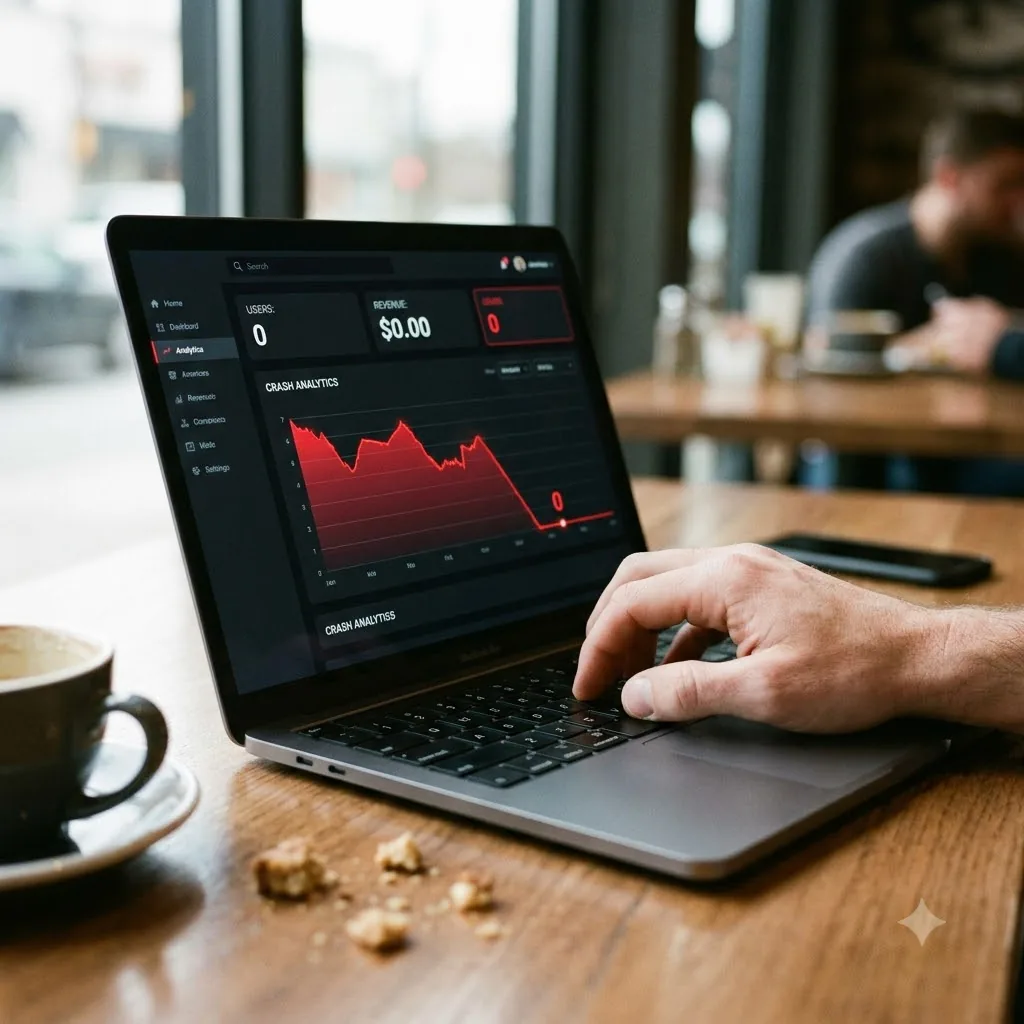
Marcus stared at the digital clock on his taskbar. It was 10:17 AM. He slammed his laptop shut, the metallic click echoing in his quiet office. The brute-force decryption script on his main monitor was useless. It was going to take over two hours to hack his way back into his own hardware relays, and the warden was going to patch a live security feed of Block D directly to the state director in forty-three minutes. If Marcus didn’t force the physical release mechanisms open before then, his fabricated dashboard would be exposed, and his venture capital pitch would be dead on arrival.
He grabbed his red master keycard from his desk and sprinted out of his office. He bypassed the elevators, taking the concrete stairwell down into the subterranean bowels of the prison. His breath echoed harshly in the narrow shaft. He had to manually trip the main breaker behind the cafeteria wall. A hard electrical reset would drop the magnetic locks on the dispensers, dropping the food onto the trays regardless of whatever denial-of-service loop the saboteur had spliced into the software.
The subterranean utility corridor behind Block D was a claustrophobic tunnel of exposed plumbing, damp concrete, and humming server towers. Marcus swiped his card at the maintenance door, his hands shaking so violently he dropped the plastic badge on his first attempt. He shoved the heavy steel door open, fully expecting to find a deserted room where a rogue script was quietly running on a cracked terminal.
Instead, he found an inmate.
The man wore the standard-issue gray jumpsuit of a Tier 2 maintenance worker. He was sitting casually on an overturned industrial bucket, a patched ethernet cable running from the open chassis of the main dietary server directly into a sleek, black smartphone resting in his palm.
“Get away from that terminal,” Marcus snapped, his heart hammering violently against his ribs. He immediately reached for the security radio clipped to his belt. “I’m calling the guards. Step back.”
The inmate didn’t flinch. He slowly looked up, the harsh blue glow of the smartphone illuminating his face. “If you touch that radio, Marcus, I hit send on the exploit logs. Your Series B funding dies before the guards even make it down the stairs.”
Marcus froze, his hand hovering inches above the plastic radio. He recognized the man’s face. It was Elias, one of the few inmates cleared for supervised IT maintenance duty. He was supposed to be running diagnostic checks on the HVAC systems in the east wing, not splicing into the central food relays.
“You,” Marcus breathed, stepping closer, his eyes darting frantically to the spliced cable. “You’re the shadow proxy. You wrote the backdoor.”
“Turns out your proprietary framework has some pretty massive holes if someone has physical access to a hardwired port,” Elias said, his thumb hovering calmly over the phone’s screen. “And a lot of uninterrupted time.”
“Cancel the ransom,” Marcus demanded, trying to mask the desperate tremor in his voice. “I don’t have the $2.4 million in liquid cash. You know that. And if the warden patches into the live feed at eleven, we both go down. He’ll see the jammed slots. He’ll see the lockdown. You’ll get solitary confinement for the rest of your sentence. Just shut the script off.”
Elias smiled. It was a cold, pitying expression that sent a chill down Marcus’s spine. “You really think the slots are jammed, don’t you?”
Marcus frowned, his gaze drifting to the thick bundle of power cables running toward the cafeteria wall. “I saw the denial-of-service loop. You locked the physical release mechanisms.”
“No, Marcus. I didn’t lock anything,” Elias said quietly. He stood up, unplugging the ethernet cable from the terminal. The raw data stream on the secondary monitor in the corner of the room flickered, but didn’t die. “The food slots have been wide open since six o’clock this morning. The trays are sitting right there on the cafeteria tables. Hot and ready.”
Marcus shook his head, his mind struggling to process the contradiction. “That’s impossible. The dashboard registered absolute zero consumption. My sensors are perfect. No one has taken a single tray.”
“Because we aren’t eating,” Elias said. “It’s a hunger strike. All four hundred and twelve of us.”
The words hung heavy in the damp air of the utility tunnel. Marcus stared at him. If the doors weren’t jammed, his brute-force script wouldn’t have done a thing. A manual reset wouldn’t change the fact that the men simply weren’t touching the food.
“Why would you strike?” Marcus asked, his voice tightening with confusion. “The predictive scarcity model provides perfectly calculated caloric intake-”
“It provides literal garbage,” Elias interrupted, his voice hardening into steel. “We cracked your algorithm three weeks ago. We saw the sourcing logic. Optimization Through Predictive Scarcity. That’s just a slick Silicon Valley phrase for a program that automatically buys Grade-D meat past its expiration date because it’s pennies on the dollar. You programmed the system to serve us rotting food, calculating exactly how much bacteria we could ingest before triggering a legally actionable medical emergency.”
Marcus felt the blood drain from his face. The rotten-food protocols were heavily encrypted, buried deep in the financial optimization subroutines. No one was supposed to see the baseline parameters.
“The ransom…” Marcus stammered, stepping back. “The $2.4 million. You were never trying to extort me for my founder’s shares.”
“I just needed a number big enough to make you panic,” Elias said. “Big enough to keep you locked in your office, spoofing the data to protect your precious VC pitch instead of coming down here and looking at the reality. You gave me exactly what I needed. Time.”
Elias tapped the screen of his smartphone. The interface didn’t show an offshore bank account or a menacing black text box. It displayed a live video feed.
“Smuggled phones are expensive, but they have fantastic cameras,” Elias said, turning the screen so Marcus could see it. On the display, Marcus saw his own pale, terrified face standing in the utility closet. In the corner of the screen, a small red dot blinked steadily, alongside a viewer count that was rapidly climbing past twelve thousand.
“What is that?” Marcus asked, his chest tight.
“This is a live stream,” Elias said, his eyes locking onto Marcus. “And I’m not broadcasting to the warden. I’m connected directly to the servers of a national prison reform watchdog, the state ACLU branch, and about a dozen investigative journalists. I’ve been streaming for forty minutes, Marcus.”
Marcus’s breath caught in his throat. He looked at the chat scrolling furiously up the side of Elias’s screen. He saw his own name flashing in the comments.
“I just finished walking them through your forged executive metrics,” Elias continued, his voice perfectly calm. “I showed them the spliced terminal, the digital band-aid you built to lie to the state director, and exactly how your algorithm feeds us spoiled rations to pad your venture capital valuation.”
“Turn it off,” Marcus whispered, his hands trembling as he lunged forward.
Elias easily stepped back, keeping the phone angled perfectly at Marcus’s desperate, sweating face. “The warden goes live at eleven, Marcus. He’s going to broadcast a cafeteria full of men sitting peacefully in front of rotting food. And thanks to you hiding the anomaly all morning, he has absolutely no idea it’s coming.”
Marcus stood completely frozen in the humming corridor, trapped under the glowing red eye of the camera, watching the viewer count tick higher.