Story code: ST-000033
Part 1: Shattered Locks
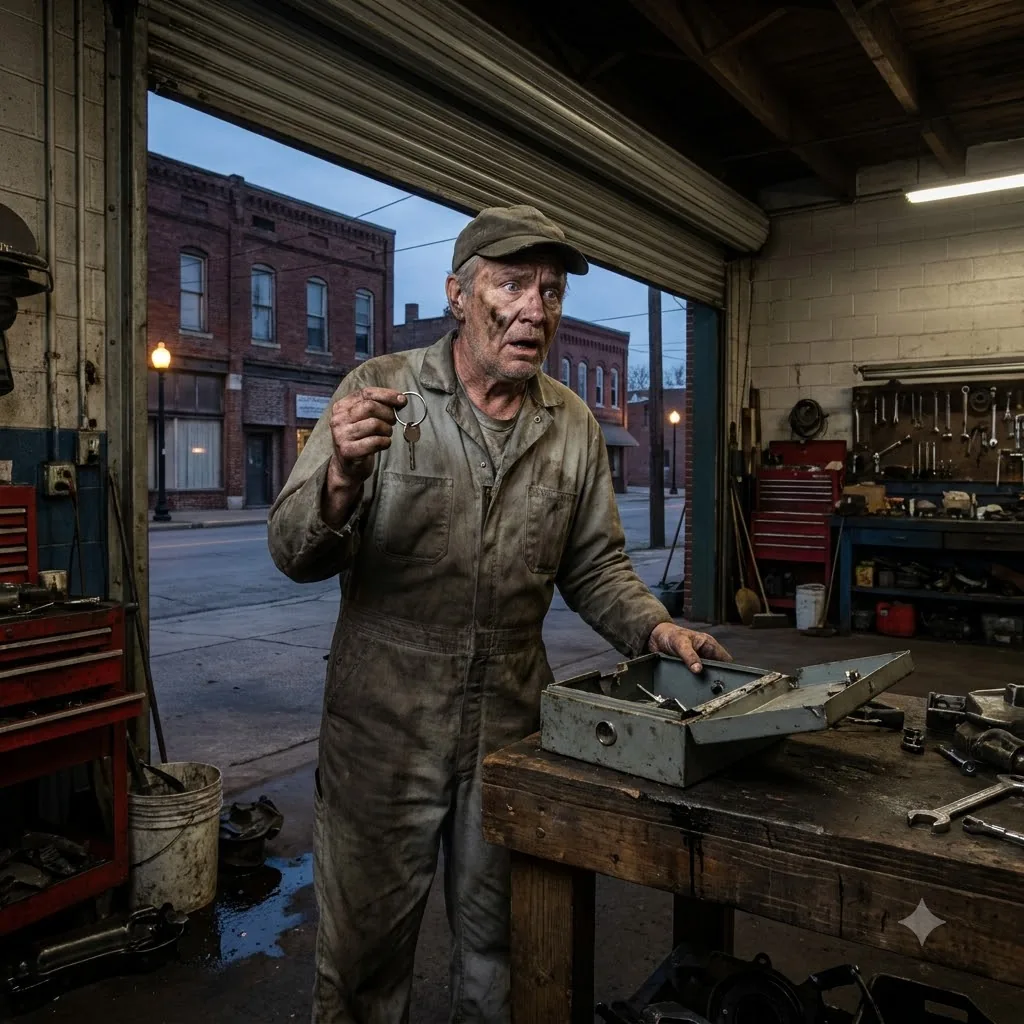
Marcus yanked the rusted chain to lower the shop’s corrugated metal gate, but his arm locked mid-pull when he spotted the shattered remains of the key box on the office drywall. The glass door hung by a bent hinge, and the silver hook reserved for the black, tinted Chrysler 300 was completely bare. He dropped the chain, the heavy metal links clattering against the grease-stained concrete as a cold knot of dread formed in his stomach.
Trayvon.
The sixteen-year-old had been pushing a broom across the service bays less than an hour ago, his shoulders hunched, his jaw tight. Marcus had assumed the boy was just processing the funeral, working through the raw grief of putting his older brother in the ground. The fragile ceasefire between their block and the Heights was only seventy-two hours old, a desperate agreement forged by the older generation to stop the neighborhood from drowning in blood. Trayvon had nodded when Marcus talked to him about honoring the peace. He had looked Marcus right in the eyes and swept the floor in absolute silence.
But that silence had been a countdown.
Marcus sprinted into the office, his boots crunching over the broken glass. The Chrysler wasn’t just a customer’s car. It was a heavy block of American steel with a modified engine and blackout tint on every window, the exact kind of anonymous vehicle someone would steal if they intended to roll down a rival block and disappear before the sirens started wailing. Marcus remembered the way Trayvon’s oversized jacket had sagged heavily on the right side all afternoon. He had ignored the warning sign, desperately wanting to believe the boy was just carrying a heavy ratchet or a scrap part.
He grabbed the keys to his flatbed tow truck from the desk and bolted for the alley. The heavy diesel engine roared to life with a violent shudder, black smoke coughing from the exhaust stack as Marcus slammed the transmission into gear. He tore out of the alleyway, the truck’s massive tires kicking up loose gravel.
The dashboard clock glared in harsh green numbers. Eight-forty. Friday night. The Heights would be packed with people spilling out of the corner stores, gathering on the stoops, enjoying the deceptive calm of the new truce. If Trayvon hit the avenue now, the collateral damage would be catastrophic. The peace treaty would vanish instantly, replaced by a wave of ruthless retaliation that would tear the remaining families apart.
Marcus gripped the massive steering wheel, his knuckles turning bone-white as he navigated the narrow residential streets. He kept his eyes locked on the road ahead, frantically scanning the brake lights in the distance. He bypassed the main boulevard, taking the brutal shortcuts through the abandoned industrial park. The tow truck bounced aggressively over the broken asphalt, the heavy suspension groaning and shrieking under the abuse. He needed to intercept the boy before the Chrysler crossed the invisible boundary line at Fourteenth Street.
Streetlamps flashed rhythmically through the cab, illuminating the cold sweat beading on Marcus’s forehead. He recalled the hollow emptiness in Trayvon’s eyes when the casket had been lowered. That was the look of someone who had nothing left to lose, a dangerous, consuming void that demanded to be filled with violence. Marcus cursed his own blindness, pressing his heavy work boot harder against the accelerator pedal. The huge diesel engine whined, pushing the massive truck past its safe limits, the frame rattling violently.
He swerved aggressively onto Fourteenth Street, the heavy flatbed fishtailing slightly before the rear dual tires found their grip on the pavement. The boundary line. Beyond this intersection, the territory belonged strictly to the Heights. Neon signs from liquor stores and late-night pawn shops cast long, chaotic shadows across the wet street. There were dozens of vehicles moving through the corridor, but Marcus was hunting for one specific silhouette.
Then he saw it.
Three blocks down, creeping menacingly slow in the right lane, was a wide, blacked-out sedan. The Chrysler 300. It hovered like a shark just outside the bright glow of a crowded corner bodega, where a dozen young men from the Heights were leaning against a brick wall, laughing and passing paper bags back and forth. They were completely unaware of the rolling death trap approaching their flank.
Marcus laid his palm on the air horn, a deafening, continuous blast that echoed off the concrete buildings, desperately trying to scatter the crowd and warn them of the incoming threat. He shoved the accelerator flush against the floorboard. The distance between the speeding tow truck and the creeping Chrysler closed rapidly. The sedan’s brake lights flared a brilliant red, an aggressive glow that painted the cracked street below.
Through the windshield, Marcus watched the passenger-side window of the Chrysler begin to slide down into the door panel with a slow, deliberate mechanical motion. The black tint vanished, revealing a narrow sliver of the dark interior. A slender arm, covered in the familiar gray fabric of Trayvon’s work jacket, extended out of the gap. The harsh metallic glint of a pistol caught the light from the streetlamp overhead.
Marcus braced his forearms against the steering wheel and aimed the reinforced steel bumper of his ten-ton tow truck directly at the passenger side of the sedan, gritting his teeth as the first muzzle flash illuminated the dark street.
Marcus yanked the rusted chain to lower the shop’s corrugated metal gate, but his arm locked mid-pull when he spotted the shattered remains of the key box on the office drywall. The glass door hung by a bent hinge, and the silver hook reserved for the black, tinted Chrysler 300 was completely bare. He dropped the chain, the heavy metal links clattering against the grease-stained concrete as a cold knot of dread formed in his stomach.
Trayvon.
The sixteen-year-old had been pushing a broom across the service bays less than an hour ago, his shoulders hunched, his jaw tight. Marcus had assumed the boy was just processing the funeral, working through the raw grief of putting his older brother in the ground. The fragile ceasefire between their block and the Heights was only seventy-two hours old, a desperate agreement forged by the older generation to stop the neighborhood from drowning in blood. Trayvon had nodded when Marcus talked to him about honoring the peace. He had looked Marcus right in the eyes and swept the floor in absolute silence.
But that silence had been a countdown.
Marcus sprinted into the office, his boots crunching over the broken glass. The Chrysler wasn’t just a customer’s car. It was a heavy block of American steel with a modified engine and blackout tint on every window, the exact kind of anonymous vehicle someone would steal if they intended to roll down a rival block and disappear before the sirens started wailing. Marcus remembered the way Trayvon’s oversized jacket had sagged heavily on the right side all afternoon. He had ignored the warning sign, desperately wanting to believe the boy was just carrying a heavy ratchet or a scrap part.
He grabbed the keys to his flatbed tow truck from the desk and bolted for the alley. The heavy diesel engine roared to life with a violent shudder, black smoke coughing from the exhaust stack as Marcus slammed the transmission into gear. He tore out of the alleyway, the truck’s massive tires kicking up loose gravel.
The dashboard clock glared in harsh green numbers. Eight-forty. Friday night. The Heights would be packed with people spilling out of the corner stores, gathering on the stoops, enjoying the deceptive calm of the new truce. If Trayvon hit the avenue now, the collateral damage would be catastrophic. The peace treaty would vanish instantly, replaced by a wave of ruthless retaliation that would tear the remaining families apart.
Marcus gripped the massive steering wheel, his knuckles turning bone-white as he navigated the narrow residential streets. He kept his eyes locked on the road ahead, frantically scanning the brake lights in the distance. He bypassed the main boulevard, taking the brutal shortcuts through the abandoned industrial park. The tow truck bounced aggressively over the broken asphalt, the heavy suspension groaning and shrieking under the abuse. He needed to intercept the boy before the Chrysler crossed the invisible boundary line at Fourteenth Street.
Streetlamps flashed rhythmically through the cab, illuminating the cold sweat beading on Marcus’s forehead. He recalled the hollow emptiness in Trayvon’s eyes when the casket had been lowered. That was the look of someone who had nothing left to lose, a dangerous, consuming void that demanded to be filled with violence. Marcus cursed his own blindness, pressing his heavy work boot harder against the accelerator pedal. The huge diesel engine whined, pushing the massive truck past its safe limits, the frame rattling violently.
He swerved aggressively onto Fourteenth Street, the heavy flatbed fishtailing slightly before the rear dual tires found their grip on the pavement. The boundary line. Beyond this intersection, the territory belonged strictly to the Heights. Neon signs from liquor stores and late-night pawn shops cast long, chaotic shadows across the wet street. There were dozens of vehicles moving through the corridor, but Marcus was hunting for one specific silhouette.
Then he saw it.
Three blocks down, creeping menacingly slow in the right lane, was a wide, blacked-out sedan. The Chrysler 300. It hovered like a shark just outside the bright glow of a crowded corner bodega, where a dozen young men from the Heights were leaning against a brick wall, laughing and passing paper bags back and forth. They were completely unaware of the rolling death trap approaching their flank.
Marcus laid his palm on the air horn, a deafening, continuous blast that echoed off the concrete buildings, desperately trying to scatter the crowd and warn them of the incoming threat. He shoved the accelerator flush against the floorboard. The distance between the speeding tow truck and the creeping Chrysler closed rapidly. The sedan’s brake lights flared a brilliant red, an aggressive glow that painted the cracked street below.
Through the windshield, Marcus watched the passenger-side window of the Chrysler begin to slide down into the door panel with a slow, deliberate mechanical motion. The black tint vanished, revealing a narrow sliver of the dark interior. A slender arm, covered in the familiar gray fabric of Trayvon’s work jacket, extended out of the gap. The harsh metallic glint of a pistol caught the light from the streetlamp overhead.
Marcus braced his forearms against the steering wheel and aimed the reinforced steel bumper of his ten-ton tow truck directly at the passenger side of the sedan, gritting his teeth as the first muzzle flash illuminated the dark street.