Story code: ST-000055
Part 1: The Capacity Builder
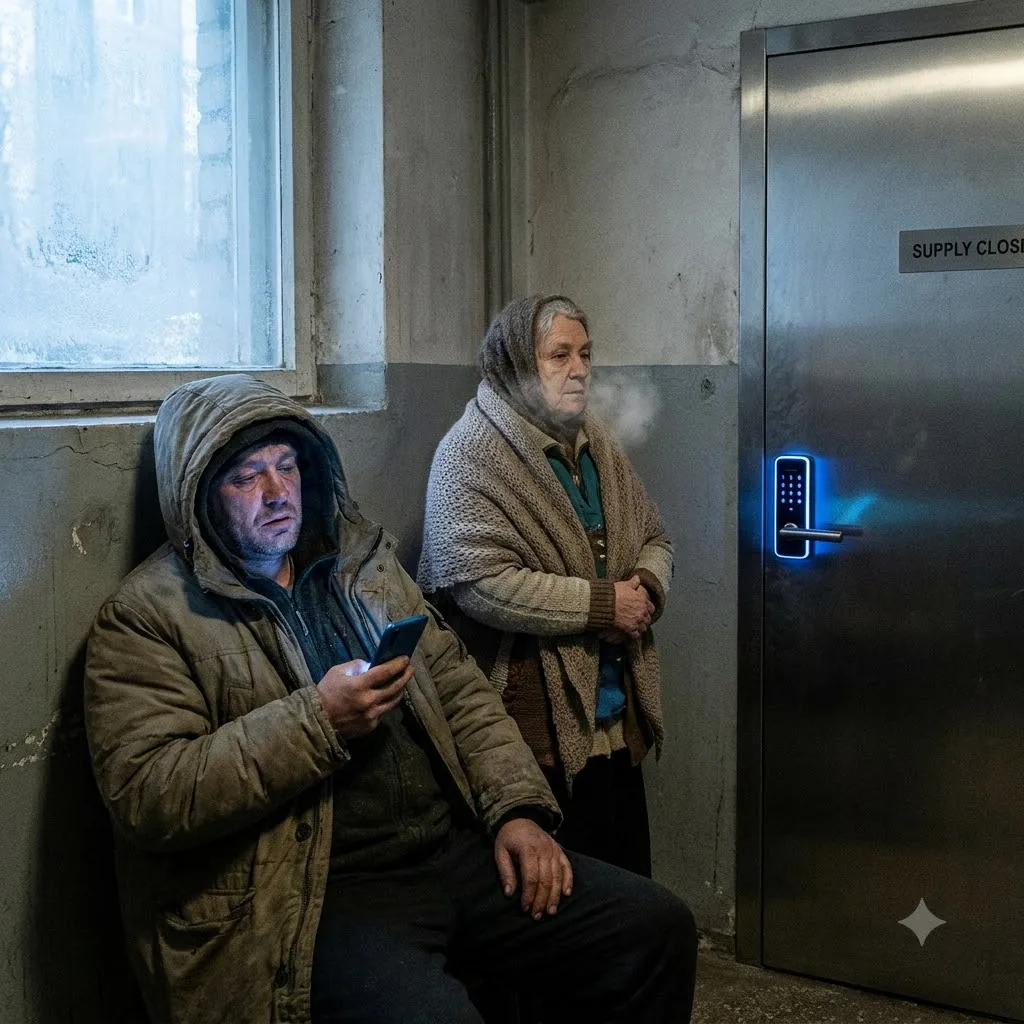
Malik grabbed the brass handle of the third-floor supply closet, expecting the resistance of the mechanical latch, but his hand slipped against a featureless panel of black glass. Mrs. Higgins stood behind him, wrapped in a threadbare coat, her breath forming small white clouds in the drafty corridor. The Crestview building’s boiler had failed just past midnight, and the temperature was dropping steadily toward forty degrees. The door to the emergency winter supplies, usually secured by a standard padlock, now featured a smart lock emitting a faint blue LED ring. Malik tapped the glass interface. A tiny red light flashed, followed by a double-beep. Access denied.
He pulled his smartphone from his jacket, his thumb stiff from the unheated hallway. His work inbox showed a message from Julian Brooks, the newly appointed executive director. Julian had arrived two weeks prior with a trust-fund pedigree and a degree in social entrepreneurship, instantly taking over the corner office. The email subject line announced a strategic pivot away from reactive aid, moving toward sustainable capacity building.
Malik skimmed past bloated paragraphs filled with phrases like synergistic empowerment and data-driven self-actualization. The fourth paragraph contained the unyielding directive. Julian had ordered all physical asset distribution paused to ensure his upcoming pilot study yielded pure metrics. The email stated that access to auxiliary storage was now app-restricted to senior research personnel, stripping the ground staff of emergency access.
Malik looked back at Mrs. Higgins. She pulled the collar of her coat over her chin, shivering. He had promised her an electric space heater five minutes ago, assuring her they had a dozen new units sitting right behind this exact door. Now, a slab of silicon and academic jargon stood in his way. He instructed Mrs. Higgins to wait inside her apartment and wrap herself in blankets, promising he would be back shortly to fix this.
Turning away from the digital lock, Malik marched down the hallway. He bypassed the broken elevator and took the concrete stairs two at a time. He pushed through the dented fire doors on the ground floor, striding toward the administrative wing. The transition was jarring. The community center lobby featured peeling linoleum and flickering lights, but the entrance to Julian’s domain was framed in floor-to-ceiling frosted glass.
Malik shoved the glass door open, stepping onto plush, sound-absorbing carpet that muted his boots. The air in the executive suite was a perfect seventy-two degrees. Julian sat behind a custom standing desk of reclaimed walnut, swiping through a tablet. The new director wore a pristine cashmere sweater, insulated from the freezing reality of the building above him. A freshly unboxed espresso machine hummed softly on a side table.
Malik crossed the room, stopping in front of the walnut desk. He stated firmly that he needed the master access code for the third-floor closet immediately.
Julian looked up, a placid smile spreading across his groomed face. He interlaced his fingers on the polished wood surface. He spoke in a measured tone, explaining that distributing space heaters was a band-aid solution that only fostered systemic dependency among residents. He urged Malik to consider the organizational impact.
Malik planted both hands on the edge of the desk. He informed Julian that the central heating was completely dead and an elderly woman was freezing in her living room above their heads. He pointed out the window at the heavy snow piling against the chain-link fence.
Julian nodded slowly, his serene expression unwavering. He picked up a metal stylus and tapped it against his palm. He told Malik that the quarterly report required measurable growth in community resilience, not a static tally of material giveaways. Julian insisted true empowerment meant teaching tenants to organize and demand better municipal services. He called it a vital lesson in self-advocacy.
Malik stared at the director, the manufactured heat of the office suddenly stifling. He reached into his pocket, wrapping his fingers tightly around his heavy steel maintenance keys. He thought about the iron crowbar sitting in his toolbox in the basement. He told Julian to open his admin app and unlock the supply door right this second.
Julian sighed, adjusting the sleeves of his sweater with deliberate slowness. He tapped his tablet screen twice to lock it, then reached for his espresso. He raised the ceramic cup toward Malik, taking a slow sip before setting it down with a sharp clink. He reached forward and pressed a silver button on the edge of his desk.
The frosted glass door behind Malik hissed softly as the electronic magnetic lock engaged, sealing them inside the warm office.
Malik grabbed the brass handle of the third-floor supply closet, expecting the resistance of the mechanical latch, but his hand slipped against a featureless panel of black glass. Mrs. Higgins stood behind him, wrapped in a threadbare coat, her breath forming small white clouds in the drafty corridor. The Crestview building’s boiler had failed just past midnight, and the temperature was dropping steadily toward forty degrees. The door to the emergency winter supplies, usually secured by a standard padlock, now featured a smart lock emitting a faint blue LED ring. Malik tapped the glass interface. A tiny red light flashed, followed by a double-beep. Access denied.
He pulled his smartphone from his jacket, his thumb stiff from the unheated hallway. His work inbox showed a message from Julian Brooks, the newly appointed executive director. Julian had arrived two weeks prior with a trust-fund pedigree and a degree in social entrepreneurship, instantly taking over the corner office. The email subject line announced a strategic pivot away from reactive aid, moving toward sustainable capacity building.
Malik skimmed past bloated paragraphs filled with phrases like synergistic empowerment and data-driven self-actualization. The fourth paragraph contained the unyielding directive. Julian had ordered all physical asset distribution paused to ensure his upcoming pilot study yielded pure metrics. The email stated that access to auxiliary storage was now app-restricted to senior research personnel, stripping the ground staff of emergency access.
Malik looked back at Mrs. Higgins. She pulled the collar of her coat over her chin, shivering. He had promised her an electric space heater five minutes ago, assuring her they had a dozen new units sitting right behind this exact door. Now, a slab of silicon and academic jargon stood in his way. He instructed Mrs. Higgins to wait inside her apartment and wrap herself in blankets, promising he would be back shortly to fix this.
Turning away from the digital lock, Malik marched down the hallway. He bypassed the broken elevator and took the concrete stairs two at a time. He pushed through the dented fire doors on the ground floor, striding toward the administrative wing. The transition was jarring. The community center lobby featured peeling linoleum and flickering lights, but the entrance to Julian’s domain was framed in floor-to-ceiling frosted glass.
Malik shoved the glass door open, stepping onto plush, sound-absorbing carpet that muted his boots. The air in the executive suite was a perfect seventy-two degrees. Julian sat behind a custom standing desk of reclaimed walnut, swiping through a tablet. The new director wore a pristine cashmere sweater, insulated from the freezing reality of the building above him. A freshly unboxed espresso machine hummed softly on a side table.
Malik crossed the room, stopping in front of the walnut desk. He stated firmly that he needed the master access code for the third-floor closet immediately.
Julian looked up, a placid smile spreading across his groomed face. He interlaced his fingers on the polished wood surface. He spoke in a measured tone, explaining that distributing space heaters was a band-aid solution that only fostered systemic dependency among residents. He urged Malik to consider the organizational impact.
Malik planted both hands on the edge of the desk. He informed Julian that the central heating was completely dead and an elderly woman was freezing in her living room above their heads. He pointed out the window at the heavy snow piling against the chain-link fence.
Julian nodded slowly, his serene expression unwavering. He picked up a metal stylus and tapped it against his palm. He told Malik that the quarterly report required measurable growth in community resilience, not a static tally of material giveaways. Julian insisted true empowerment meant teaching tenants to organize and demand better municipal services. He called it a vital lesson in self-advocacy.
Malik stared at the director, the manufactured heat of the office suddenly stifling. He reached into his pocket, wrapping his fingers tightly around his heavy steel maintenance keys. He thought about the iron crowbar sitting in his toolbox in the basement. He told Julian to open his admin app and unlock the supply door right this second.
Julian sighed, adjusting the sleeves of his sweater with deliberate slowness. He tapped his tablet screen twice to lock it, then reached for his espresso. He raised the ceramic cup toward Malik, taking a slow sip before setting it down with a sharp clink. He reached forward and pressed a silver button on the edge of his desk.
The frosted glass door behind Malik hissed softly as the electronic magnetic lock engaged, sealing them inside the warm office.