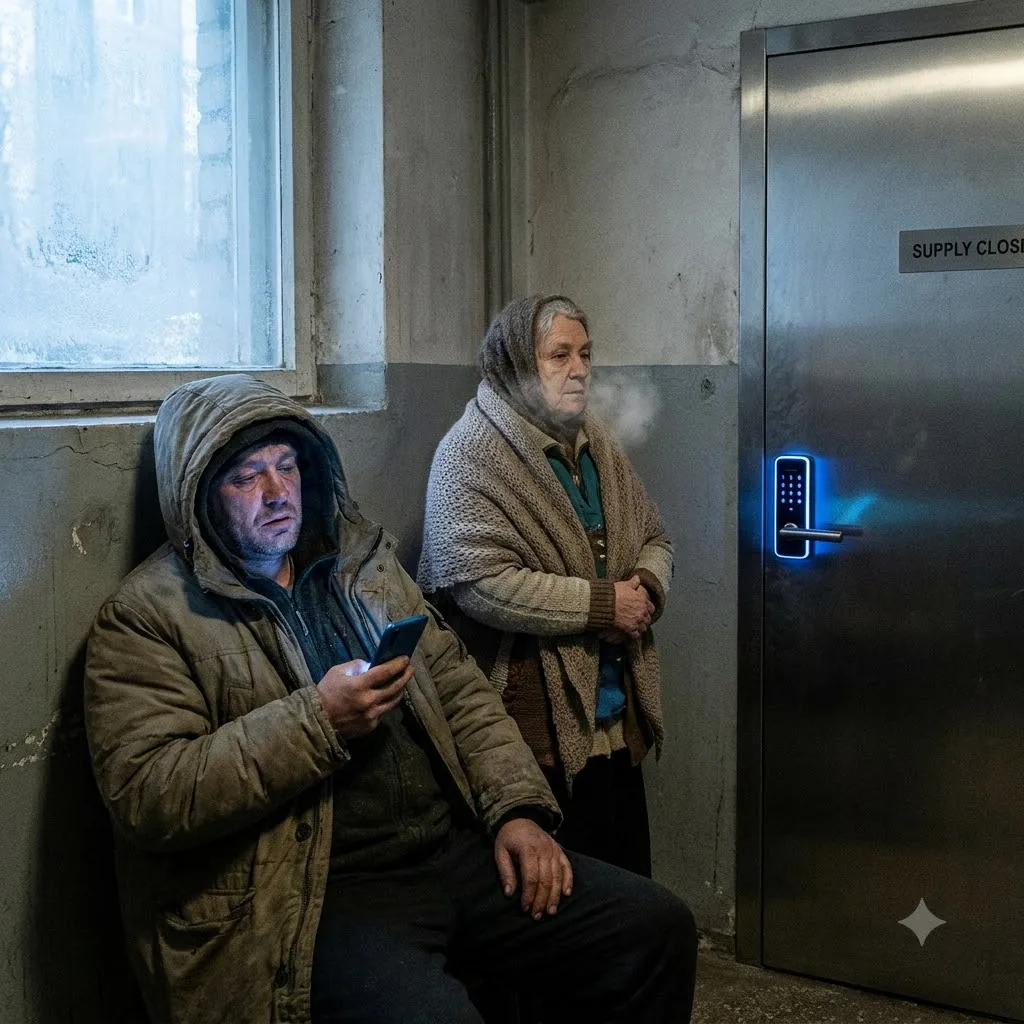
Story code: ST-000055
Part 2: The Metric of Suffering
Malik gripped the brushed steel handle of the frosted glass door, throwing his full weight backward. The heavy panel didn’t budge a fraction of an inch. The magnetic lock held with the silent, stubborn force of industrial electromagnetism, anchoring the door securely to the frame. He yanked it twice more, the handle rattling uselessly, before spinning around to glare at the reclaimed walnut desk.
“De-escalation,” Julian said smoothly, lacing his fingers together over his pristine cashmere sweater. “You came into this office projecting a highly aggressive paradigm, Malik. I am simply establishing a safe boundary so we can communicate as equals.”
“Open the door,” Malik said, his voice dropping to a low, dangerous rumble. Sweat began to prickle at his collar. The perfectly regulated seventy-two-degree air in the executive suite felt suffocating after the icy reality of the corridors above. The freshly unboxed espresso machine on the side table hissed, venting a small plume of aromatic steam that smelled entirely out of place in a failing building.
“Not until you agree to sit down and process the full scope of the initiative,” Julian replied, completely unbothered by Malik’s anger. He swiped a manicured finger across his tablet. “I’ve spent the morning reviewing your personnel file. Twelve years as head of maintenance at Crestview. You know every tenant by name. You possess an immense amount of undocumented social capital in this ecosystem.”
Malik didn’t care about his social capital. His phone vibrated violently in his jacket pocket, a jarring buzz against his ribs. He pulled it out, swiping past the lock screen. It was a text from Mr. Flores, the tenant living directly across from the third-floor supply closet.
*Pipes in 3B are banging loud. It’s freezing up here. Higgins isn’t answering her door.*
Cold fear spiked in Malik’s chest, instantly burning away his immediate fury at the locked door. The century-old plumbing in Crestview was notoriously brittle. If the water stagnant inside those cast-iron pipes froze and expanded, the metal would fracture. It wouldn’t just be a leak; it would be a catastrophic rupture, flooding the unheated apartments with icy water. In forty-degree temperatures, it would be a lethal disaster for the elderly residents on that floor.
He shoved the phone back into his pocket and marched up to the edge of the walnut desk. “The pipes on the third floor are freezing, Julian. If they burst, your pilot study is going to be a study in hypothermia and massive property damage. Turn off the smart lock on the supply closet right now.”
Julian clicked his tongue, shaking his head with a condescending sigh. “More reactionary thinking. If the pipes burst, we document the municipal failure. We use the resulting crisis to lobby the city council for a total infrastructure grant. Do you see the macro-level vision now, Malik? A few space heaters just delay the necessary collapse. We need calculated friction to force systemic change.”
Malik stared at the director, horrified. Julian was entirely insulated by his wealth, his academic jargon, and his theoretical models. He was perfectly willing to let the building freeze and flood just to manufacture a compelling data point for his quarterly report.
“People live here,” Malik said, plunging his hand into his pocket and gripping his heavy steel maintenance keys. The jagged brass edges pressed sharply into his palm, grounding him. “They aren’t data points. Mrs. Higgins is eighty years old. She isn’t going to survive a ‘calculated friction’ event today.”
“They will adapt, provided we guide them properly,” Julian countered softly. He tapped his tablet, rotating the screen to face Malik. A digital contract illuminated the glass. “I need a community liaison for this rollout. Someone the tenants trust, someone who can explain why this temporary discomfort is vital for their long-term empowerment. Sign this strategic acknowledgement. It comes with a new title, a twenty percent salary increase, and a permanent move into the administrative tier.”
Malik looked down at the screen. The glowing text outlined a complete, indefinite ban on distributing the emergency winter supplies. It explicitly forbade maintenance staff from intervening in temperature-related complaints unless a city inspector was present to record the failure.
“And if I refuse to sign away their safety?” Malik asked, his jaw tight.
Julian’s placid smile faded into a thin, corporate line. “Then I terminate your employment immediately for insubordination and threatening behavior. I’ll have building security escort you off the premises. You will lose your pension, your maintenance keys, and your access to Crestview. You won’t be legally permitted to set foot in the building to help Mrs. Higgins or anyone else ever again.”
The trap was perfectly, ruthlessly set. Malik looked at the heavy frosted glass door, then back at Julian’s custom desk. If he signed the form, he appeased his wealthy boss, kept his livelihood, and gained a promotion-but he would become fully complicit in Julian’s cruel experiment, leaving his community to freeze.
His phone vibrated again. Another frantic text from the third floor. The pipes were running out of time.
Malik thought about the iron crowbar sitting in his toolbox in the basement. He didn’t need Julian’s app to open the supply closet. He could pry the door off its hinges. But first, he needed to get out of this office.
Malik pulled his hand out of his pocket, pulling the massive ring of maintenance keys into the light. The heavy metal jingled loudly in the quiet, climate-controlled room.
Julian leaned back slightly, his eyes narrowing as he clocked the heavy brass. “Physical violence will result in immediate arrest, Malik. The cameras in the lobby are recording.”
“I’m not going to touch you,” Malik said quietly.
He turned away from the desk, fixing his eyes on the frosted glass door. The magnetic lock was seated at the top of the frame. The heavy steel keys in his hand, if swung with enough force, could easily shatter the expensive glass panel. It would trigger the security alarms. It would guarantee his termination. It would permanently destroy the career he had spent over a decade building.
But it would get him out of the room.
Malik took a deep breath, squaring his shoulders toward the locked door, wrapping the thick metal key ring tightly around his knuckles.
“If you break that glass,” Julian warned, his voice finally losing its serene edge, rising in genuine alarm, “you are done in this city, Malik. I will personally ensure you never work in facilities management again. Put the keys down.”