Story code: ST-000091
Part 1: The Sump Pump
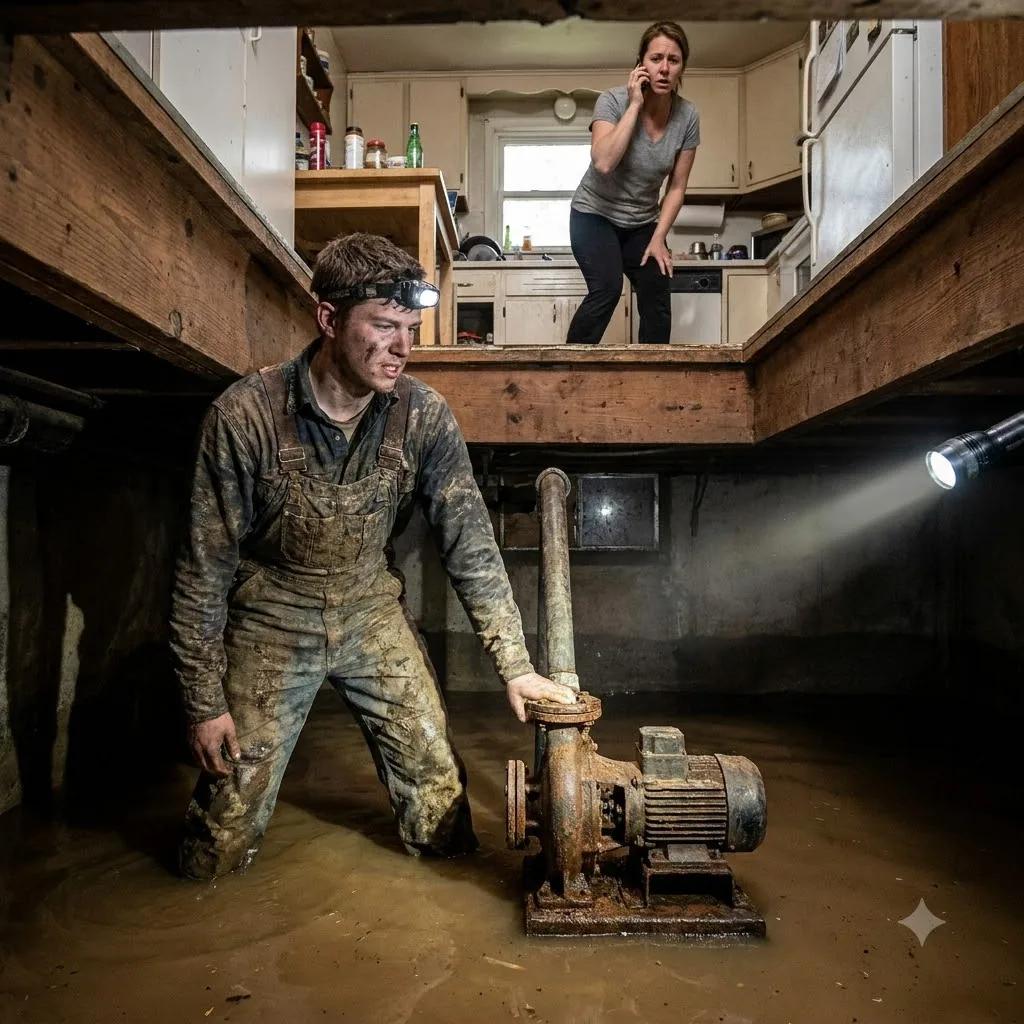
Mateo’s pipe wrench slipped on the rusted housing of the seized sump pump, sending a fresh splash of silty, sewage-laced water directly into his face. He spat a mouthful of grit onto the flooded concrete, wiping his eyes with the back of a mud-caked neoprene glove. The basement smelled of rotting drywall, ruptured sewer lines, and the bloated river that had swallowed the neighborhood two days ago. The cold was absolute, seeping through his heavy rubber waders and settling deep into his bones. Directly above his head, bleeding through the exposed floor joists, Mrs. Gable was weeping into her speakerphone. The tinny, cheerful hold music of a corporate insurance hotline provided a surreal soundtrack to her choked pleas about a denied flood claim.
Mateo dug his fingers into the freezing sludge clogging the pump’s intake grate. He had been down in this dark pit for three hours, wrestling with the calcified impeller, determined to get the water level dropping before the brick foundation buckled under the hydrostatic pressure. He was the only contractor pulling twelve-hour shifts in submerged cellars while larger companies waited for dry streets. The cash from these emergency repairs was the sole barrier between his family and the bank foreclosing on their house. Every turn of the wrench, every scraped knuckle, was another dollar toward the massive arrears hanging over his head.
A sharp, frantic vibration hammered against his ribs.
His phone, tucked deep inside the breast pocket of his insulated coveralls, buzzed three times in rapid succession. Mateo ignored it, focusing his burning forearms on the stripped bolt holding the pump motor in place. He needed both hands and maximum leverage to crack the rusted seal.
The phone buzzed again. Then it erupted into five more spasms, a continuous, angry sequence that refused to stop.
Mrs. Gable’s voice echoed down the stairwell. She begged a representative to review the fine print, her voice cracking under the weight of imminent ruin. Mateo grunted, threw his entire body weight against the heavy iron wrench, and felt the rusted bolt finally give way with a deafening metallic screech.
Before he could pry the motor casing apart, his chest vibrated with another relentless string of notifications. It felt less like a group text message and more like a digital alarm.
Mateo sighed, standing up straight in shin-deep water. His lower back screamed in protest. He stripped his left glove off with his teeth, wiped his freezing fingers on a dry patch of flannel, and fished the phone out.
The lock screen was a cascading waterfall of alerts from the local community app. He tapped the top banner, the sudden screen brightness searing his tired eyes in the dim, cavernous basement.
The top post in the Eastside Flood Recovery group had been published ten minutes ago. It already boasted four hundred comments and dozens of shares. The author was Arthur Penhaligon, a wealthy resident from the high ground who had appointed himself the neighborhood’s watchdog and self-proclaimed community hero the moment the disaster struck.
Mateo read the bold, capitalized headline.
URGENT WARNING: PREDATOR IN OUR BASEMENTS. DO NOT HIRE MATEO SILVA.
A block of solid ice formed in Mateo’s stomach, heavier than the freezing water surrounding his boots. He scrolled down with a trembling, mud-stained thumb. Arthur attached a screenshot of a redacted court document from eight years ago, completely stripped of context or the eventual dismissal, alongside a grainy photograph of Mateo taken from across the street.
The text beneath was a masterclass in targeted destruction. Arthur claimed Mateo used the flood as a cover to case vulnerable homes, bringing up the old legal trouble as proof of deceit. The watchdog urged every homeowner to fire Mateo immediately, lock their doors, and report his truck license plate to the local authorities for operating a malicious scam.
Mateo stared blindly at the glowing pixels. He had paid for his past, cleared the slate, and worked until his hands literally bled to build a reliable name in this town. Now, a man who spent the disaster sitting dry in his hillside home was tearing it all down.
The notifications continued to roll in, each one a digital stone thrown by the very people Mateo had been trying to help. Clients he had scheduled for the afternoon were canceling in real time. One comment demanded to know his current location. Another suggested organizing a group to track his work truck down and run him out of the zip code.
The financial lifeline he desperately needed to save his own home evaporated in a handful of unverified keystrokes.
Upstairs, the tinny hold music stopped abruptly.
Mrs. Gable was no longer crying. A heavy, terrifying silence pressed down through the floorboards, replacing the chaotic, desperate sounds of her phone call.
Mateo looked up at the exposed wood of the ceiling. He heard the distinct creak of her wooden rocking chair stopping. Then came the slow sound of her slippers moving toward the top of the basement stairs.
He shoved the phone back into his pocket, his bare hand slick with cold sweat. The basement door groaned open, spilling a sharp wedge of yellow hallway light across the surface of the muddy water.
Mrs. Gable stood rigidly on the landing, her phone clutched tightly in her hand, the screen facing outward as she stared down into the shadows.
Mateo’s pipe wrench slipped on the rusted housing of the seized sump pump, sending a fresh splash of silty, sewage-laced water directly into his face. He spat a mouthful of grit onto the flooded concrete, wiping his eyes with the back of a mud-caked neoprene glove. The basement smelled of rotting drywall, ruptured sewer lines, and the bloated river that had swallowed the neighborhood two days ago. The cold was absolute, seeping through his heavy rubber waders and settling deep into his bones. Directly above his head, bleeding through the exposed floor joists, Mrs. Gable was weeping into her speakerphone. The tinny, cheerful hold music of a corporate insurance hotline provided a surreal soundtrack to her choked pleas about a denied flood claim.
Mateo dug his fingers into the freezing sludge clogging the pump’s intake grate. He had been down in this dark pit for three hours, wrestling with the calcified impeller, determined to get the water level dropping before the brick foundation buckled under the hydrostatic pressure. He was the only contractor pulling twelve-hour shifts in submerged cellars while larger companies waited for dry streets. The cash from these emergency repairs was the sole barrier between his family and the bank foreclosing on their house. Every turn of the wrench, every scraped knuckle, was another dollar toward the massive arrears hanging over his head.
A sharp, frantic vibration hammered against his ribs.
His phone, tucked deep inside the breast pocket of his insulated coveralls, buzzed three times in rapid succession. Mateo ignored it, focusing his burning forearms on the stripped bolt holding the pump motor in place. He needed both hands and maximum leverage to crack the rusted seal.
The phone buzzed again. Then it erupted into five more spasms, a continuous, angry sequence that refused to stop.
Mrs. Gable’s voice echoed down the stairwell. She begged a representative to review the fine print, her voice cracking under the weight of imminent ruin. Mateo grunted, threw his entire body weight against the heavy iron wrench, and felt the rusted bolt finally give way with a deafening metallic screech.
Before he could pry the motor casing apart, his chest vibrated with another relentless string of notifications. It felt less like a group text message and more like a digital alarm.
Mateo sighed, standing up straight in shin-deep water. His lower back screamed in protest. He stripped his left glove off with his teeth, wiped his freezing fingers on a dry patch of flannel, and fished the phone out.
The lock screen was a cascading waterfall of alerts from the local community app. He tapped the top banner, the sudden screen brightness searing his tired eyes in the dim, cavernous basement.
The top post in the Eastside Flood Recovery group had been published ten minutes ago. It already boasted four hundred comments and dozens of shares. The author was Arthur Penhaligon, a wealthy resident from the high ground who had appointed himself the neighborhood’s watchdog and self-proclaimed community hero the moment the disaster struck.
Mateo read the bold, capitalized headline.
URGENT WARNING: PREDATOR IN OUR BASEMENTS. DO NOT HIRE MATEO SILVA.
A block of solid ice formed in Mateo’s stomach, heavier than the freezing water surrounding his boots. He scrolled down with a trembling, mud-stained thumb. Arthur attached a screenshot of a redacted court document from eight years ago, completely stripped of context or the eventual dismissal, alongside a grainy photograph of Mateo taken from across the street.
The text beneath was a masterclass in targeted destruction. Arthur claimed Mateo used the flood as a cover to case vulnerable homes, bringing up the old legal trouble as proof of deceit. The watchdog urged every homeowner to fire Mateo immediately, lock their doors, and report his truck license plate to the local authorities for operating a malicious scam.
Mateo stared blindly at the glowing pixels. He had paid for his past, cleared the slate, and worked until his hands literally bled to build a reliable name in this town. Now, a man who spent the disaster sitting dry in his hillside home was tearing it all down.
The notifications continued to roll in, each one a digital stone thrown by the very people Mateo had been trying to help. Clients he had scheduled for the afternoon were canceling in real time. One comment demanded to know his current location. Another suggested organizing a group to track his work truck down and run him out of the zip code.
The financial lifeline he desperately needed to save his own home evaporated in a handful of unverified keystrokes.
Upstairs, the tinny hold music stopped abruptly.
Mrs. Gable was no longer crying. A heavy, terrifying silence pressed down through the floorboards, replacing the chaotic, desperate sounds of her phone call.
Mateo looked up at the exposed wood of the ceiling. He heard the distinct creak of her wooden rocking chair stopping. Then came the slow sound of her slippers moving toward the top of the basement stairs.
He shoved the phone back into his pocket, his bare hand slick with cold sweat. The basement door groaned open, spilling a sharp wedge of yellow hallway light across the surface of the muddy water.
Mrs. Gable stood rigidly on the landing, her phone clutched tightly in her hand, the screen facing outward as she stared down into the shadows.