Story code: ST-000135
Part 4: The Boiler Room
Leo stood on the freezing concrete steps outside the regional compliance office. The heavy metal door slammed shut behind him, the echo swallowed by the roar of early morning traffic. Hayes hadn’t formally booked him into a county jail. The prosecutor had simply stopped the audio recording, confiscated the printed map, and issued a provisional administrative release. Hayes knew the audio of that interrogation was a toxic liability, but he still wielded the crushing power of the state bureaucracy.
Leo pulled his phone from his coat pocket. His hands were numb, the red indentations from the metal handcuffs still burning around his wrists. He tapped the corporate warehouse app on his screen. The interface flashed once before a new, permanent block of text locked the display: *EMPLOYMENT TERMINATED. GROSS NON-COMPLIANCE. INSURANCE BENEFITS REVOKED RETROACTIVELY.*
There would be no final paycheck. No severance package to float his rent. He was entirely locked out of his livelihood.
His phone vibrated in his palm. It was a frantic text from his older sister, Elena.
*Leo, what’s going on? Two state compliance officers just showed up at my door. They’re demanding five years of tax returns and birth certificates for the kids. They said I’m under investigation for harboring a defrauder and complicity in identity falsification.*
Leo’s chest tightened, the cold air scraping the back of his throat. Hayes was retaliating. Since the prosecutor couldn’t legally pursue a criminal trafficking charge using illegally purchased commercial geofencing data, he was turning the administrative screws on Leo’s family. By weaponizing Leo’s emergency contact forms and their previously shared address, the state was threatening Elena’s custody of her children and her financial stability. It was an isolation tactic, designed to make him toxic to the people he loved most.
He typed a quick reply, begging her not to answer any more questions without a lawyer, though he had absolutely no idea how either of them would afford one.
With nowhere else to go and his car still impounded halfway across town at the pharmacy, Leo started walking. He moved blocks away from the state building, eventually pushing through the foggy glass door of a rundown corner diner. He slid into a cracked vinyl booth in the back, the smell of burnt coffee and fried grease washing over him.
He stared at the scarred Formica table. No job. No medication. His sister caught in the crosshairs of a ruthless state mandate.
The bell above the diner door jingled. A man in a faded canvas jacket walked in, his eyes scanning the booths. He looked to be in his late sixties, with a thick gray beard and a scuffed walking cane clutched in a calloused hand. He spotted Leo, walked over, and slid into the opposite side of the booth without asking permission.
“You’re Leo,” the man said. It wasn’t a question. “I’m Silas. I used to be a shop steward at the old auto plant before the state busted the union.”
Leo narrowed his eyes, pulling his hands into his lap. “How do you know who I am?”
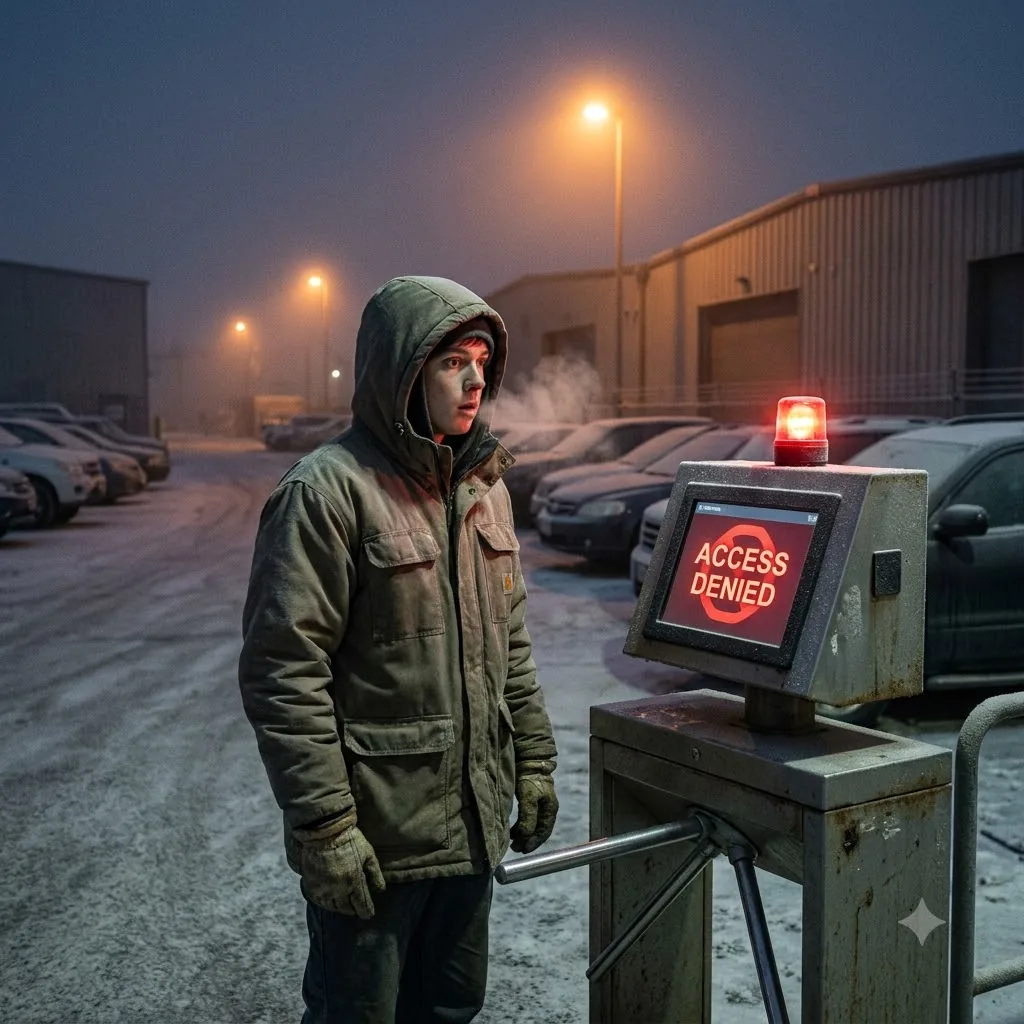
“Warehouse floors talk,” Silas said, signaling the waitress for two coffees. “Word travels fast on the midnight shift when the gates lock a guy out with an 808 code. A couple of the younger fulfillment workers reached out to my group. Said they saw the remote HR kiosk panic. Said you got pinched by compliance.”
“I don’t have a group,” Leo muttered, his defenses fully raised. “And I don’t have a job anymore, either. They bought our corporate wellness data. They tracked my phone to a clinic in Illinois.”
Silas didn’t look surprised. He reached into his deep coat pocket and slid a small, unmarked amber vial across the table, followed by a sealed bundle of sterile syringes. Leo stared at the testosterone, his breath catching in his throat.
“Community defense fund,” Silas said quietly. “We have a network of older folks who remember what it was like before the shiny new clinics, before the state decided to play doctor. We source it ourselves.”
Leo reached out and touched the cold glass of the vial. It was real.
“They aren’t just coming for me,” Leo said, the grim reality of his sister’s panicked text settling heavily on his shoulders. “They sent compliance officers to my sister’s house this morning. They’re auditing her entire life because she’s my emergency contact. They want to crush my family until I disappear.”
“That’s their playbook,” Silas nodded, his expression weathered but unshaken. “They use the bureaucracy to make the cost of existing too high. But they’re acting sloppy. If they’re buying bulk commercial data to bypass federal warrants, that means they’re terrified of a real legal fight. It means they know their mandate is a house of cards.”
Silas leaned forward, resting his thick forearms on the table. “You aren’t fighting this alone, kid. We have paralegals who know how to drag out these family audits for years. We have organizers setting up burner phones for the warehouse workers right now so the company can’t geofence their off-hours. We survived the raids in the eighties, and we’re going to survive Senator Graves and his algorithms.”
Leo looked from the vial of medication to the hardened, steady eyes of the older man sitting across from him. The sheer terror of the morning-the locked turnstile, the horrified pharmacist, the suffocating interrogation room-began to slowly recede, replaced by something much heavier and far more durable.
He had lost his livelihood. His medical insurance was a dead end, and his family was now squarely in the sights of a hostile government. The comfortable illusion that following the rules would keep him safe was permanently shattered.
But as Silas handed him a thick, encrypted burner phone, Leo gripped the plastic tightly. The state had tried to leave him isolated and afraid. Instead, they had just introduced him to an army.