Story code: ST-000141
Part 1: The Silent Treatment
Elias hauled the fifty-pound duffel of salvaged copper wire through the chain-link gates of Miller’s Scrap and Salvage, expecting the familiar metallic screech of the weighing scales. Instead, the yard fell into a sudden, suffocating silence as three local scrappers turned their backs to him in unison. He shifted the heavy canvas strap on his shoulder, his hands stained dark from a weekend spent stripping insulation, and kept walking toward the front office.
The smell of engine oil and oxidized iron hung heavy in the damp Tuesday morning air. Usually, this place buzzed with the sounds of grinders, shouting men, and the diesel rumble of the magnetic crane. Today, the crane sat idle. The grinder was powered down. Every pair of eyes in the yard seemed fixed on his boots.
Elias reached the large iron plate of the floor scale and dropped the duffel. The thick copper wiring clanked satisfyingly, a sound that usually prompted Artie, the yard owner, to grab his clipboard.
Artie stood inside the open doorway of his plywood booth. He did not pick up the clipboard. He did not offer his usual gruff morning greeting. He simply stared at Elias with a hard, unfamiliar expression.
Elias gave a polite nod, pointing a grease-stained finger at the duffel to signal he was ready to weigh in.
Artie stepped out of the booth, walked over to the scale, and used his steel-toed boot to kick the duffel off the iron plate. The heavy bag tumbled into the dirt. Artie folded his thick arms across his chest and stared at the gravel, refusing to make eye contact.
Elias opened his mouth to speak, but the absolute hostility in the older man’s posture stopped him. The silence in the yard felt thick enough to choke on. Elias looked over his shoulder. A pair of brothers he had known since grade school were standing by a pile of aluminum siding. They immediately pivoted away, muttering low under their breath.
The hair on the back of Elias’s neck stood up. He reached down and grabbed the canvas handle of his duffel, hoisting the dead weight back against his hip. He took a step backward.
A teenager in a gray hoodie stepped out from behind a rusted-out washing machine. The kid held a smartphone at eye level, the dual lenses aimed directly at Elias’s face. The screen displayed a live-stream interface, words scrolling rapidly in the chat box at the bottom.
Elias raised his free hand to shield his eyes. He told the kid to put the phone away.
The teenager ignored the instruction, stepping closer. He leaned his head near the microphone and narrated the moment in an excited, breathless whisper, detailing how Elias had the nerve to show his face in public. The kid thrust the phone mere inches from Elias’s nose, the red recording indicator blinking with rhythmic cruelty.
Elias turned his back on the camera. His pulse hammered against his ribs as he quickened his pace toward the front gate. The fifty pounds of copper felt twice as heavy now, biting into his shoulder blade, but he refused to drop it. He marched out of the chain-link enclosure and onto the shoulder of the dirt road where he had parked his battered green pickup.
The walk felt like a slow-motion nightmare. He could feel the stares burning into his back from the men inside the fence.
He rounded the corner of the fence line and spotted his truck. He stopped dead in his tracks.
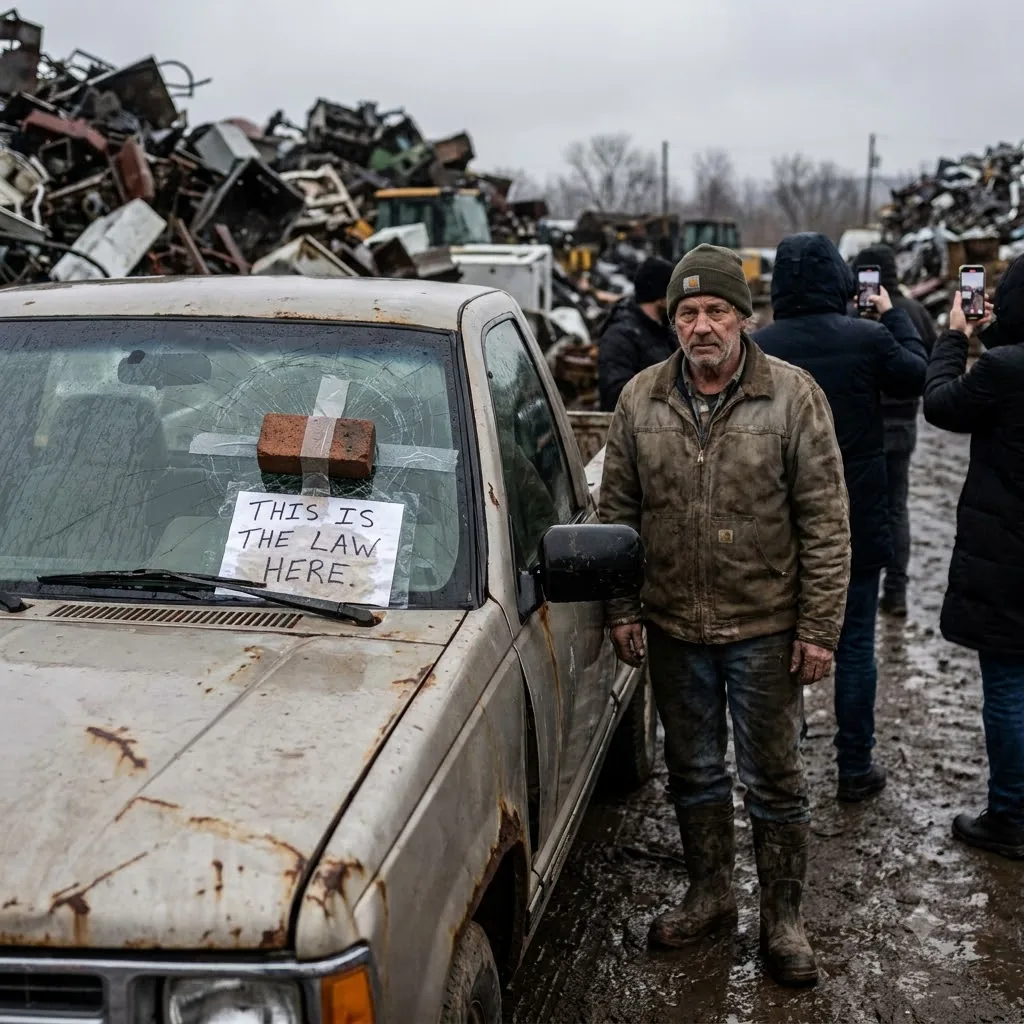
The morning sunlight caught the windshield at a strange angle, illuminating thousands of tiny, crystalline fractures spreading out like a massive spider web. The driver’s side glass was completely caved in. A deep, concave crater sat at eye level. Resting heavy against the wiper blades was half of a red clay brick, shedding orange dust onto the hood.
Elias dropped the duffel. It hit the weeds with a heavy thud. He rushed forward, his boots crunching over the loose gravel and broken safety glass scattered across the asphalt.
Taped directly over the center of the impact zone, right where the glass was pulverized into a white powder, was a standard sheet of printer paper. Someone had used thick strips of clear packing tape to secure it against the morning wind.
Elias stepped right up to the front bumper. His chest heaved as he stared at the paper. It was a color printout of a social media screenshot. The ink was slightly damp, giving the blocky text a smeared edge. His own face stared back at him from the center of the page. It was a candid photo, one he did not remember taking, bordered by a long paragraph of bold, aggressive text and a series of digital red circles pointing to something blurry in the background.
His fingers trembled as he reached out to peel the packing tape away from the ruined glass. He needed to read the paragraphs underneath his photo.
Before his fingernail could catch the edge of the tape, the loud crunch of heavy tires sliding on gravel made him freeze. A white county sheriff’s cruiser aggressively pulled in behind his pickup, blocking him against the fence. The harsh red and blue strobe lights of the lightbar threw frantic, flashing reflections across the shattered windshield and the printed paper, just as the deputy’s heavy door swung open.
Elias hauled the fifty-pound duffel of salvaged copper wire through the chain-link gates of Miller’s Scrap and Salvage, expecting the familiar metallic screech of the weighing scales. Instead, the yard fell into a sudden, suffocating silence as three local scrappers turned their backs to him in unison. He shifted the heavy canvas strap on his shoulder, his hands stained dark from a weekend spent stripping insulation, and kept walking toward the front office.
The smell of engine oil and oxidized iron hung heavy in the damp Tuesday morning air. Usually, this place buzzed with the sounds of grinders, shouting men, and the diesel rumble of the magnetic crane. Today, the crane sat idle. The grinder was powered down. Every pair of eyes in the yard seemed fixed on his boots.
Elias reached the large iron plate of the floor scale and dropped the duffel. The thick copper wiring clanked satisfyingly, a sound that usually prompted Artie, the yard owner, to grab his clipboard.
Artie stood inside the open doorway of his plywood booth. He did not pick up the clipboard. He did not offer his usual gruff morning greeting. He simply stared at Elias with a hard, unfamiliar expression.
Elias gave a polite nod, pointing a grease-stained finger at the duffel to signal he was ready to weigh in.
Artie stepped out of the booth, walked over to the scale, and used his steel-toed boot to kick the duffel off the iron plate. The heavy bag tumbled into the dirt. Artie folded his thick arms across his chest and stared at the gravel, refusing to make eye contact.
Elias opened his mouth to speak, but the absolute hostility in the older man’s posture stopped him. The silence in the yard felt thick enough to choke on. Elias looked over his shoulder. A pair of brothers he had known since grade school were standing by a pile of aluminum siding. They immediately pivoted away, muttering low under their breath.
The hair on the back of Elias’s neck stood up. He reached down and grabbed the canvas handle of his duffel, hoisting the dead weight back against his hip. He took a step backward.
A teenager in a gray hoodie stepped out from behind a rusted-out washing machine. The kid held a smartphone at eye level, the dual lenses aimed directly at Elias’s face. The screen displayed a live-stream interface, words scrolling rapidly in the chat box at the bottom.
Elias raised his free hand to shield his eyes. He told the kid to put the phone away.
The teenager ignored the instruction, stepping closer. He leaned his head near the microphone and narrated the moment in an excited, breathless whisper, detailing how Elias had the nerve to show his face in public. The kid thrust the phone mere inches from Elias’s nose, the red recording indicator blinking with rhythmic cruelty.
Elias turned his back on the camera. His pulse hammered against his ribs as he quickened his pace toward the front gate. The fifty pounds of copper felt twice as heavy now, biting into his shoulder blade, but he refused to drop it. He marched out of the chain-link enclosure and onto the shoulder of the dirt road where he had parked his battered green pickup.
The walk felt like a slow-motion nightmare. He could feel the stares burning into his back from the men inside the fence.
He rounded the corner of the fence line and spotted his truck. He stopped dead in his tracks.
The morning sunlight caught the windshield at a strange angle, illuminating thousands of tiny, crystalline fractures spreading out like a massive spider web. The driver’s side glass was completely caved in. A deep, concave crater sat at eye level. Resting heavy against the wiper blades was half of a red clay brick, shedding orange dust onto the hood.
Elias dropped the duffel. It hit the weeds with a heavy thud. He rushed forward, his boots crunching over the loose gravel and broken safety glass scattered across the asphalt.
Taped directly over the center of the impact zone, right where the glass was pulverized into a white powder, was a standard sheet of printer paper. Someone had used thick strips of clear packing tape to secure it against the morning wind.
Elias stepped right up to the front bumper. His chest heaved as he stared at the paper. It was a color printout of a social media screenshot. The ink was slightly damp, giving the blocky text a smeared edge. His own face stared back at him from the center of the page. It was a candid photo, one he did not remember taking, bordered by a long paragraph of bold, aggressive text and a series of digital red circles pointing to something blurry in the background.
His fingers trembled as he reached out to peel the packing tape away from the ruined glass. He needed to read the paragraphs underneath his photo.
Before his fingernail could catch the edge of the tape, the loud crunch of heavy tires sliding on gravel made him freeze. A white county sheriff’s cruiser aggressively pulled in behind his pickup, blocking him against the fence. The harsh red and blue strobe lights of the lightbar threw frantic, flashing reflections across the shattered windshield and the printed paper, just as the deputy’s heavy door swung open.