Story code: ST-000146
Part 1: Weaponized Illumination
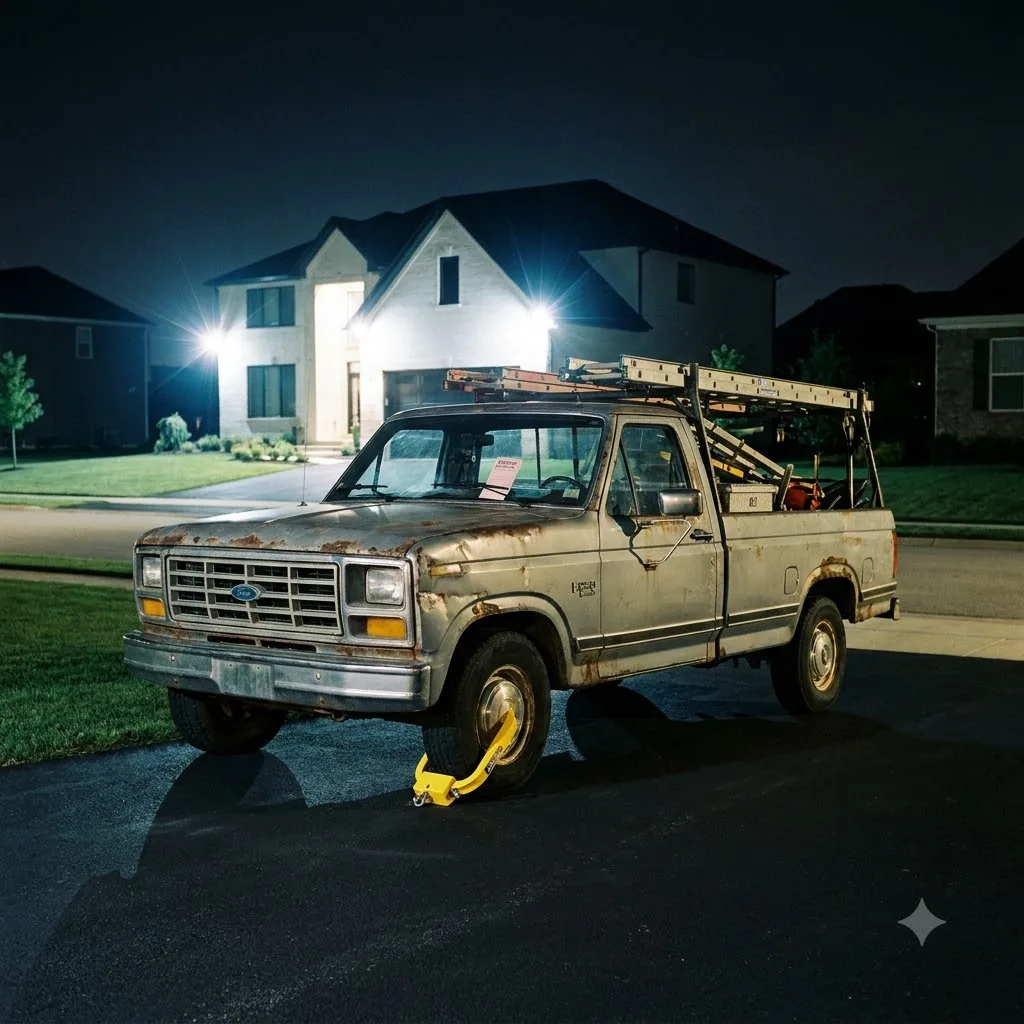
The bone-rattling roar of the almond sweepers still vibrated in Mateo’s jaw, a dusty phantom noise that abruptly died against the eerie, manicured silence of his midnight driveway. Locked around the front driver-side tire of his beat-up Ford F-150 was a mass of heavy, industrial yellow steel. It was a parking boot, its interlocking jaws clamped tight against the worn rubber and rusted rim, anchoring his only means of income to the pristine concrete.
Mateo stood frozen at the edge of his property. The powdery dirt of the orchards still coated his work boots and stiffened the denim of his jeans, carrying the bitter scent of crushed almond hulls. In this neighborhood of perfectly edged lawns and identical stucco facades, his dust-covered presence always felt like a trespass. Now, the yellow metal trap declared it. He knelt on the driveway, running a calloused thumb over the cold steel of the locking mechanism. There was no keyhole he could force, no chain he could cut with the bolt snips sitting in his toolbox. It was a professional-grade immobilizer.
A sharp slap of white paper against glass drew his gaze upward. Tucked firmly beneath the wiper blade on the driver’s side was a stiff envelope. Mateo pushed himself up, his knees popping in the quiet night air, and pulled the paper free. He carried it to the faint amber glow of the streetlamp bleeding through the oak branches.
The header was printed in bold, uncompromising letters. It was an official citation from the subdivision’s Homeowners Association. Below the date and his address, a single line of violation text was circled in stark red ink.
Violation: Unsightly commercial equipment parked outside of an enclosed garage.
Below that was the penalty amount. Five hundred dollars.
Mateo stared at the typed numbers. The terrifying math began to cascade through his exhausted mind. Five hundred dollars was two weeks of grueling, throat-burning labor in the dust of the Central Valley harvest. It was the exact amount he had set aside for the rent, neatly banded in an envelope on his kitchen counter. It was groceries. It was the diesel he needed to get back to the orchards tomorrow morning. Without the truck, he could not work. Without work, the delicate, invisible life he had built in this neighborhood would shatter.
He turned the paper over, desperate for a phone number or an address to an impound office, but found only the stamped signature of the new HOA President. A man named Vance.
The silence of the cul-de-sac felt heavier now. The identical houses surrounding him were completely dark, their occupants asleep, insulated from the panic tightening in Mateo’s chest. He looked back at the rusted quarter panels of his Ford, heavily dented from years of hauling ladders and irrigation pipes. It was ugly, but it was his life. Pushing the truck into the single-car garage was impossible since the space was filled to the ceiling with his landlord’s stored furniture.
Mateo folded the citation, his hands trembling slightly, and shoved it into his jacket pocket. He stepped back toward the yellow boot, crouching low to inspect the hinge on the underside. He needed leverage. He needed a pry bar.
A sharp, metallic click echoed from the shadows near his front porch.
Before Mateo could turn, an array of motion-sensor floodlights snapped on with a blinding, white-hot intensity. The sudden weaponized illumination stripped away the shadows, pinning him against the side of his immobilized truck. He threw a hand up to shield his eyes, squinting through the harsh glare.
A heavy set of boots stepped onto the concrete. The footsteps were slow, deliberate, crushing a stray almond leaf into powder.
Mateo lowered his hand just enough to see the man standing between him and his front door. It was Vance, the new HOA president. But he was not wearing a bathrobe or a pair of suburban pajamas. He was fully dressed in a crisp, dark green tactical uniform.
The fabric was heavy and perfectly pressed, bearing the unmistakable structural bulk of a ballistic vest worn beneath the outer shirt. A radio microphone clipped to the shoulder strap emitted a burst of low, distorted static. On the right sleeve, a large, shield-shaped patch was embroidered in gold and black thread, displaying the insignia of federal immigration enforcement. A heavy duty belt wrapped around Vance’s waist, loaded with handcuffs, a collapsible baton, and the matte black grip of a holstered sidearm.
Vance stopped at the edge of the driveway, standing entirely still under the blinding floodlights, his thumbs resting casually behind his duty belt. He looked down at the yellow boot, then slowly shifted his gaze up to meet Mateo’s eyes. The metal handcuffs on his belt clinked softly as he shifted his weight.
Mateo stopped breathing. The citation in his pocket suddenly felt like a piece of ash. This was no longer about a neighborhood ordinance or an unsightly vehicle. The man blocking his front door controlled the rules of the subdivision and possessed the authority to erase Mateo’s entire existence by morning.
Vance smiled, a tight, cold expression that did not reach his eyes, and rested his right hand directly over the thick red citation book tucked into his tactical vest as he took a step closer.
The bone-rattling roar of the almond sweepers still vibrated in Mateo’s jaw, a dusty phantom noise that abruptly died against the eerie, manicured silence of his midnight driveway. Locked around the front driver-side tire of his beat-up Ford F-150 was a mass of heavy, industrial yellow steel. It was a parking boot, its interlocking jaws clamped tight against the worn rubber and rusted rim, anchoring his only means of income to the pristine concrete.
Mateo stood frozen at the edge of his property. The powdery dirt of the orchards still coated his work boots and stiffened the denim of his jeans, carrying the bitter scent of crushed almond hulls. In this neighborhood of perfectly edged lawns and identical stucco facades, his dust-covered presence always felt like a trespass. Now, the yellow metal trap declared it. He knelt on the driveway, running a calloused thumb over the cold steel of the locking mechanism. There was no keyhole he could force, no chain he could cut with the bolt snips sitting in his toolbox. It was a professional-grade immobilizer.
A sharp slap of white paper against glass drew his gaze upward. Tucked firmly beneath the wiper blade on the driver’s side was a stiff envelope. Mateo pushed himself up, his knees popping in the quiet night air, and pulled the paper free. He carried it to the faint amber glow of the streetlamp bleeding through the oak branches.
The header was printed in bold, uncompromising letters. It was an official citation from the subdivision’s Homeowners Association. Below the date and his address, a single line of violation text was circled in stark red ink.
Violation: Unsightly commercial equipment parked outside of an enclosed garage.
Below that was the penalty amount. Five hundred dollars.
Mateo stared at the typed numbers. The terrifying math began to cascade through his exhausted mind. Five hundred dollars was two weeks of grueling, throat-burning labor in the dust of the Central Valley harvest. It was the exact amount he had set aside for the rent, neatly banded in an envelope on his kitchen counter. It was groceries. It was the diesel he needed to get back to the orchards tomorrow morning. Without the truck, he could not work. Without work, the delicate, invisible life he had built in this neighborhood would shatter.
He turned the paper over, desperate for a phone number or an address to an impound office, but found only the stamped signature of the new HOA President. A man named Vance.
The silence of the cul-de-sac felt heavier now. The identical houses surrounding him were completely dark, their occupants asleep, insulated from the panic tightening in Mateo’s chest. He looked back at the rusted quarter panels of his Ford, heavily dented from years of hauling ladders and irrigation pipes. It was ugly, but it was his life. Pushing the truck into the single-car garage was impossible since the space was filled to the ceiling with his landlord’s stored furniture.
Mateo folded the citation, his hands trembling slightly, and shoved it into his jacket pocket. He stepped back toward the yellow boot, crouching low to inspect the hinge on the underside. He needed leverage. He needed a pry bar.
A sharp, metallic click echoed from the shadows near his front porch.
Before Mateo could turn, an array of motion-sensor floodlights snapped on with a blinding, white-hot intensity. The sudden weaponized illumination stripped away the shadows, pinning him against the side of his immobilized truck. He threw a hand up to shield his eyes, squinting through the harsh glare.
A heavy set of boots stepped onto the concrete. The footsteps were slow, deliberate, crushing a stray almond leaf into powder.
Mateo lowered his hand just enough to see the man standing between him and his front door. It was Vance, the new HOA president. But he was not wearing a bathrobe or a pair of suburban pajamas. He was fully dressed in a crisp, dark green tactical uniform.
The fabric was heavy and perfectly pressed, bearing the unmistakable structural bulk of a ballistic vest worn beneath the outer shirt. A radio microphone clipped to the shoulder strap emitted a burst of low, distorted static. On the right sleeve, a large, shield-shaped patch was embroidered in gold and black thread, displaying the insignia of federal immigration enforcement. A heavy duty belt wrapped around Vance’s waist, loaded with handcuffs, a collapsible baton, and the matte black grip of a holstered sidearm.
Vance stopped at the edge of the driveway, standing entirely still under the blinding floodlights, his thumbs resting casually behind his duty belt. He looked down at the yellow boot, then slowly shifted his gaze up to meet Mateo’s eyes. The metal handcuffs on his belt clinked softly as he shifted his weight.
Mateo stopped breathing. The citation in his pocket suddenly felt like a piece of ash. This was no longer about a neighborhood ordinance or an unsightly vehicle. The man blocking his front door controlled the rules of the subdivision and possessed the authority to erase Mateo’s entire existence by morning.
Vance smiled, a tight, cold expression that did not reach his eyes, and rested his right hand directly over the thick red citation book tucked into his tactical vest as he took a step closer.