Story code: ST-000184
Part 2: The Severance Package
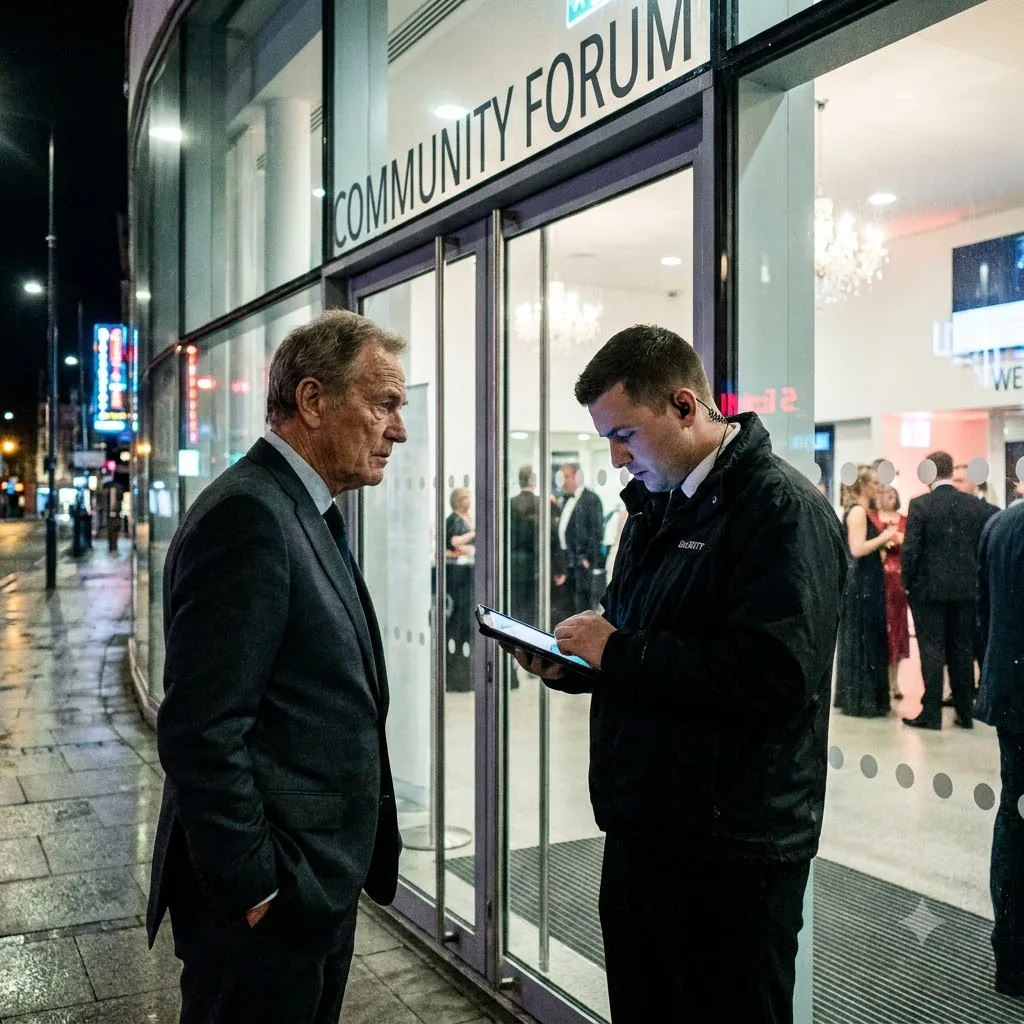
The heavy brass-handled door pressed viciously against the toe of Trey’s polished Oxford shoe. The stiff leather creaked under the immense pressure. The larger of the two yellow-jacketed contractors leaned his full body weight against the glass, his thick neck reddening with the effort to force the door shut.
“Move the foot, pal,” the contractor grunted, his hand dropping closer to the heavy tactical baton secured at his hip. “Or I’m going to break it.”
Trey did not look down at the guard’s hand. He kept his eyes locked dead on the man’s face. He knew exactly what this type of rented muscle looked for-fear, hesitation, a reason to escalate the violence and earn their exorbitant hourly rate. Trey offered none of it. He had stared down men with loaded weapons in dim alleyways; a corporate security guard in a windbreaker did not intimidate him.
“You push that door one more inch,” Trey said, his voice dropping into a low, terrifyingly calm rumble, “and you are going to find out how little that yellow jacket actually protects you.”
The guard hesitated, his eyes flickering as he registered the utter lack of bluff in Trey’s tone. That brief, uncertain pause was just enough.
From inside the plush lobby, a smooth, commanding voice echoed over the ambient hum of the party. “Stand down, fellas. It’s alright. Let him breathe.”
Marcus stepped forward, sliding gracefully between the two hulking guards. He patted the large contractor on the shoulder, a perfectly executed gesture of tech-CEO leadership. Marcus turned to face Trey through the narrow, six-inch gap in the doorway. Behind Marcus, a local city councilman and two grey-haired venture capitalists in expensive cashmere sweaters paused to watch the commotion.
Marcus immediately adjusted his posture, adopting a look of profound, patronizing pity. He spoke loudly, ensuring his voice carried to the investors standing a few yards away.
“Trey, brother, I know you’re excited. But I told you, the community center doesn’t open for public intake until Monday morning. Tonight is a closed donor event.”
Trey felt the words hit him like a physical blow to the sternum. *Public intake.* Marcus was standing right in front of five million dollars of venture capital and deliberately dismissing his co-founder as a neighborhood charity case. The sheer audacity of the lie temporarily paralyzed him.
“Cut the performance, Marcus,” Trey said, keeping his voice strictly at the threshold. “Tell these guards to back off. We are going into the back office, and we are looking at the capitalization table.”
Marcus smiled warmly for his audience behind the glass, but as he leaned his face into the crack of the door, his eyes were cold, flat, and reptilian.
“There is no cap table with your name on it, Trey. You honestly thought I was going to hand thirty percent of a legitimate tech enterprise to a former gang enforcer?”
“I built this with you,” Trey hissed, the unfamiliar wool of his tailored suit suddenly feeling suffocating. “You had a buggy app and a whiteboard. I went to the rival shot-callers. I got them to clear the territory so your little tech vans could park without getting stripped for parts. I recruited the block captains. SafeBlock works because I made the streets agree to it.”
“SafeBlock works because my algorithm predicts the crime patterns,” Marcus whispered back, his perfect white smile never wavering. “You were a useful independent contractor for the beta phase. I paid you in cash. That was our hustle. But we’re Series A now. The VCs did background checks on all executive partners. You think they’re going to write a five-million-dollar check to a guy with a felony rap sheet? You’re a liability.”
“We had a handshake agreement,” Trey said, the betrayal burning a hole straight through his chest.
“Grow up,” Marcus replied smoothly. He reached into the inner pocket of his navy blazer, pulled out a thick white envelope, and slid it through the crack in the door. It hit Trey’s chest and fell to the concrete stairs. “There’s ten thousand in cash in there. A generous bonus for your community outreach. Buy yourself something nice. You already got the suit.”
Trey didn’t look down at the envelope. He stared at Marcus, seeing the arrogant tech-bro clearly for the first time. Marcus honestly believed he had outsmarted a veteran street boss. He thought a few corporate guards and a locked glass door could sever Trey from the very neighborhood he had bled to stabilize.
“Kevin,” Marcus called out, raising his voice back to its performative volume. Trey’s nephew stepped forward, his eyes glued to the floor, terrified to look at his uncle. “Kevin, please inform this gentleman that if he doesn’t take his donation and leave the premises quietly, we will be forced to contact the precinct.”
Trey looked at Kevin. The boy was visibly trembling, clutching the VIP clipboard to his chest like a shield. Marcus had intentionally weaponized Trey’s own family, knowing Trey would rather walk away than see his nephew involved in a police incident that could jeopardize his college scholarships. It was a masterclass in manipulation.
The pressure was absolute. If Trey fought his way into the lobby, the police would arrest him, Marcus would play the victim, and the investors would sign the checks tomorrow, convinced the SafeBlock app was necessary to stop aggressive “thugs” like Trey. The trap was perfectly sprung. He had no leverage here, not on this side of the glass.
Trey slowly pulled his polished shoe backward, sliding it out of the doorjamb.
The heavy glass door clicked shut instantly. The deadbolt slid into place with a loud, final snap. Marcus gave him one last patronizing wave, turned on his heel, and guided the councilman back toward the champagne and the plush white carpet, laughing at a joke Trey couldn’t hear.
Trey stood entirely alone on the cold concrete stairs. The evening wind bit through his expensive jacket. He looked down at the white envelope resting on the pavement. Ten thousand dollars to walk away from his own empire.
He didn’t pick it up.
Instead, Trey reached into his trousers and pulled out his cell phone. Marcus truly believed his software code controlled the streets. Marcus thought the corporate money made him untouchable. But the veteran boss knew a fundamental truth about this neighborhood: the streets only stayed quiet because Trey asked them to.
Trey unlocked his screen and scrolled to a number he hadn’t dialed in three years. If Marcus wanted to show the venture capitalists what this neighborhood looked like without Trey’s protection, Trey was going to give them a live demonstration.