Story code: ST-000191
Part 1: The Cost of a Fortress
The heavy oak door of his coastal estate clicked shut, sealing Arthur inside a foyer so utterly dark and silent that the commemorative crystal gavel in his hand suddenly felt like a meaningless paperweight. He had just left a roaring ballroom at the local country club, toasted by dozens of wealthy neighbors for single-handedly bankrolling the two-million-dollar legal victory that permanently secured their exclusive enclave, but not a single lamp had been left on to welcome him back. The stark contrast between the back-slapping, champagne-soaked triumph of the party and the suffocating stillness of his own home made him grip the polished crystal handle tighter.
Arthur reached for the smart-home panel on the wall to flood the grand hallway with warm light. His finger tapped the glass, but the system remained dormant in its sleep mode. He navigated the shadows using only the faint moonlight spilling through the floor-to-ceiling windows, the sharp clicks of his Italian leather dress shoes echoing off the imported marble. He had spent the last three years and a massive portion of his personal fortune fighting the city to privatize the access roads, erecting automated security gates and impenetrable stone perimeters to keep the chaos of the outside world completely away from his property. Tonight marked the official activation of those barriers. He had won the war.
Yet, the victory tasted incredibly hollow in the absolute vacuum of the house. He walked past the formal dining room, expecting to see the soft, familiar amber glow of the hallway sconces. His housekeeper, Rosa, always left a small light on for him. She also consistently left a chilled glass of sparkling water and a folded linen napkin on the entry credenza whenever he had a late evening out. Tonight, the dark mahogany surface was completely bare.
He loosened his silk tie, the sudden quiet making his ears ring after hours of clinking glasses and loud, boastful speeches. He moved toward the sprawling chef’s kitchen, running his free hand along the pristine, temperature-controlled walls of the wine corridor. The air felt unusually cold. Usually, Rosa had the climate control set to a comfortable, welcoming warmth before she retired to her quarters above the garage. He assumed she had simply forgotten or gone to sleep early.
A faint, tearing sound broke the silence.
It came from the direction of the rear mudroom, a sterile, highly organized space designed for stowing golf clubs and tennis gear. Arthur stopped at the edge of the kitchen island. The tearing sound repeated, followed by a sharp, ragged intake of breath. He set the heavy crystal gavel down on the granite countertop with a soft thud and pushed through the swinging door into the utility corridor.
The motion-sensor lights flickered on, momentarily blinding him with bright fluorescent sterility.
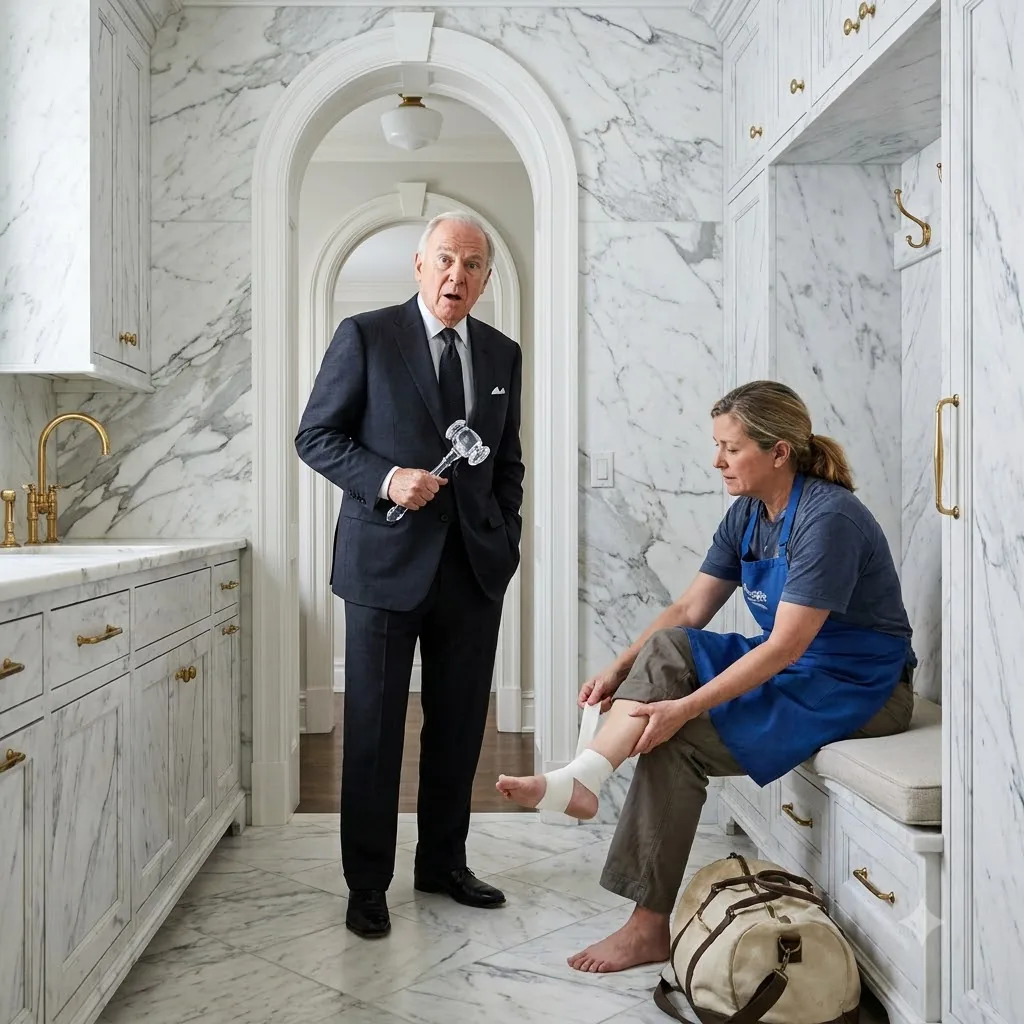
Rosa sat on the custom built-in bench at the far end of the mudroom. She was not wearing her usual crisp, gray uniform. Instead, she wore a heavy, faded winter coat and damp, dark trousers. Beside her feet rested a bulging, worn canvas duffel bag, its zipper straining against the contents packed inside.
Arthur stopped in his tracks, staring at the floor. Rosa had her right foot resting on her opposite knee. Her usually sensible orthopedic work shoes were tossed aside, coated in a thick layer of wet, sandy grit that had already begun to stain the immaculate white tile. She held a roll of white athletic tape in her trembling hands.
Her bare toes and heels were a total mess of ruptured blisters and raw, peeling skin. Some of the severe abrasions were fresh and weeping, a brutal testament to a grueling, punishing physical ordeal that made absolutely no sense in the context of her daily domestic job. She tore another strip of the white tape, wincing as she wrapped it tightly around her swollen arch. The sheer violence of the deep friction wounds on her feet stood in shocking contrast to the flawless, untouched luxury of the mudroom around them.
Arthur looked from the blood-spotted tape to the heavy duffel bag. Rosa had worked for him for seven years, managing every single detail of his daily domestic life with quiet, invisible precision. She never used the front doors, she never tracked in dirt, and she certainly never packed her belongings in the middle of the night.
She finished securing the tape and slowly lowered her foot to the cold tile. She did not stand up. She did not offer a polite smile or utter a single word of congratulation for the massive legal victory that had dominated his life and conversations for years.
Rosa simply reached down and laced up a pair of heavy walking boots, her movements stiff and agonizingly slow, before wrapping her fingers tightly around the canvas straps of her packed bag.
The heavy oak door of his coastal estate clicked shut, sealing Arthur inside a foyer so utterly dark and silent that the commemorative crystal gavel in his hand suddenly felt like a meaningless paperweight. He had just left a roaring ballroom at the local country club, toasted by dozens of wealthy neighbors for single-handedly bankrolling the two-million-dollar legal victory that permanently secured their exclusive enclave, but not a single lamp had been left on to welcome him back. The stark contrast between the back-slapping, champagne-soaked triumph of the party and the suffocating stillness of his own home made him grip the polished crystal handle tighter.
Arthur reached for the smart-home panel on the wall to flood the grand hallway with warm light. His finger tapped the glass, but the system remained dormant in its sleep mode. He navigated the shadows using only the faint moonlight spilling through the floor-to-ceiling windows, the sharp clicks of his Italian leather dress shoes echoing off the imported marble. He had spent the last three years and a massive portion of his personal fortune fighting the city to privatize the access roads, erecting automated security gates and impenetrable stone perimeters to keep the chaos of the outside world completely away from his property. Tonight marked the official activation of those barriers. He had won the war.
Yet, the victory tasted incredibly hollow in the absolute vacuum of the house. He walked past the formal dining room, expecting to see the soft, familiar amber glow of the hallway sconces. His housekeeper, Rosa, always left a small light on for him. She also consistently left a chilled glass of sparkling water and a folded linen napkin on the entry credenza whenever he had a late evening out. Tonight, the dark mahogany surface was completely bare.
He loosened his silk tie, the sudden quiet making his ears ring after hours of clinking glasses and loud, boastful speeches. He moved toward the sprawling chef’s kitchen, running his free hand along the pristine, temperature-controlled walls of the wine corridor. The air felt unusually cold. Usually, Rosa had the climate control set to a comfortable, welcoming warmth before she retired to her quarters above the garage. He assumed she had simply forgotten or gone to sleep early.
A faint, tearing sound broke the silence.
It came from the direction of the rear mudroom, a sterile, highly organized space designed for stowing golf clubs and tennis gear. Arthur stopped at the edge of the kitchen island. The tearing sound repeated, followed by a sharp, ragged intake of breath. He set the heavy crystal gavel down on the granite countertop with a soft thud and pushed through the swinging door into the utility corridor.
The motion-sensor lights flickered on, momentarily blinding him with bright fluorescent sterility.
Rosa sat on the custom built-in bench at the far end of the mudroom. She was not wearing her usual crisp, gray uniform. Instead, she wore a heavy, faded winter coat and damp, dark trousers. Beside her feet rested a bulging, worn canvas duffel bag, its zipper straining against the contents packed inside.
Arthur stopped in his tracks, staring at the floor. Rosa had her right foot resting on her opposite knee. Her usually sensible orthopedic work shoes were tossed aside, coated in a thick layer of wet, sandy grit that had already begun to stain the immaculate white tile. She held a roll of white athletic tape in her trembling hands.
Her bare toes and heels were a total mess of ruptured blisters and raw, peeling skin. Some of the severe abrasions were fresh and weeping, a brutal testament to a grueling, punishing physical ordeal that made absolutely no sense in the context of her daily domestic job. She tore another strip of the white tape, wincing as she wrapped it tightly around her swollen arch. The sheer violence of the deep friction wounds on her feet stood in shocking contrast to the flawless, untouched luxury of the mudroom around them.
Arthur looked from the blood-spotted tape to the heavy duffel bag. Rosa had worked for him for seven years, managing every single detail of his daily domestic life with quiet, invisible precision. She never used the front doors, she never tracked in dirt, and she certainly never packed her belongings in the middle of the night.
She finished securing the tape and slowly lowered her foot to the cold tile. She did not stand up. She did not offer a polite smile or utter a single word of congratulation for the massive legal victory that had dominated his life and conversations for years.
Rosa simply reached down and laced up a pair of heavy walking boots, her movements stiff and agonizingly slow, before wrapping her fingers tightly around the canvas straps of her packed bag.