Story code: ST-000192
Part 3: The Foundation
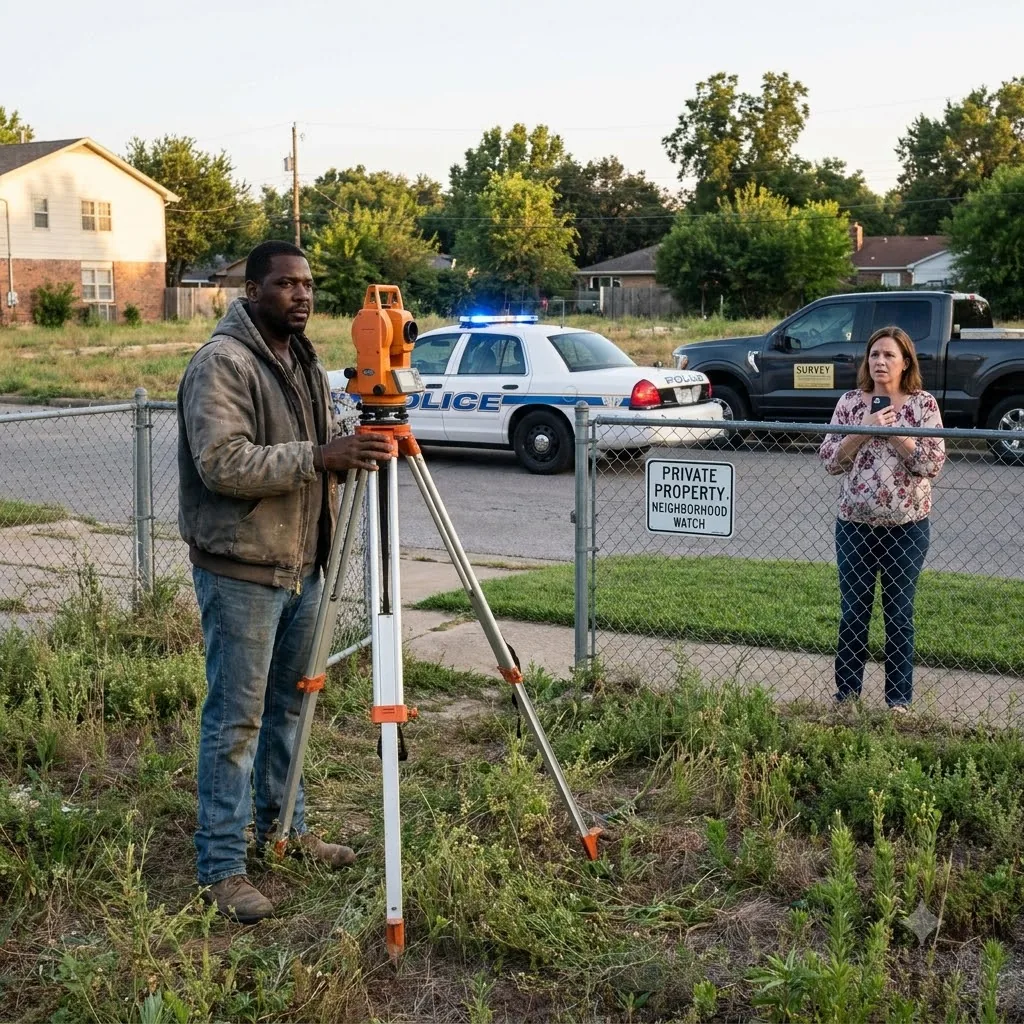
Marcus shifted his weight against the hot steel of the tailgate. The handcuffs bit sharply into his wrists, a stinging reminder of the absurdity of the situation. The officer stood just inches away, holding the thick leather binder in one hand, waiting for the emergency contact number.
On the sidewalk, Eleanor had fully rallied her audience. The elderly man with the watering can and the jogger with the golden retriever were now joined by two more neighbors, all murmuring quietly as Eleanor loudly dictated her complaint to the HOA security dispatcher on her smartphone.
“I’m waiting,” the officer said, his voice dropping an octave, carrying a distinct warning. “Give me the number for Oak & Iron Holdings. Right now.”
Marcus took a slow, deep breath, pulling the heavy, humid air into his lungs. He nodded toward the open cab of his utility truck. “Five-five-five,” he began, his voice perfectly steady. “Two-eight-four. Nine-nine-zero-one.”
The officer didn’t reach for his shoulder mic to radio dispatch. Instead, he pulled his own smartphone from his tactical vest, tapped the screen with his thumb, and hit the call button. He raised the phone to his ear, his eyes locked onto Marcus in a cold, unyielding stare.
For three agonizing seconds, the street was filled only with the idle rumble of the police cruiser and Eleanor’s shrill complaints about plummeting property values.
Then, an upbeat, polyphonic ringtone shattered the tension.
The sound emanated from the cab of Marcus’s truck. Through the open driver’s side door, the screen of Marcus’s heavy-duty smartphone illuminated brightly on the dashboard. The unknown caller ID flashed against the dusty glass of the windshield.
The officer blinked. He slowly lowered his phone from his ear. The ringing on the dashboard stopped simultaneously.
“What kind of game is this?” the officer demanded, his grip tightening on the leather binder.
“It’s not a game,” Marcus said quietly, keeping his posture submissive. “If you look at the back pocket of that binder, you’ll find the articles of incorporation for Oak & Iron Holdings. It’s a single-member LLC registered in this state. Turn to the signature page of the deed you just read, and compare it to the driver’s license in your hand.”
The officer frowned deeply. He holstered his phone and flipped past the first few pages of the land survey. He found the legal deed of sale. He scanned the bottom of the page, his eyes darting between the thick black ink of the signature and the laminated plastic of Marcus’s ID.
Marcus watched the rigid, tactical tension drain out of the officer’s shoulders. The aggressive law enforcement posture-the wide stance, the hand hovering near the utility belt-evaporated, replaced by a sudden, profound awkwardness.
“Oak & Iron Holdings,” the officer muttered, reading the printed name below the signature line. “Marcus…”
“I own the lot,” Marcus said, keeping his tone completely even. “I bought it three months ago. I am the legal property owner, the project manager, and the general contractor.”
The officer closed the binder with a heavy thud. He stepped behind Marcus without another word. The cold steel of the handcuffs clicked loudly, releasing their agonizing bite on Marcus’s wrists. Marcus pulled his arms forward, rubbing the deep, angry red indents on his skin as he turned to face the street.
Eleanor ended her call, practically shoving her phone into her beige cardigan pocket. She stared at the officer, her mouth falling open in a tight, confused shape. “What are you doing? Why did you take those off? I have the HOA security on their way!”
“Ma’am, there’s no trespassing here,” the officer said, his voice clipped and highly professional, though edged with clear irritation. He handed Marcus his wallet and ID. “He’s the legal owner of the property.”
“That is a lie!” Eleanor shrieked, taking a step toward the curb, completely abandoning the safety of her wrought-iron fence. She pointed a trembling finger at Marcus’s faded jeans and dusty work boots. “Look at him! He doesn’t live here! There’s no way he can afford an empty lot in this subdivision. Check the zoning! Even if he bought it, single-family zoning laws strictly prohibit any unauthorized commercial construction!”
“Actually,” Marcus interrupted, stepping away from the truck. He reached out and tapped the heavy front cover of the binder the officer was still holding. “Officer, could you pull out the folded pages in the front sleeve? The architectural blueprints.”
The officer hesitated for a fraction of a second, then slid a thick, tightly folded stack of large-format blue paper from the binder’s pocket. He shook them out, letting the heavy sheets unfold across the metal tailgate of Marcus’s truck.
The detailed schematic displayed a clean, modern elevation drawing.
Eleanor marched right up to the property line, craning her neck to look at the plans resting on the tailgate. The other neighbors leaned in from the sidewalk, their curiosity entirely overpowering their initial hesitation.
“What is that?” Eleanor demanded, her eyes scanning the grid lines and structural notes. “That’s not a single-family estate. That’s… what are those? Multiple entrances?”
“It’s a fourplex,” Marcus stated plainly, letting his hands drop to his sides. “Three stories. Twelve individual units. I spent the last year working closely with the city council to get a special zoning variance passed under the new urban density initiative.”
Eleanor stared at him, the color draining completely from her face. “Twelve units?” she whispered, horrified.
“Affordable, multi-family housing,” Marcus clarified. He looked directly past her, his gaze settling on the vibrant yard signs planted just a few feet away on her immaculate lawn. The ones that boldly championed community inclusion, kindness, and equality for all. “Subsidized for low-income families. The city approved the final permits last week. I was just measuring the setbacks so we can pour the foundation on Monday.”
The absolute silence that fell over the street was deafening. The jogger stopped shifting her weight. The elderly man lowered his watering can heavily to his side. Eleanor stood entirely frozen on the edge of the asphalt, her eyes darting frantically between the undeniable municipal approval stamps on the blueprints and the dusty, working-class man who had just legally anchored a low-income housing project directly next door to her multi-million-dollar sanctuary. She opened her mouth to speak, but no sound came out.