Story code: ST-000206
Part 1: The Missing Data Block
The flashing error code on Elena’s tablet illuminated the interior of her city-issued sedan with a harsh red glare. The screen displayed a perfectly integrated smart-city map, an unbroken mesh of glowing green data points covering her entire district. It was a masterpiece of urban planning, tracking everything from water pressure to traffic density in real time, save for a single blacked-out square at 402 Sycamore Lane. That one unmapped parcel of land represented a missing data block actively stalling a fifty-million-dollar federal infrastructure grant. The city required one hundred percent grid compliance to secure the funding, and this particular address was ruining months of flawless municipal work.
Elena locked her tablet, gripped the steering wheel, and stared out the windshield at the offending property. The city contractors had refused to return to this address after a brief surveying attempt last Tuesday. They had filed a vague grievance about unsafe conditions and refused to elaborate or answer follow-up calls from her department. Elena had assumed they encountered a stubborn, tin-foil-hat holdout shouting about property rights from the porch. Contractors were notoriously easy to spook when residents got combative. She grabbed her municipal clipboard, intent on enforcing the zoning code personally and clearing the final bureaucratic hurdle for the city grant.
She stepped out of the car, immediately struck by the absolute silence surrounding the lot. Sycamore Lane was a typical suburban arterial road, yet the ambient hum of distant traffic and neighborhood lawnmowers seemed to die at the edge of the property line. Elena marched up the cracked concrete driveway, her heels clicking loudly against the pavement. She prepared her standard speech, rehearsing the local ordinances regarding mandatory utility integration and the fines associated with non-compliance. Her gaze shifted from her clipboard to the structure at the end of the driveway, and her professional frustration rapidly shifted into a cold, creeping unease.
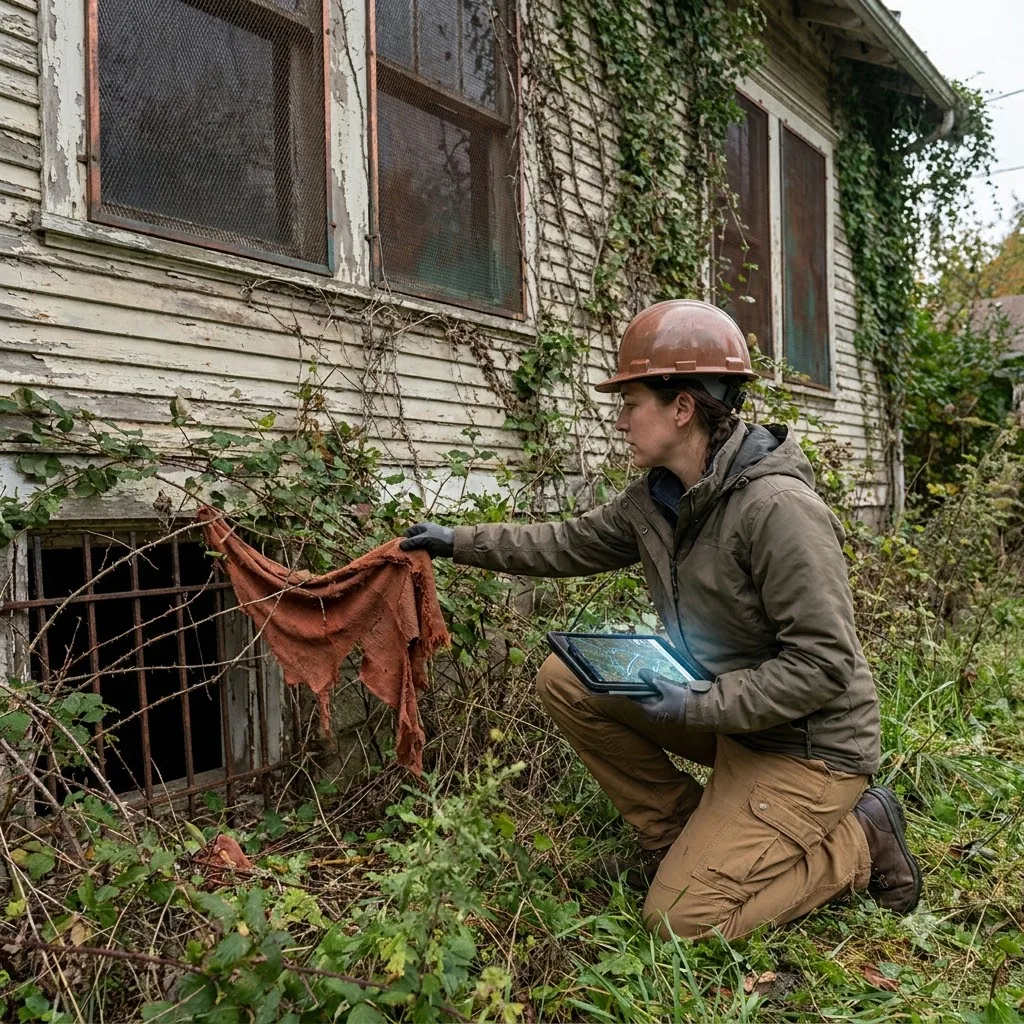
The house was aggressively fortified. Elena stopped walking and stared at the bizarre modifications altering the original suburban architecture. Thick, interwoven copper mesh covered every single window. The metallic grid was not held up by simple screens, but anchored directly into the brickwork with heavy-duty industrial bolts. The sunlight caught the copper, giving the house a hostile, metallic sheen that looked designed to block signals rather than insects. She moved off the driveway, stepping carefully through the overgrown yard to inspect the side of the structure. She scanned the exterior walls for the standard grey utility boxes, the smart meters, or even an outdated analog power drop.
There was nothing. The house possessed no water meters, no electrical connections, and no gas lines. The entire structure was physically severed from the municipal life support system, functioning entirely off the grid in the middle of a densely populated city.
Elena frowned, noting the deliberate landscaping. The front lawn was not a victim of neglect. Tall, sharp-edged ornamental grasses were planted in dense, staggered rows. The vegetation created unnatural blind spots, funneling anyone approaching the house away from the open driveway and onto a narrow, curving dirt path choked with thick brush. The arrangement felt less like a garden and more like a tactical bottleneck designed to control movement. She smoothed her blazer and stepped onto the dirt path, determined to reach the front door and issue the citation.
The ground beneath her shoes felt oddly soft, the earth freshly turned and smelling of damp root and oxidized metal. She kept her eyes on the heavy oak front door, noting the complete lack of a doorbell or visible handle. She took another step forward, mentally preparing to knock.
Her toe hooked against something thin and incredibly taut hidden beneath the loose topsoil.
A harsh, metallic snap echoed through the quiet yard. A thick braided steel cable whipped upward from the brush, wrapping viciously around Elena’s right ankle. The mechanism yanked her leg to the side with brutal, mechanical efficiency. She pitched forward, throwing her hands out to break her fall. Her knees slammed hard into the damp earth, sending her clipboard and tablet skittering out of reach into the tall grass.
Elena gasped, grabbing at her ankle to relieve the pressure. The cable was biting fiercely through her slacks, pulled taut by a heavy-duty spring and pulley system anchored to a thick steel spike driven deep into the ground. It was an entirely analog trap, a piece of physical engineering completely invisible to the digital mapping software she relied on. She dug her fingers into the cold mud, frantically searching for a release latch along the rusted steel mechanism.
Her hand brushed against something soft and heavy.
She pulled her fingers back, her breath catching in her throat. Half-buried in the soil right next to the steel spike was a massive wad of industrial medical gauze. It was completely soaked through with fresh, dark crimson fluid. The blood had pooled thickly in the dirt, coagulating against the cold metal of the trap’s baseplate. It was a massive volume of fluid, indicating a severe, recent laceration that had absolutely nothing to do with zoning laws or utility disputes. As Elena stared at the ruined, blood-soaked fabric, the heavy oak front door groaned open on un-oiled hinges, casting a long, dark shadow over the dirt path.
The flashing error code on Elena’s tablet illuminated the interior of her city-issued sedan with a harsh red glare. The screen displayed a perfectly integrated smart-city map, an unbroken mesh of glowing green data points covering her entire district. It was a masterpiece of urban planning, tracking everything from water pressure to traffic density in real time, save for a single blacked-out square at 402 Sycamore Lane. That one unmapped parcel of land represented a missing data block actively stalling a fifty-million-dollar federal infrastructure grant. The city required one hundred percent grid compliance to secure the funding, and this particular address was ruining months of flawless municipal work.
Elena locked her tablet, gripped the steering wheel, and stared out the windshield at the offending property. The city contractors had refused to return to this address after a brief surveying attempt last Tuesday. They had filed a vague grievance about unsafe conditions and refused to elaborate or answer follow-up calls from her department. Elena had assumed they encountered a stubborn, tin-foil-hat holdout shouting about property rights from the porch. Contractors were notoriously easy to spook when residents got combative. She grabbed her municipal clipboard, intent on enforcing the zoning code personally and clearing the final bureaucratic hurdle for the city grant.
She stepped out of the car, immediately struck by the absolute silence surrounding the lot. Sycamore Lane was a typical suburban arterial road, yet the ambient hum of distant traffic and neighborhood lawnmowers seemed to die at the edge of the property line. Elena marched up the cracked concrete driveway, her heels clicking loudly against the pavement. She prepared her standard speech, rehearsing the local ordinances regarding mandatory utility integration and the fines associated with non-compliance. Her gaze shifted from her clipboard to the structure at the end of the driveway, and her professional frustration rapidly shifted into a cold, creeping unease.
The house was aggressively fortified. Elena stopped walking and stared at the bizarre modifications altering the original suburban architecture. Thick, interwoven copper mesh covered every single window. The metallic grid was not held up by simple screens, but anchored directly into the brickwork with heavy-duty industrial bolts. The sunlight caught the copper, giving the house a hostile, metallic sheen that looked designed to block signals rather than insects. She moved off the driveway, stepping carefully through the overgrown yard to inspect the side of the structure. She scanned the exterior walls for the standard grey utility boxes, the smart meters, or even an outdated analog power drop.
There was nothing. The house possessed no water meters, no electrical connections, and no gas lines. The entire structure was physically severed from the municipal life support system, functioning entirely off the grid in the middle of a densely populated city.
Elena frowned, noting the deliberate landscaping. The front lawn was not a victim of neglect. Tall, sharp-edged ornamental grasses were planted in dense, staggered rows. The vegetation created unnatural blind spots, funneling anyone approaching the house away from the open driveway and onto a narrow, curving dirt path choked with thick brush. The arrangement felt less like a garden and more like a tactical bottleneck designed to control movement. She smoothed her blazer and stepped onto the dirt path, determined to reach the front door and issue the citation.
The ground beneath her shoes felt oddly soft, the earth freshly turned and smelling of damp root and oxidized metal. She kept her eyes on the heavy oak front door, noting the complete lack of a doorbell or visible handle. She took another step forward, mentally preparing to knock.
Her toe hooked against something thin and incredibly taut hidden beneath the loose topsoil.
A harsh, metallic snap echoed through the quiet yard. A thick braided steel cable whipped upward from the brush, wrapping viciously around Elena’s right ankle. The mechanism yanked her leg to the side with brutal, mechanical efficiency. She pitched forward, throwing her hands out to break her fall. Her knees slammed hard into the damp earth, sending her clipboard and tablet skittering out of reach into the tall grass.
Elena gasped, grabbing at her ankle to relieve the pressure. The cable was biting fiercely through her slacks, pulled taut by a heavy-duty spring and pulley system anchored to a thick steel spike driven deep into the ground. It was an entirely analog trap, a piece of physical engineering completely invisible to the digital mapping software she relied on. She dug her fingers into the cold mud, frantically searching for a release latch along the rusted steel mechanism.
Her hand brushed against something soft and heavy.
She pulled her fingers back, her breath catching in her throat. Half-buried in the soil right next to the steel spike was a massive wad of industrial medical gauze. It was completely soaked through with fresh, dark crimson fluid. The blood had pooled thickly in the dirt, coagulating against the cold metal of the trap’s baseplate. It was a massive volume of fluid, indicating a severe, recent laceration that had absolutely nothing to do with zoning laws or utility disputes. As Elena stared at the ruined, blood-soaked fabric, the heavy oak front door groaned open on un-oiled hinges, casting a long, dark shadow over the dirt path.