Story code: ST-000217
Part 1: The Barricade at Dawn
Arthur slammed the brakes of his pickup, his headlights cutting through the freezing mist to illuminate a jagged, ten-foot-high barricade of interlocking steel folding chairs blocking the entrance to the Centennial Park pavilion. He threw the gearshift into park, the engine’s low idle the only sound disturbing the sudden, dead silence of the damp morning. The bed of his truck was weighed down with rolled-up vinyl banners, zip ties, and the heavy portable PA system he had been trusted to set up. He stared through the windshield at the chaotic wall of metal blocking the only access point to the stone structure.
He stepped out into the biting cold, his heavy boots crunching against the frost-heaved gravel of the parking lot. The damp air stung his face and hands. He marched toward the pavilion, his jaw clenched so tight his molars ached. He had arrived at five in the morning specifically to ensure absolute perfection. His standing with his brothers had been eroding for months. A few missed mandatory meetings, a brief hesitation during the last membership vote, and suddenly he was hovering on the outside of the only circle of friends he had left. Being assigned the advance setup was his final test. If the pavilion was not completely prepped, draped in their banners, and pristine when the convoy of lifted trucks rolled in at dawn, he was permanently exiled.
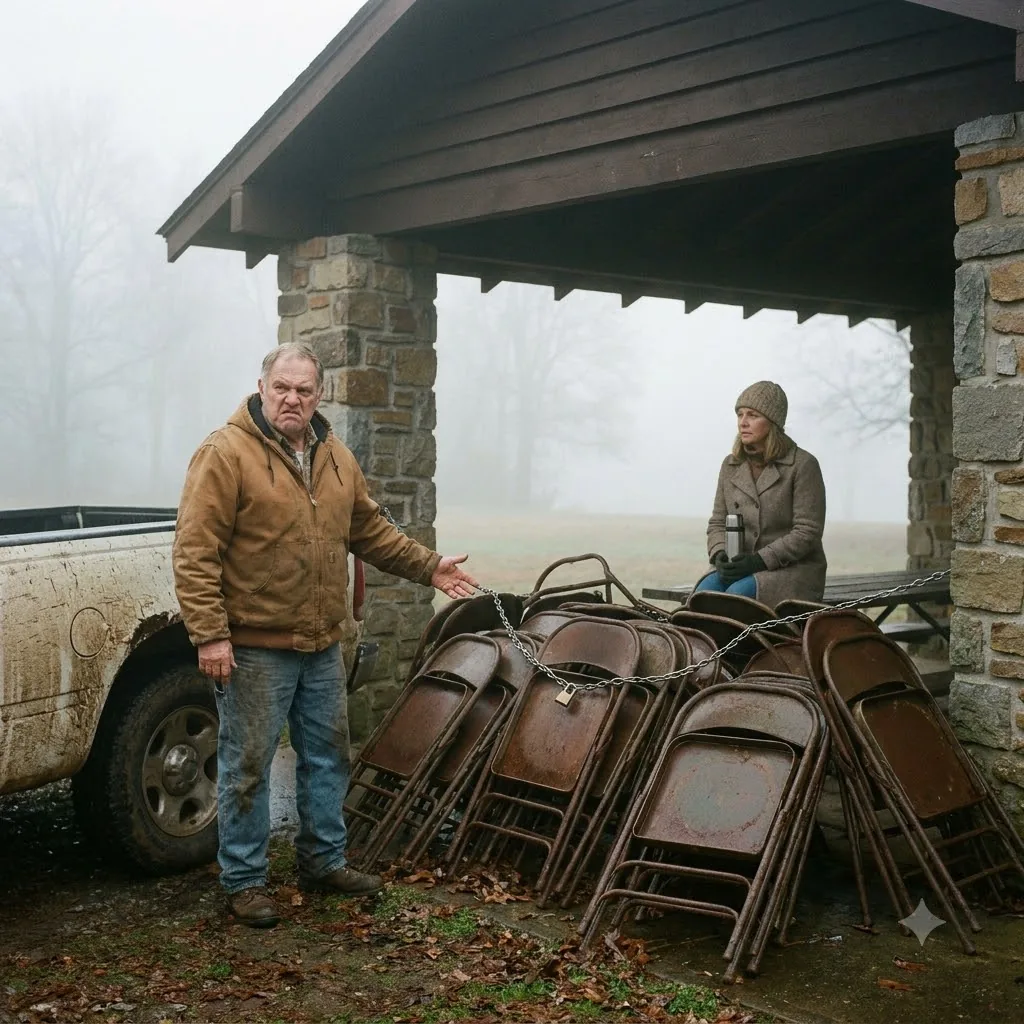
He stopped three feet from the barricade, exhaling a cloud of white vapor as he studied the tangled mass of metal. Hundreds of gray folding chairs were stacked, woven, and braced against the pavilion’s heavy timber support columns. Thick, galvanized steel chains snaked through the chair legs in complex loops, bound tight with heavy-duty brass padlocks. It was an engineering marvel of pure obstruction.
Then, a shadow shifted in the gloom.
Behind the twisted wall of metal, sitting perfectly still on a wooden picnic table, was a lone woman. She wore a heavy olive-drab parka, the hood pulled back to reveal dark hair plastered to her forehead by the mist. Her hands were wrapped around a scratched silver thermos. A faint plume of steam drifted up from the rim. Next to her steel-toed boots on the concrete floor sat a heavy, black canvas duffel bag. It looked packed to bursting, the thick canvas straps straining against the main zipper.
Arthur pressed his leather-gloved hands against the freezing metal of the nearest chair back.
“This is a permitted event,” Arthur stated, his voice flat, projecting loudly through the narrow gaps in the barricade. “I have the city paperwork for this specific structure. You need to pack up your things and leave immediately.”
The woman did not blink. She took a slow, deliberate sip from her thermos, her eyes fixed on a point just above Arthur’s left shoulder.
Arthur felt a spike of pure, territorial rage burning in his chest. He pulled his smartphone from his coat pocket, swiping roughly at the screen to bring up the official reservation document. He held the phone up against the steel chair backs, the bright white screen casting an eerie glow in the swirling mist.
“My reservation began exactly thirty-five minutes ago,” Arthur said, tapping the glass screen with a rigid finger. “My people will be here soon. You do not want to be sitting there when they arrive.”
He meant it as a strict warning, a way to assert dominance over the space, but the moment the words left his mouth, a cold knot formed in his gut. The men in his group were completely intolerant of disrespect. If they found a stranger actively disrupting their most crucial rally of the entire year, they would not wait for park rangers or city police to handle the eviction. They would dismantle the barricade by brute force, and they would drag whoever was behind it out onto the wet, frozen grass. Arthur had seen exactly how fast things escalated when his brothers felt their territory was being challenged.
The woman lowered her thermos, setting it gently on the wooden bench beside her thigh. She leaned forward, reaching down toward the heavy black canvas duffel bag resting on the concrete.
Arthur took an involuntary half-step back, his boots grinding into the gravel. His eyes locked on the bag. The way the canvas sagged suggested dense, serious weight. The heavy-duty metal zipper gleamed faintly under the amber glow of the pavilion’s security lights.
“Keep your hands where I can see them,” Arthur commanded, his pulse beginning to hammer a frantic rhythm against his ribs. “Leave the bag on the floor. Unchain these chairs right now.”
She ignored his orders entirely. Her pale fingers gripped the oversized brass pull of the duffel bag’s zipper.
Before Arthur could raise his voice again, his phone vibrated violently in his palm, letting out a sharp, continuous buzz. He glanced down. The screen displayed an urgent text message from Vance, the group’s volatile sergeant-at-arms.
*Change of plans. Convoy rolling in early. We are five minutes out. Better be ready.*
Arthur stared at the bright text, the words burning into his vision. Five minutes. He looked back up at the silent, unmoving woman, then at the padlocked chains securing the massive wall of chairs, and finally at the heavy canvas bag at her feet. The mist around them seemed to thicken, pressing in on the pavilion like a physical weight. The low, unmistakable rumble of heavily modified diesel engines began to echo from the distant highway exit ramp, cutting through the stillness of the park.
“Listen to me,” Arthur said, dropping his official, authoritative tone, his voice falling to a frantic, harsh whisper. “They are coming right now. They will tear this entire structure apart. You have to leave right this second.”
The woman finally shifted her gaze, looking directly into his eyes with absolute, chilling calm as she slid the zipper of the black canvas duffel bag completely open.
Arthur slammed the brakes of his pickup, his headlights cutting through the freezing mist to illuminate a jagged, ten-foot-high barricade of interlocking steel folding chairs blocking the entrance to the Centennial Park pavilion. He threw the gearshift into park, the engine’s low idle the only sound disturbing the sudden, dead silence of the damp morning. The bed of his truck was weighed down with rolled-up vinyl banners, zip ties, and the heavy portable PA system he had been trusted to set up. He stared through the windshield at the chaotic wall of metal blocking the only access point to the stone structure.
He stepped out into the biting cold, his heavy boots crunching against the frost-heaved gravel of the parking lot. The damp air stung his face and hands. He marched toward the pavilion, his jaw clenched so tight his molars ached. He had arrived at five in the morning specifically to ensure absolute perfection. His standing with his brothers had been eroding for months. A few missed mandatory meetings, a brief hesitation during the last membership vote, and suddenly he was hovering on the outside of the only circle of friends he had left. Being assigned the advance setup was his final test. If the pavilion was not completely prepped, draped in their banners, and pristine when the convoy of lifted trucks rolled in at dawn, he was permanently exiled.
He stopped three feet from the barricade, exhaling a cloud of white vapor as he studied the tangled mass of metal. Hundreds of gray folding chairs were stacked, woven, and braced against the pavilion’s heavy timber support columns. Thick, galvanized steel chains snaked through the chair legs in complex loops, bound tight with heavy-duty brass padlocks. It was an engineering marvel of pure obstruction.
Then, a shadow shifted in the gloom.
Behind the twisted wall of metal, sitting perfectly still on a wooden picnic table, was a lone woman. She wore a heavy olive-drab parka, the hood pulled back to reveal dark hair plastered to her forehead by the mist. Her hands were wrapped around a scratched silver thermos. A faint plume of steam drifted up from the rim. Next to her steel-toed boots on the concrete floor sat a heavy, black canvas duffel bag. It looked packed to bursting, the thick canvas straps straining against the main zipper.
Arthur pressed his leather-gloved hands against the freezing metal of the nearest chair back.
“This is a permitted event,” Arthur stated, his voice flat, projecting loudly through the narrow gaps in the barricade. “I have the city paperwork for this specific structure. You need to pack up your things and leave immediately.”
The woman did not blink. She took a slow, deliberate sip from her thermos, her eyes fixed on a point just above Arthur’s left shoulder.
Arthur felt a spike of pure, territorial rage burning in his chest. He pulled his smartphone from his coat pocket, swiping roughly at the screen to bring up the official reservation document. He held the phone up against the steel chair backs, the bright white screen casting an eerie glow in the swirling mist.
“My reservation began exactly thirty-five minutes ago,” Arthur said, tapping the glass screen with a rigid finger. “My people will be here soon. You do not want to be sitting there when they arrive.”
He meant it as a strict warning, a way to assert dominance over the space, but the moment the words left his mouth, a cold knot formed in his gut. The men in his group were completely intolerant of disrespect. If they found a stranger actively disrupting their most crucial rally of the entire year, they would not wait for park rangers or city police to handle the eviction. They would dismantle the barricade by brute force, and they would drag whoever was behind it out onto the wet, frozen grass. Arthur had seen exactly how fast things escalated when his brothers felt their territory was being challenged.
The woman lowered her thermos, setting it gently on the wooden bench beside her thigh. She leaned forward, reaching down toward the heavy black canvas duffel bag resting on the concrete.
Arthur took an involuntary half-step back, his boots grinding into the gravel. His eyes locked on the bag. The way the canvas sagged suggested dense, serious weight. The heavy-duty metal zipper gleamed faintly under the amber glow of the pavilion’s security lights.
“Keep your hands where I can see them,” Arthur commanded, his pulse beginning to hammer a frantic rhythm against his ribs. “Leave the bag on the floor. Unchain these chairs right now.”
She ignored his orders entirely. Her pale fingers gripped the oversized brass pull of the duffel bag’s zipper.
Before Arthur could raise his voice again, his phone vibrated violently in his palm, letting out a sharp, continuous buzz. He glanced down. The screen displayed an urgent text message from Vance, the group’s volatile sergeant-at-arms.
*Change of plans. Convoy rolling in early. We are five minutes out. Better be ready.*
Arthur stared at the bright text, the words burning into his vision. Five minutes. He looked back up at the silent, unmoving woman, then at the padlocked chains securing the massive wall of chairs, and finally at the heavy canvas bag at her feet. The mist around them seemed to thicken, pressing in on the pavilion like a physical weight. The low, unmistakable rumble of heavily modified diesel engines began to echo from the distant highway exit ramp, cutting through the stillness of the park.
“Listen to me,” Arthur said, dropping his official, authoritative tone, his voice falling to a frantic, harsh whisper. “They are coming right now. They will tear this entire structure apart. You have to leave right this second.”
The woman finally shifted her gaze, looking directly into his eyes with absolute, chilling calm as she slid the zipper of the black canvas duffel bag completely open.