Story code: ST-000223
Part 2: The Reclassification
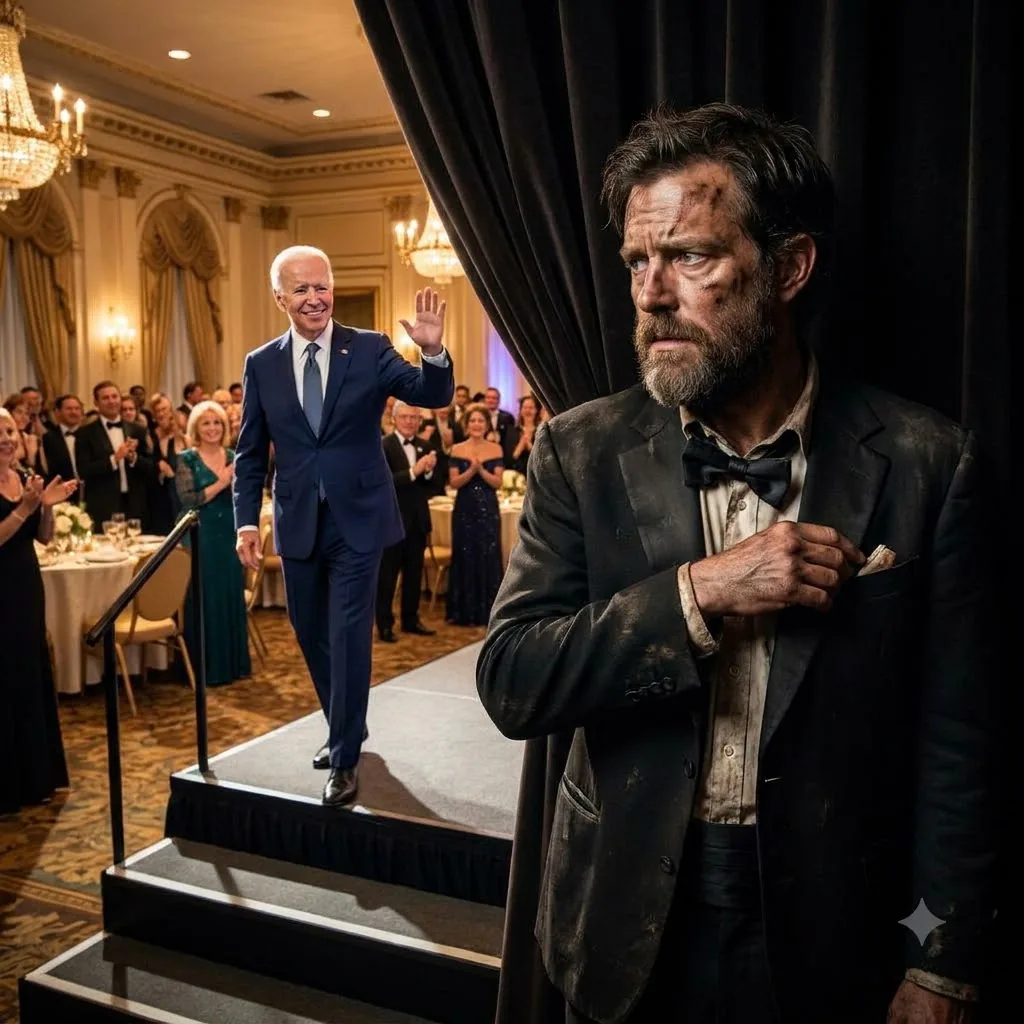
“…this,” Ray finished, his voice surprisingly steady despite the frantic, deafening hammering in his chest.
He held the paper out, keeping it just out of Thorne’s immediate reach. The top half of the page was a ruined smear of blue ink, bleeding into indistinct violet clouds from weeks submerged in the filthy, toxic runoff that had swallowed Ray’s neighborhood. But the bottom paragraph, along with the sharp, aggressive black strokes of Commissioner Marcus Thorne’s signature, remained perfectly preserved right next to the embossed silver seal of the state insurance board.
Thorne’s polished smile didn’t vanish entirely, but it froze, becoming a rigid, plastic mask. Ray watched the Commissioner’s eyes flick downward, locking onto the distinct, swirling ‘M’ of his own handwriting. For a fraction of a second, the deep, artificial tan on Thorne’s face seemed to pale. His jaw muscles twitched under his smooth cheeks.
“Excuse me, sir,” Thorne said, his baritone voice booming with practiced, theatrical warmth. He took a half-step backward, ensuring he remained securely within the protective semi-circle of his wealthy donors. “I’m afraid you have me at a disadvantage. Are you on the catering staff?”
“I’m from the lower basin,” Ray said, his grip tightening on the edge of the stiff, warped page. “From the flood zone. The one you just got an award for stabilizing.”
A low murmur rippled through the immediate crowd. The major donor with the heavy gold watch shifted his weight, his brow furrowing in profound irritation as he stared at the brown water stains marring Ray’s fingers. The woman in the sequined emerald dress raised a hand to her throat, whispering frantically to her companion. Nobody was looking at the paper; they were looking at Ray as if he had just tracked wet mud onto a priceless rug.
“Ah,” Thorne said, his expression melting into a sickening display of profound, manufactured pity. He looked out at his donors, shaking his head slowly. “A tragedy. An absolute tragedy. We lost so many good homes down there. My heart breaks for you, son. But I assure you, my office is doing everything in its power to expedite the relief funds.”
“This isn’t a relief application,” Ray countered, taking a step forward. His blistered heel screamed in protest inside the tight rental shoe, but he ignored the sharp pain. He thrust the paper higher into the chandelier’s light. “It’s an internal directive. The emergency zoning reclassification. You signed it three days before the levees broke.”
Thorne’s eyes narrowed into tiny, dangerous slits, completely betraying his compassionate tone. “I sign hundreds of documents a week, friend. Now, if you’ll excuse me-”
“You reclassified the entire lower basin as a high-risk negligent zone!” Ray shouted, his voice cracking as it echoed over the soft jazz playing in the background. He desperately scanned the faces of the executives and lobbyists, praying for a spark of realization or outrage. “He knew the structural integrity of the dam was failing! He signed this to give the underwriters a legal loophole! He voided our flood insurance before the water even hit our front doors!”
The absolute silence that followed was suffocating. Ray waited for the uproar. He waited for the wealthy donors to turn on the man they had just applauded.
Instead, the man with the gold watch scoffed loudly. “Security,” he snapped, waving a hand in the air. “Get this lunatic out of here. He’s ruining the evening.”
Ray felt a cold weight drop in his stomach. They didn’t care. They were the underwriters, the corporate partners, the developers-the very people whose profit margins had been protected by the reclassification. Thorne hadn’t betrayed this room; he had enriched them.
Heavy footsteps pounded against the polished hardwood behind Ray. Before he could turn, two massive hands clamped down onto his shoulders. The cheap polyester of his rented tuxedo jacket bunched up violently, digging into his armpits.
“Sir, you need to come with us right now,” a gruff voice commanded right next to Ray’s ear.
Ray jerked his arm forward, desperate to keep the fragile document away from the reaching fingers of the security guard. “Don’t touch it!” Ray yelled. He twisted his torso, throwing his weight against the guard’s grip. The sudden movement sent his slick, poorly fitted shoe sliding across the floor. Ray stumbled, nearly dropping to one knee, but he clutched the brittle paper tightly against his chest, terrified it would tear. If it tore, if the signature was destroyed, he had absolutely nothing left.
“Hey! Stop resisting!” the second guard barked, grabbing Ray’s right forearm and twisting it backward.
A cheap plastic button popped off Ray’s jacket, clattering loudly against the floorboards. Pain flared through his shoulder joint. He gasped, his fingers trembling, the edges of the water-logged paper crumpling against his dress shirt.
“Please, gentlemen, gently!” Thorne’s voice rang out, dripping with magnanimous concern. The Commissioner stepped forward, closing the distance between them. He raised his hands in a gesture of peace, playing the role of the benevolent leader perfectly for his watching audience. “The man is clearly suffering from trauma. He’s a victim of a terrible natural disaster. Let’s not make this worse for him.”
Thorne reached out, extending his right hand as if to comfort Ray. But as his hand descended, it bypassed Ray’s shoulder entirely and clamped down onto Ray’s right wrist like an iron vise. The Commissioner’s perfectly manicured nails dug viciously into the sensitive tendons just below Ray’s palm.
Thorne leaned in close, his face inches from Ray’s. Ray knew that to the watching crowd, the gesture probably looked like an intimate moment of shared grief. But Ray could smell the overpowering, expensive mint on Thorne’s breath, and he saw the absolute, ruthless malice burning in the politician’s eyes.
“You’re making a massive mistake, you pathetic little nobody,” Thorne whispered, his voice a barely audible hiss underneath the murmurs of the crowd. “Hand me the paper, right now. You give it to me, and I let you walk out the service doors. You hold onto it, and I’ll have these men break your arm, drag you out in zip ties, and lock you in a cell until the mold takes the rest of your miserable life.”
Ray’s breath hitched in his throat. The guard behind him applied more pressure, pulling Ray’s left arm higher up his back. The pain was blinding. His fingers were already going numb, his grip on the crinkled, water-stained document beginning to slip.