Story code: ST-000235
Part 1: The Sightlines
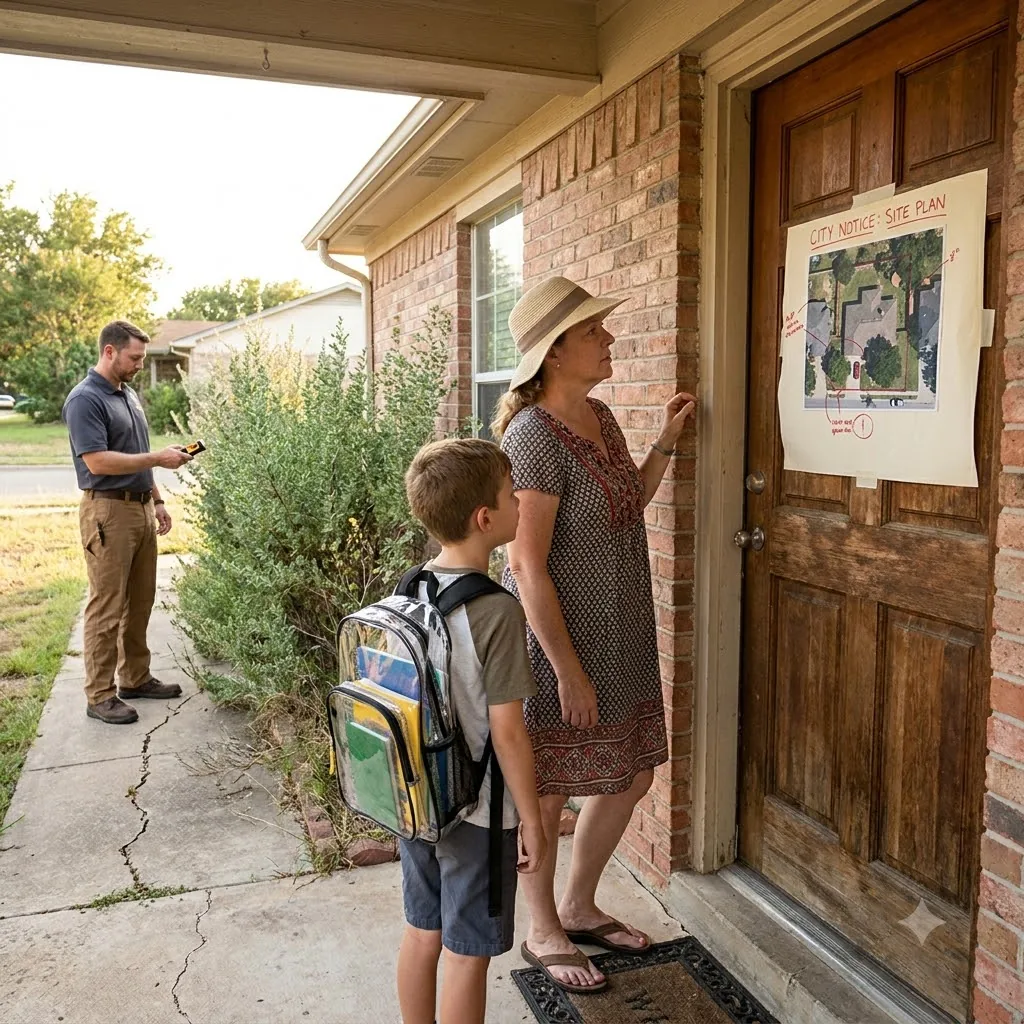
Maya pushed her front door open to check the morning mail, causing a heavy-stock piece of paper taped to the frame to pull loose. The thick page fluttered down, landing face-up on the woven welcome mat. She crouched to pick it up, her brow furrowing at the glossy finish. Printed on the stiff paper was a high-resolution satellite drone map of her entire front yard, severely defaced with thick, red marker lines drawn directly through her native sagebrush. The harsh red strokes intersected in a crude, precise crosshair resting directly over her front porch.
She stepped out into the crisp morning air, her thumb pressing hard against the edge of the photograph. Down on the edge of the sidewalk, Arthur stood completely motionless. The Oak Creek Homeowners Association president wore his usual crisp khaki shorts and a tucked-in beige polo, but he was not holding his standard wooden clipboard and fine-point pen. Instead, Arthur had both hands tightly gripped around a small black device-a digital laser measure. He held the device at eye level, a bright red dot emitting from the front lens and painting a glowing focal point onto the tallest stalks of Maya’s drought-resistant blue grama grass.
Arthur clicked a button on the side of the plastic casing. The machine let out a sharp, electronic beep. He lowered it, read the green digital display, and finally unclipped a pen from his collar to jot a figure onto a small notepad resting against his thigh.
Maya walked down the sloping concrete driveway, the heavy-stock citation slapping against her leg with every step. She looked from the paper to the man. The red ink on the drone photo matched the exact angles Arthur was currently measuring from the street.
Arthur did not look up as her footsteps echoed on the pavement. He shifted his stance, widening his feet slightly like a golfer preparing to swing, and raised the laser measure again. This time, he aimed the red beam straight through a dense cluster of silver sage near the walkway.
Maya stopped three feet away and held the defaced satellite photograph out in front of him. She told him he had no right to fly drones over her house and leave marked-up surveillance photos taped to her front door.
Arthur kept his right eye trained on the digital display of his device. He stated in a flat voice that the document was a formal visibility assessment, strictly required under Section four, Paragraph B of the updated community safety charter. He claimed the unmanicured vegetation created an unacceptable concealment hazard for the adjacent sidewalk and obstructed critical neighborhood sightlines.
Maya looked down at the knee-high sagebrush gently swaying in the breeze. She told him it was a state-certified pollinator garden, completely within the county drought-restriction guidelines and specifically approved by the landscaping committee last spring.
Arthur clicked the laser measure again. Another sharp beep echoed in the quiet, empty street. He noted the new measurement, his pen scratching heavily against the lined paper of his notepad. He said the county did not dictate the line-of-sight requirements for Oak Creek residents. He adjusted his wire-rimmed glasses, his gaze finally shifting from the native plants to Maya’s face. His eyes were entirely flat, completely devoid of the usual neighborly pretense he wore at the annual block parties.
He pointed his pen at the thickest patch of decorative grass near Maya’s brick mailbox. He declared the density of the root structure and the overall height of the stalks completely obscured the visual corridor from the street to the primary residence. He used the phrase “tactical blind spot,” his voice dropping into a low, clinical monotone that sounded entirely out of place in a suburban dispute about lawn care.
Maya looked down at the glossy paper in her hand again. The red lines were not drawn to show property boundaries or utility easements. They were drawn directly from the street, cutting through the exact spots where her grass grew thickest, terminating exactly at her front living room windows. It looked significantly less like a zoning citation and entirely like a sniper’s vantage map. She told him the ornamental grass was barely two feet tall and hid absolutely nothing from anyone walking by.
Arthur shook his head, a rigid, heavily practiced movement. He stated that the neighborhood watch council could no longer tolerate unmonitored zones where visual confirmation of the perimeter was compromised. He tapped the hard plastic of the laser measure against his notepad. He informed her that she had until Friday at noon to cut everything down to the mandated four-inch limit, or the community safety committee would be forced to take immediate corrective action on her behalf.
Maya took a step closer, gripping the paper tight enough to crumple the edges. She demanded to know what corrective action meant. She told him to take his creepy drone photos and his laser pointers and get completely off her property line before she called the authorities.
A white minivan with dark tinted windows rolled slowly around the corner, its tires crunching loudly against the loose gravel built up in the gutter. It came to a crawling stop directly behind Arthur. The side panel of the vehicle bore a large magnetic decal for the Oak Creek Neighborhood Watch. The passenger-side window hummed mechanically as it rolled down exactly two inches, revealing nothing but impenetrable shadow inside the cabin.
Arthur turned his head toward the idling van. He gave a single, curt nod to the unseen driver. He then turned back to face Maya, raising the digital laser measure one more time. He didn’t point it at the grass near the street, and he didn’t point it at the sagebrush by the walkway. He pointed the glowing red dot directly onto the center of Maya’s chest and slowly reached for the button.
Maya pushed her front door open to check the morning mail, causing a heavy-stock piece of paper taped to the frame to pull loose. The thick page fluttered down, landing face-up on the woven welcome mat. She crouched to pick it up, her brow furrowing at the glossy finish. Printed on the stiff paper was a high-resolution satellite drone map of her entire front yard, severely defaced with thick, red marker lines drawn directly through her native sagebrush. The harsh red strokes intersected in a crude, precise crosshair resting directly over her front porch.
She stepped out into the crisp morning air, her thumb pressing hard against the edge of the photograph. Down on the edge of the sidewalk, Arthur stood completely motionless. The Oak Creek Homeowners Association president wore his usual crisp khaki shorts and a tucked-in beige polo, but he was not holding his standard wooden clipboard and fine-point pen. Instead, Arthur had both hands tightly gripped around a small black device-a digital laser measure. He held the device at eye level, a bright red dot emitting from the front lens and painting a glowing focal point onto the tallest stalks of Maya’s drought-resistant blue grama grass.
Arthur clicked a button on the side of the plastic casing. The machine let out a sharp, electronic beep. He lowered it, read the green digital display, and finally unclipped a pen from his collar to jot a figure onto a small notepad resting against his thigh.
Maya walked down the sloping concrete driveway, the heavy-stock citation slapping against her leg with every step. She looked from the paper to the man. The red ink on the drone photo matched the exact angles Arthur was currently measuring from the street.
Arthur did not look up as her footsteps echoed on the pavement. He shifted his stance, widening his feet slightly like a golfer preparing to swing, and raised the laser measure again. This time, he aimed the red beam straight through a dense cluster of silver sage near the walkway.
Maya stopped three feet away and held the defaced satellite photograph out in front of him. She told him he had no right to fly drones over her house and leave marked-up surveillance photos taped to her front door.
Arthur kept his right eye trained on the digital display of his device. He stated in a flat voice that the document was a formal visibility assessment, strictly required under Section four, Paragraph B of the updated community safety charter. He claimed the unmanicured vegetation created an unacceptable concealment hazard for the adjacent sidewalk and obstructed critical neighborhood sightlines.
Maya looked down at the knee-high sagebrush gently swaying in the breeze. She told him it was a state-certified pollinator garden, completely within the county drought-restriction guidelines and specifically approved by the landscaping committee last spring.
Arthur clicked the laser measure again. Another sharp beep echoed in the quiet, empty street. He noted the new measurement, his pen scratching heavily against the lined paper of his notepad. He said the county did not dictate the line-of-sight requirements for Oak Creek residents. He adjusted his wire-rimmed glasses, his gaze finally shifting from the native plants to Maya’s face. His eyes were entirely flat, completely devoid of the usual neighborly pretense he wore at the annual block parties.
He pointed his pen at the thickest patch of decorative grass near Maya’s brick mailbox. He declared the density of the root structure and the overall height of the stalks completely obscured the visual corridor from the street to the primary residence. He used the phrase “tactical blind spot,” his voice dropping into a low, clinical monotone that sounded entirely out of place in a suburban dispute about lawn care.
Maya looked down at the glossy paper in her hand again. The red lines were not drawn to show property boundaries or utility easements. They were drawn directly from the street, cutting through the exact spots where her grass grew thickest, terminating exactly at her front living room windows. It looked significantly less like a zoning citation and entirely like a sniper’s vantage map. She told him the ornamental grass was barely two feet tall and hid absolutely nothing from anyone walking by.
Arthur shook his head, a rigid, heavily practiced movement. He stated that the neighborhood watch council could no longer tolerate unmonitored zones where visual confirmation of the perimeter was compromised. He tapped the hard plastic of the laser measure against his notepad. He informed her that she had until Friday at noon to cut everything down to the mandated four-inch limit, or the community safety committee would be forced to take immediate corrective action on her behalf.
Maya took a step closer, gripping the paper tight enough to crumple the edges. She demanded to know what corrective action meant. She told him to take his creepy drone photos and his laser pointers and get completely off her property line before she called the authorities.
A white minivan with dark tinted windows rolled slowly around the corner, its tires crunching loudly against the loose gravel built up in the gutter. It came to a crawling stop directly behind Arthur. The side panel of the vehicle bore a large magnetic decal for the Oak Creek Neighborhood Watch. The passenger-side window hummed mechanically as it rolled down exactly two inches, revealing nothing but impenetrable shadow inside the cabin.
Arthur turned his head toward the idling van. He gave a single, curt nod to the unseen driver. He then turned back to face Maya, raising the digital laser measure one more time. He didn’t point it at the grass near the street, and he didn’t point it at the sagebrush by the walkway. He pointed the glowing red dot directly onto the center of Maya’s chest and slowly reached for the button.