Story code: ST-000256
Part 1: The Perimeter Trap
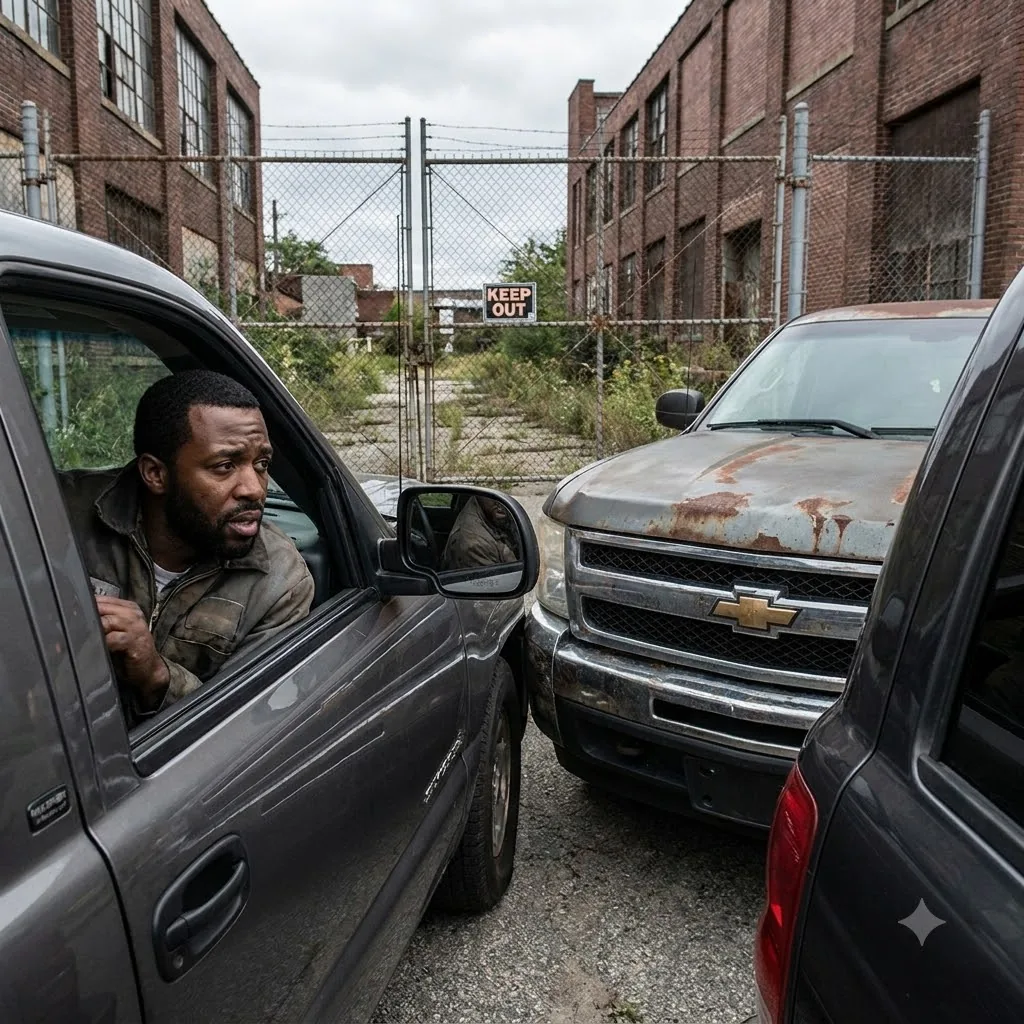
Marcus traces a red marker along the primary load-bearing columns on the oversized schematic resting on his steering wheel, calculating the structural tolerances of the central furnace building. The sudden, violent screech of braking tires shatters his concentration as a faded red Chevy Silverado swerves aggressively across the gravel shoulder, kicking up a thick cloud of dust. The truck slams to a halt diagonally, its rusted front bumper stopping mere inches from the grille of Marcus’s leased F-250.
Marcus drops his marker. He immediately reaches for the ignition, intending to throw the truck in reverse and avoid whatever confrontation is brewing on this desolate stretch of road. The heavy crunch of tires on gravel in his rearview mirror stops his hand entirely. A dark blue Ford F-150 has pulled up tight against his rear bumper, leaving absolutely no clearance. He is boxed in completely. To his left sits the eight-foot chain-link fence of the abandoned steel mill, topped with rusted razor wire. To his right, a steep, rain-slicked drainage ditch guarantees he would sink to the axles if he tried to drive onto the grass.
The driver of the Silverado kicks his door open. He is a heavy-set man in grease-stained denim and a high-vis vest that looks decades out of date. He marches directly toward Marcus’s driver-side window, gripping a heavy metal flashlight like a baton.
Marcus carefully folds his schematics, sliding them face-down onto the passenger seat. He ensures nothing is visible except his professional demeanor. He places both hands perfectly at ten and two on the steering wheel, making sure his palms are clearly visible. He knows the statistics regarding men like him in situations exactly like this. He knows the exact kind of trap this laid-off worker has just sprung.
The man slaps the hood of Marcus’s truck with his bare hand, leaving a smear on the clean white paint. He points the heavy flashlight at the windshield, shouting aggressively through the glass.
“Roll it down,” the man barks.
Marcus analyzes the situation through the mirrors. The driver of the rear truck keeps his engine idling, his silhouette obscured by the afternoon glare. The man in front-Dale, according to the embroidered patch peeling off his faded vest-steps closer, tapping the metal casing of the flashlight against the driver’s window.
Marcus cracks his window exactly two inches.
“I am parked on a public road,” Marcus states, keeping his voice level and entirely devoid of emotion.
“You are casing our mill,” Dale snaps back. “You out-of-town scrap rats think nobody is watching. We see you out here scoping the perimeter for copper wire.”
Marcus looks past the angry foreman to the skeletal remains of the plant. The towering smoke stacks are streaked with decades of rust and neglect. He looks back at Dale, noting the aggressive posture, the flushed neck, the knuckles turning white around the thick handle of the flashlight.
“I have absolutely no interest in scrap metal,” Marcus says. “Return to your vehicle and move it.”
Dale lets out a harsh, barking laugh that carries over the rumble of the idling engines. “I am not moving a damn inch. We run a neighborhood watch here. We protect our own property.”
Dale gestures to the truck parked behind Marcus. The Ford driver revs his engine loudly, closing the microscopic gap until his front bumper physically bumps Marcus’s trailer hitch. A jarring metallic thud echoes through the cab of the F-250.
Marcus grips the steering wheel tighter. The physical contact with his vehicle is a clear escalation. This encounter is entirely designed to provoke him. They want him to step out of the cab. They want him to yell, to posture, to give them a legally defensible excuse to use that flashlight. They see a Black man in an unmarked truck parked outside their defunct point of pride, and they have decided to play vigilante.
Marcus refuses to give them the satisfaction.
He reaches slowly for his phone mounted on the dashboard bracket.
Dale immediately raises his arm, slamming the heavy rubber butt of the flashlight against the reinforced glass of the driver’s side window. The impact sounds like a gunshot, but the glass holds firm.
“Put the phone down,” Dale orders, leaning his face into the narrow gap of the open window. “You call the authorities, and things are going to get much worse for you. We handle our own problems in this town.”
“You are currently detaining me against my will,” Marcus replies. “That is a felony.”
“You people come up here from the city thinking you can strip our livelihood,” Dale says, his voice thick with unbridled resentment. “This plant fed my family for three generations. You are not taking one single piece of pipe out of there.”
Marcus glances at the face-down blueprints on the passenger seat. He has every legal permit required to sit exactly where he is. Explaining his actual presence to a man actively threatening him is entirely pointless and tactically foolish.
“This is your final warning to clear my path,” Marcus says.
Dale spits on the ground near the tires. “You do not give the orders here. I am detaining you for attempted grand larceny.”
Dale gestures sharply to the rear truck again. The younger driver cuts his engine and steps out onto the gravel. He is wearing scuffed steel-toed boots and carrying a rusted crowbar resting casually over his shoulder. The second man walks deliberately up to the passenger side of Marcus’s truck, boxing him in by foot just as thoroughly as the vehicles.
Now there is an armed man on both sides of the cab.
The younger man taps the passenger window twice with the tip of the crowbar.
Marcus does not flinch. He locks his eyes dead on Dale, maintaining the steady breathing exercises he uses to manage high-stress environments.
Dale reaches into the bed of his Silverado and hauls out a thick, heavy-duty tow chain. He drags it across the gravel, the metal links clanking loudly as he marches directly toward the front axle of Marcus’s leased truck. He plans to physically chain the F-250 to his own tow hook, effectively seizing the vehicle.
The younger man raises the crowbar an inch higher, preparing to shatter the passenger window if Marcus makes any sudden moves to intervene.
Marcus watches the heavy steel hook swing dangerously close to his front tires, drops his right hand swiftly from the steering wheel down to the gear selector, and pulls it firmly into drive.
Marcus traces a red marker along the primary load-bearing columns on the oversized schematic resting on his steering wheel, calculating the structural tolerances of the central furnace building. The sudden, violent screech of braking tires shatters his concentration as a faded red Chevy Silverado swerves aggressively across the gravel shoulder, kicking up a thick cloud of dust. The truck slams to a halt diagonally, its rusted front bumper stopping mere inches from the grille of Marcus’s leased F-250.
Marcus drops his marker. He immediately reaches for the ignition, intending to throw the truck in reverse and avoid whatever confrontation is brewing on this desolate stretch of road. The heavy crunch of tires on gravel in his rearview mirror stops his hand entirely. A dark blue Ford F-150 has pulled up tight against his rear bumper, leaving absolutely no clearance. He is boxed in completely. To his left sits the eight-foot chain-link fence of the abandoned steel mill, topped with rusted razor wire. To his right, a steep, rain-slicked drainage ditch guarantees he would sink to the axles if he tried to drive onto the grass.
The driver of the Silverado kicks his door open. He is a heavy-set man in grease-stained denim and a high-vis vest that looks decades out of date. He marches directly toward Marcus’s driver-side window, gripping a heavy metal flashlight like a baton.
Marcus carefully folds his schematics, sliding them face-down onto the passenger seat. He ensures nothing is visible except his professional demeanor. He places both hands perfectly at ten and two on the steering wheel, making sure his palms are clearly visible. He knows the statistics regarding men like him in situations exactly like this. He knows the exact kind of trap this laid-off worker has just sprung.
The man slaps the hood of Marcus’s truck with his bare hand, leaving a smear on the clean white paint. He points the heavy flashlight at the windshield, shouting aggressively through the glass.
“Roll it down,” the man barks.
Marcus analyzes the situation through the mirrors. The driver of the rear truck keeps his engine idling, his silhouette obscured by the afternoon glare. The man in front-Dale, according to the embroidered patch peeling off his faded vest-steps closer, tapping the metal casing of the flashlight against the driver’s window.
Marcus cracks his window exactly two inches.
“I am parked on a public road,” Marcus states, keeping his voice level and entirely devoid of emotion.
“You are casing our mill,” Dale snaps back. “You out-of-town scrap rats think nobody is watching. We see you out here scoping the perimeter for copper wire.”
Marcus looks past the angry foreman to the skeletal remains of the plant. The towering smoke stacks are streaked with decades of rust and neglect. He looks back at Dale, noting the aggressive posture, the flushed neck, the knuckles turning white around the thick handle of the flashlight.
“I have absolutely no interest in scrap metal,” Marcus says. “Return to your vehicle and move it.”
Dale lets out a harsh, barking laugh that carries over the rumble of the idling engines. “I am not moving a damn inch. We run a neighborhood watch here. We protect our own property.”
Dale gestures to the truck parked behind Marcus. The Ford driver revs his engine loudly, closing the microscopic gap until his front bumper physically bumps Marcus’s trailer hitch. A jarring metallic thud echoes through the cab of the F-250.
Marcus grips the steering wheel tighter. The physical contact with his vehicle is a clear escalation. This encounter is entirely designed to provoke him. They want him to step out of the cab. They want him to yell, to posture, to give them a legally defensible excuse to use that flashlight. They see a Black man in an unmarked truck parked outside their defunct point of pride, and they have decided to play vigilante.
Marcus refuses to give them the satisfaction.
He reaches slowly for his phone mounted on the dashboard bracket.
Dale immediately raises his arm, slamming the heavy rubber butt of the flashlight against the reinforced glass of the driver’s side window. The impact sounds like a gunshot, but the glass holds firm.
“Put the phone down,” Dale orders, leaning his face into the narrow gap of the open window. “You call the authorities, and things are going to get much worse for you. We handle our own problems in this town.”
“You are currently detaining me against my will,” Marcus replies. “That is a felony.”
“You people come up here from the city thinking you can strip our livelihood,” Dale says, his voice thick with unbridled resentment. “This plant fed my family for three generations. You are not taking one single piece of pipe out of there.”
Marcus glances at the face-down blueprints on the passenger seat. He has every legal permit required to sit exactly where he is. Explaining his actual presence to a man actively threatening him is entirely pointless and tactically foolish.
“This is your final warning to clear my path,” Marcus says.
Dale spits on the ground near the tires. “You do not give the orders here. I am detaining you for attempted grand larceny.”
Dale gestures sharply to the rear truck again. The younger driver cuts his engine and steps out onto the gravel. He is wearing scuffed steel-toed boots and carrying a rusted crowbar resting casually over his shoulder. The second man walks deliberately up to the passenger side of Marcus’s truck, boxing him in by foot just as thoroughly as the vehicles.
Now there is an armed man on both sides of the cab.
The younger man taps the passenger window twice with the tip of the crowbar.
Marcus does not flinch. He locks his eyes dead on Dale, maintaining the steady breathing exercises he uses to manage high-stress environments.
Dale reaches into the bed of his Silverado and hauls out a thick, heavy-duty tow chain. He drags it across the gravel, the metal links clanking loudly as he marches directly toward the front axle of Marcus’s leased truck. He plans to physically chain the F-250 to his own tow hook, effectively seizing the vehicle.
The younger man raises the crowbar an inch higher, preparing to shatter the passenger window if Marcus makes any sudden moves to intervene.
Marcus watches the heavy steel hook swing dangerously close to his front tires, drops his right hand swiftly from the steering wheel down to the gear selector, and pulls it firmly into drive.