Story code: ST-000305
Part 1: Shortcut in the Dark
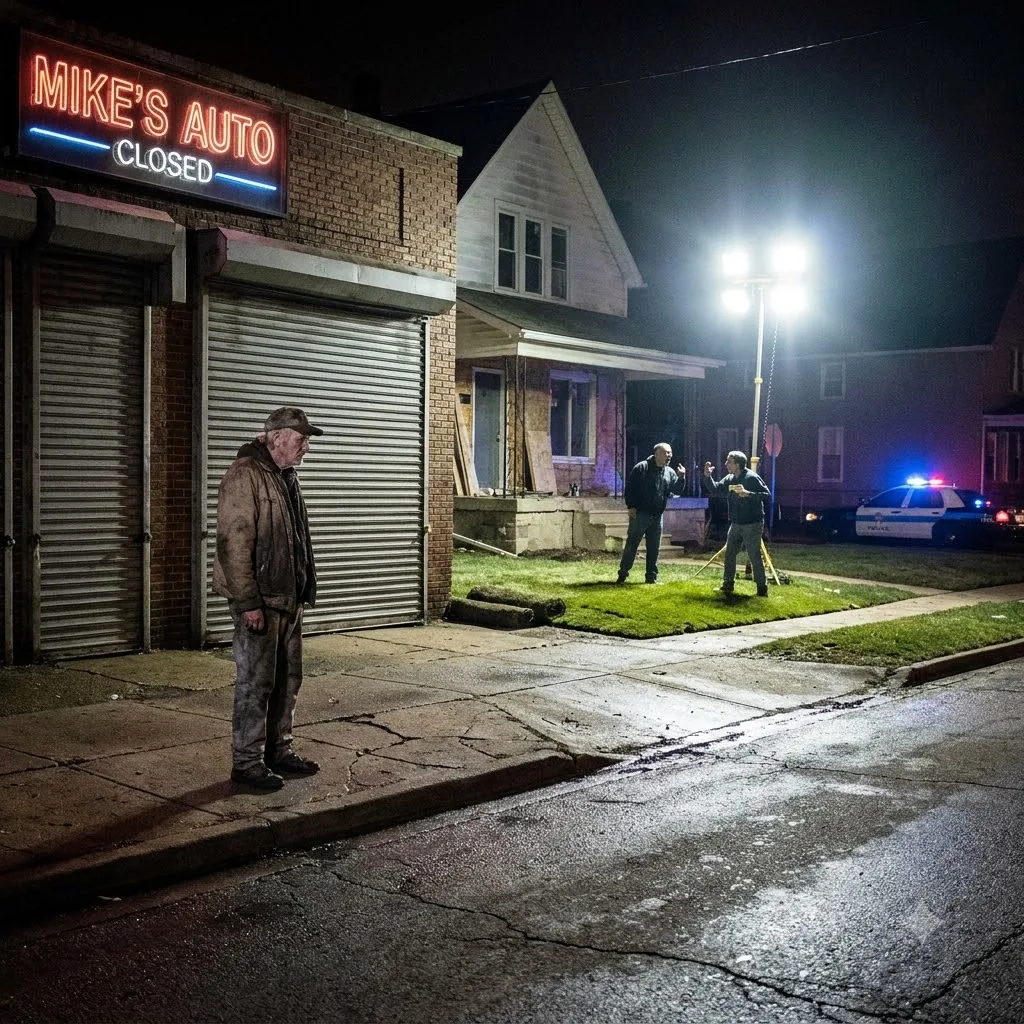
The heavy iron padlock snapped shut against the rolling metal gate of Marcus’s auto shop, echoing with a sharp clang through an unusually silent block. Marcus pulled his keys from the cylinder, savoring the rare stillness of the neighborhood. The thick summer heat usually carried the sounds of blaring car stereos or distant arguments, but tonight, the street was entirely peaceful. A three-month truce between the rival crews was actually holding. He turned away from the grease-stained bricks of his shop, ready to walk to his apartment, when a harsh, metallic clack-clack shattered the quiet.
Instinct took over. Marcus dropped his shoulder, pressing his back against the rusted fender of a parked Chevy. Across the narrow street, a halogen security floodlight flared to life with an aggressive electronic hum, casting stark, blinding white shadows across a patchy front lawn.
His chest tightened as the silence stretched out. The racking of a pump-action shotgun was an unmistakable sound, but the aftermath felt completely wrong. There were no tires squealing on the asphalt. There were no gang slogans shouted into the night air. The anticipated burst of return fire never came. Marcus assumed the fragile neighborhood truce had just collapsed, expecting to see a retaliation hit or a drive-by stalled out on the curb. He kept his head below the window line of the parked cars, sliding his heavy work boots silently along the gutter to see who was breaking the peace.
Marcus crept behind a dented minivan parked on the opposite curb and peered around the cracked red taillight. The harsh glare of the security light illuminated a scene entirely stripped of gang warfare, yet infinitely more volatile.
A teenager, no older than fifteen, stood absolutely frozen in the center of the overgrown grass. His oversized dark hoodie hung loose around his narrow frame, and his worn sneakers were planted mid-stride. He had simply taken a shortcut across the wrong lawn in the dark. On the elevated concrete porch stood the homeowner, an older man in a faded flannel robe, gripping a long-barreled shotgun with white-knuckled intensity. The dark bore of the weapon was leveled directly at the boy’s chest.
It was a terrifyingly mundane property dispute escalating into a lethal execution. The homeowner was trembling violently. Even from the street, Marcus could see the man’s shoulders shaking, the heavy barrel of the shotgun dipping and rising with his erratic, panicked breathing. The man shouted a steady stream of frantic commands, ordering the boy to stay exactly where he was, declaring that this was private property and he had the right to defend his home.
The man on the porch had backed himself into a psychological corner. He was terrified, treating a teenager taking a shortcut like a home invasion in progress. He fully believed that if he lowered the weapon now, he would be attacked.
Marcus shifted his gaze to the boy. He recognized the kid. It was Little Trey, a kid who usually hung around the fringes of the local crew, trying to earn his reputation. Trey stared down the barrel of the gun, his jaw locked so tight the muscles in his neck strained against his collar. A bead of sweat caught the harsh halogen light as it rolled down his cheek.
Trey was trapped. If he threw his hands in the air and begged for his life, he would survive the night but lose every ounce of respect on the streets. Backing down in front of his peers carried a delayed death sentence in this neighborhood. Trey kept his hands rigidly at his sides, his chin tilted up in a desperate, foolish show of defiance. He was willing to die rather than look weak.
The real danger, however, was backing up onto the cracked sidewalk. Three older teenagers, Trey’s friends, had retreated to the edge of the property line. Their postures were fluid, defensive, and deeply alarming. They were spreading out in a tactical fan, their eyes darting between the trembling man on the porch and the dark windows of the surrounding houses. They were not running away. Instead, their hands were slipping beneath the hems of their dark shirts, reaching toward their waistbands.
The metallic clink of a belt buckle shifting under fabric reached Marcus’s ears. Weapons were being drawn on the sidewalk. The older boys believed they had to defend Trey, or face the same lethal judgment from the street for abandoning one of their own.
Thirty feet of open air separated the edge of the minivan from the center of the lawn. Marcus knew he had a window of maybe three seconds before the trembling homeowner flinched, or the boys on the sidewalk leveled their hidden steel. He stepped out from the shadows of the minivan, raising his empty hands to shoulder height, and moved onto the illuminated asphalt with slow, deliberate steps.
He projected his voice in a calm, booming baritone, telling everyone to lock their hands and breathe. The sudden noise broke the terrible standoff.
The homeowner gasped, wildly jerking the barrel of the shotgun away from Trey and pointing it directly at Marcus’s chest as a teenager on the sidewalk ripped a heavy, dark metal object from his waistband.
The heavy iron padlock snapped shut against the rolling metal gate of Marcus’s auto shop, echoing with a sharp clang through an unusually silent block. Marcus pulled his keys from the cylinder, savoring the rare stillness of the neighborhood. The thick summer heat usually carried the sounds of blaring car stereos or distant arguments, but tonight, the street was entirely peaceful. A three-month truce between the rival crews was actually holding. He turned away from the grease-stained bricks of his shop, ready to walk to his apartment, when a harsh, metallic clack-clack shattered the quiet.
Instinct took over. Marcus dropped his shoulder, pressing his back against the rusted fender of a parked Chevy. Across the narrow street, a halogen security floodlight flared to life with an aggressive electronic hum, casting stark, blinding white shadows across a patchy front lawn.
His chest tightened as the silence stretched out. The racking of a pump-action shotgun was an unmistakable sound, but the aftermath felt completely wrong. There were no tires squealing on the asphalt. There were no gang slogans shouted into the night air. The anticipated burst of return fire never came. Marcus assumed the fragile neighborhood truce had just collapsed, expecting to see a retaliation hit or a drive-by stalled out on the curb. He kept his head below the window line of the parked cars, sliding his heavy work boots silently along the gutter to see who was breaking the peace.
Marcus crept behind a dented minivan parked on the opposite curb and peered around the cracked red taillight. The harsh glare of the security light illuminated a scene entirely stripped of gang warfare, yet infinitely more volatile.
A teenager, no older than fifteen, stood absolutely frozen in the center of the overgrown grass. His oversized dark hoodie hung loose around his narrow frame, and his worn sneakers were planted mid-stride. He had simply taken a shortcut across the wrong lawn in the dark. On the elevated concrete porch stood the homeowner, an older man in a faded flannel robe, gripping a long-barreled shotgun with white-knuckled intensity. The dark bore of the weapon was leveled directly at the boy’s chest.
It was a terrifyingly mundane property dispute escalating into a lethal execution. The homeowner was trembling violently. Even from the street, Marcus could see the man’s shoulders shaking, the heavy barrel of the shotgun dipping and rising with his erratic, panicked breathing. The man shouted a steady stream of frantic commands, ordering the boy to stay exactly where he was, declaring that this was private property and he had the right to defend his home.
The man on the porch had backed himself into a psychological corner. He was terrified, treating a teenager taking a shortcut like a home invasion in progress. He fully believed that if he lowered the weapon now, he would be attacked.
Marcus shifted his gaze to the boy. He recognized the kid. It was Little Trey, a kid who usually hung around the fringes of the local crew, trying to earn his reputation. Trey stared down the barrel of the gun, his jaw locked so tight the muscles in his neck strained against his collar. A bead of sweat caught the harsh halogen light as it rolled down his cheek.
Trey was trapped. If he threw his hands in the air and begged for his life, he would survive the night but lose every ounce of respect on the streets. Backing down in front of his peers carried a delayed death sentence in this neighborhood. Trey kept his hands rigidly at his sides, his chin tilted up in a desperate, foolish show of defiance. He was willing to die rather than look weak.
The real danger, however, was backing up onto the cracked sidewalk. Three older teenagers, Trey’s friends, had retreated to the edge of the property line. Their postures were fluid, defensive, and deeply alarming. They were spreading out in a tactical fan, their eyes darting between the trembling man on the porch and the dark windows of the surrounding houses. They were not running away. Instead, their hands were slipping beneath the hems of their dark shirts, reaching toward their waistbands.
The metallic clink of a belt buckle shifting under fabric reached Marcus’s ears. Weapons were being drawn on the sidewalk. The older boys believed they had to defend Trey, or face the same lethal judgment from the street for abandoning one of their own.
Thirty feet of open air separated the edge of the minivan from the center of the lawn. Marcus knew he had a window of maybe three seconds before the trembling homeowner flinched, or the boys on the sidewalk leveled their hidden steel. He stepped out from the shadows of the minivan, raising his empty hands to shoulder height, and moved onto the illuminated asphalt with slow, deliberate steps.
He projected his voice in a calm, booming baritone, telling everyone to lock their hands and breathe. The sudden noise broke the terrible standoff.
The homeowner gasped, wildly jerking the barrel of the shotgun away from Trey and pointing it directly at Marcus’s chest as a teenager on the sidewalk ripped a heavy, dark metal object from his waistband.