Story code: ST-000306
Part 1: The Orange Sticker
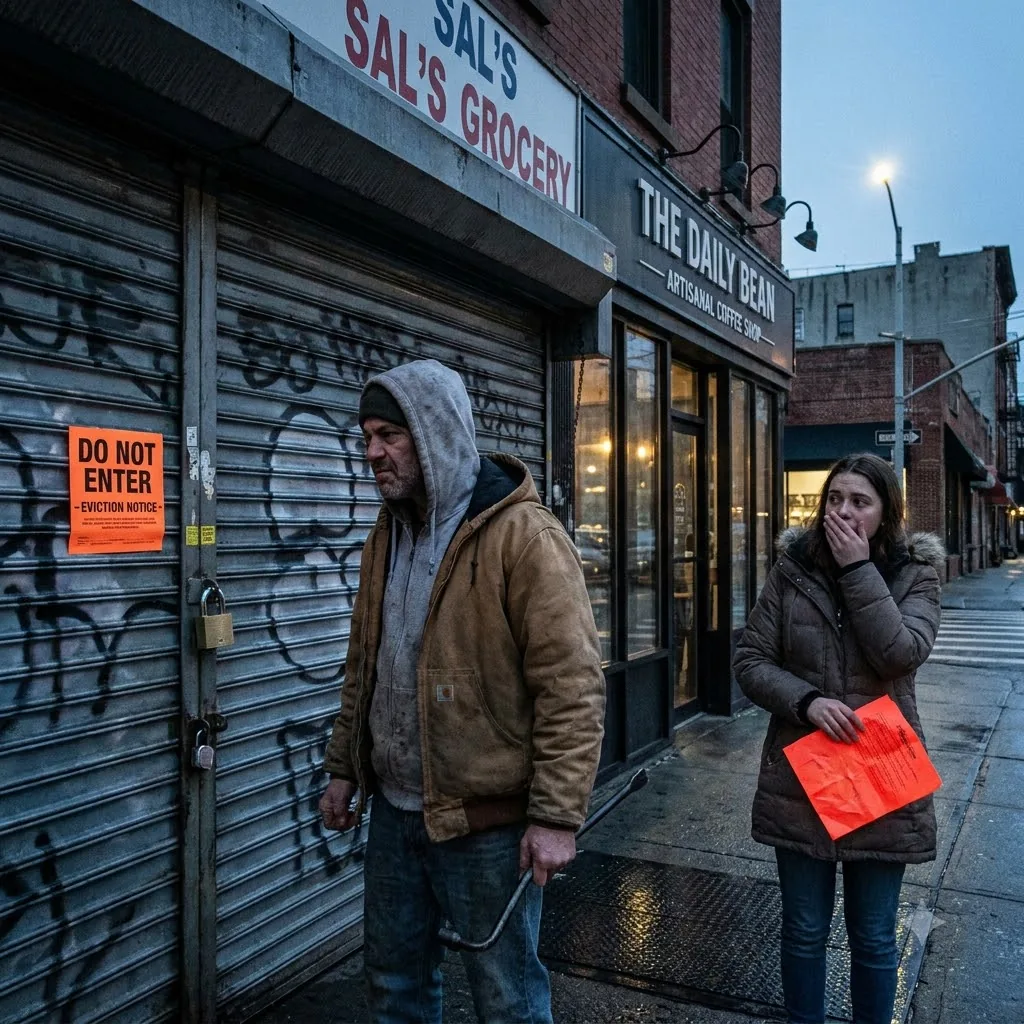
Mateo stepped out of his truck at five in the morning and stopped cold, his eyes locked on the heavy commercial padlock securing the rolling gate of his family’s bodega. Flanking the thick steel lock was a massive neon-orange violation sticker from the Neighborhood Association, citing him twelve hundred dollars for “unapproved awning aesthetics.” A few feet away, outside the newly renovated coffee shop next door, the owner named Chloe stood entirely motionless, visibly shaking as she gripped a matching neon notice.
The street remained completely quiet, illuminated by buzzing amber streetlights. Mateo tugged the heavy brass casing of the lock, but it did not budge. The bodega had been in his family for three generations. The green canvas awning extending over the sidewalk had been installed by his grandfather thirty years ago, surviving hurricanes and decades of urban decay without a single complaint from city inspectors. Now, a newly formed neighborhood board deemed it an aesthetic violation and assumed they had the authority to bolt his business shut in the middle of the night.
He read the aggressive block letters printed on the neon paper. The adhesive was the cheap, industrial kind designed to leave a permanent residue on the glass behind the gate. The text declared the premises seized pending an emergency aesthetic compliance hearing, demanding the penalty be paid before the removal of the hardware. The audacity of the physical lock made the blood pound in Mateo’s ears. He had fresh bread deliveries arriving in twenty minutes. His morning regulars would be lining up at his counter in half an hour expecting coffee and breakfast sandwiches. He had a business to run, and no private organization was going to chain him out of his own building.
He turned his attention to Chloe. She had opened her minimalist cafe next door two months ago, bringing pour-over coffee to a block previously known only for Mateo’s traditional café con leche. The dominant rumor was that the board had recruited her with grants to help drive out older, less photogenic businesses. Looking at her right now, that entire narrative completely unraveled. She was not gloating. She stood in a thin cardigan, her knuckles completely white as she crushed the neon-orange paper against her chest. Her teeth chattered audibly in the brisk November breeze. She stared in sheer horror at the identical heavy padlock chained through the sleek bronze handles of her custom glass doors.
Mateo realized they were both staring at the exact same glowing orange paper. She looked over at him, her eyes wide and panicked. He did not say a word. The board was playing a highly dangerous game, testing their boundaries by physically locking property owners out of their livelihoods to see who would cave first. Mateo was not going to stand on the sidewalk and wait for a daytime hearing to beg for his keys back.
He turned on his heel and marched back to his battered pickup truck idling at the curb. The heavy driver-side door groaned loudly as he yanked it open. He reached behind the worn leather bench seat, his fingers brushing past jumper cables until he felt the freezing forged steel of his four-way tire iron. He pulled the heavy tool out of the cab, the impressive heft of the metal grounding his frustration into focused intent.
He slammed the truck door shut. The sound echoed like a gunshot down the empty avenue. Chloe flinched violently, taking a half-step backward. Mateo ignored her reaction, gripping the steel crossbar with both hands as he stalked back toward his bodega gate. The Association wanted to play at being a municipal authority, but a cheap commercial padlock was no match for basic leverage and torque. He positioned the flattened wedge end of the tire iron inside the U-shaped shackle of the padlock.
He planted his heavy work boots firmly on the concrete, adjusting his grip. The sharp metal-on-metal scraping sound rang out loudly in the quiet dawn as he wedged the tool into place. He took a deep breath, preparing to throw his entire body weight backward to snap the locking mechanism. The fine print on the neon sticker threatened severe penalties for tampering with Association enforcement hardware, a threat he fully intended to ignore.
Before he could thrust his weight downward, the low, aggressive hum of a heavily modified engine broke the silence of the street. A pristine white SUV with dark tinted windows and a glowing amber lightbar slowly rolled around the corner. It crept along the curb, its high-beam headlights washing entirely over Mateo, illuminating his raised tire iron and casting long shadows against the corrugated metal gate. The side panel of the vehicle bore the dark green crest of the Neighborhood Association. The heavy SUV came to a complete stop directly in front of the bodega, the passenger side window smoothly gliding down into the door frame to reveal the dark interior.
Mateo stepped out of his truck at five in the morning and stopped cold, his eyes locked on the heavy commercial padlock securing the rolling gate of his family’s bodega. Flanking the thick steel lock was a massive neon-orange violation sticker from the Neighborhood Association, citing him twelve hundred dollars for “unapproved awning aesthetics.” A few feet away, outside the newly renovated coffee shop next door, the owner named Chloe stood entirely motionless, visibly shaking as she gripped a matching neon notice.
The street remained completely quiet, illuminated by buzzing amber streetlights. Mateo tugged the heavy brass casing of the lock, but it did not budge. The bodega had been in his family for three generations. The green canvas awning extending over the sidewalk had been installed by his grandfather thirty years ago, surviving hurricanes and decades of urban decay without a single complaint from city inspectors. Now, a newly formed neighborhood board deemed it an aesthetic violation and assumed they had the authority to bolt his business shut in the middle of the night.
He read the aggressive block letters printed on the neon paper. The adhesive was the cheap, industrial kind designed to leave a permanent residue on the glass behind the gate. The text declared the premises seized pending an emergency aesthetic compliance hearing, demanding the penalty be paid before the removal of the hardware. The audacity of the physical lock made the blood pound in Mateo’s ears. He had fresh bread deliveries arriving in twenty minutes. His morning regulars would be lining up at his counter in half an hour expecting coffee and breakfast sandwiches. He had a business to run, and no private organization was going to chain him out of his own building.
He turned his attention to Chloe. She had opened her minimalist cafe next door two months ago, bringing pour-over coffee to a block previously known only for Mateo’s traditional café con leche. The dominant rumor was that the board had recruited her with grants to help drive out older, less photogenic businesses. Looking at her right now, that entire narrative completely unraveled. She was not gloating. She stood in a thin cardigan, her knuckles completely white as she crushed the neon-orange paper against her chest. Her teeth chattered audibly in the brisk November breeze. She stared in sheer horror at the identical heavy padlock chained through the sleek bronze handles of her custom glass doors.
Mateo realized they were both staring at the exact same glowing orange paper. She looked over at him, her eyes wide and panicked. He did not say a word. The board was playing a highly dangerous game, testing their boundaries by physically locking property owners out of their livelihoods to see who would cave first. Mateo was not going to stand on the sidewalk and wait for a daytime hearing to beg for his keys back.
He turned on his heel and marched back to his battered pickup truck idling at the curb. The heavy driver-side door groaned loudly as he yanked it open. He reached behind the worn leather bench seat, his fingers brushing past jumper cables until he felt the freezing forged steel of his four-way tire iron. He pulled the heavy tool out of the cab, the impressive heft of the metal grounding his frustration into focused intent.
He slammed the truck door shut. The sound echoed like a gunshot down the empty avenue. Chloe flinched violently, taking a half-step backward. Mateo ignored her reaction, gripping the steel crossbar with both hands as he stalked back toward his bodega gate. The Association wanted to play at being a municipal authority, but a cheap commercial padlock was no match for basic leverage and torque. He positioned the flattened wedge end of the tire iron inside the U-shaped shackle of the padlock.
He planted his heavy work boots firmly on the concrete, adjusting his grip. The sharp metal-on-metal scraping sound rang out loudly in the quiet dawn as he wedged the tool into place. He took a deep breath, preparing to throw his entire body weight backward to snap the locking mechanism. The fine print on the neon sticker threatened severe penalties for tampering with Association enforcement hardware, a threat he fully intended to ignore.
Before he could thrust his weight downward, the low, aggressive hum of a heavily modified engine broke the silence of the street. A pristine white SUV with dark tinted windows and a glowing amber lightbar slowly rolled around the corner. It crept along the curb, its high-beam headlights washing entirely over Mateo, illuminating his raised tire iron and casting long shadows against the corrugated metal gate. The side panel of the vehicle bore the dark green crest of the Neighborhood Association. The heavy SUV came to a complete stop directly in front of the bodega, the passenger side window smoothly gliding down into the door frame to reveal the dark interior.