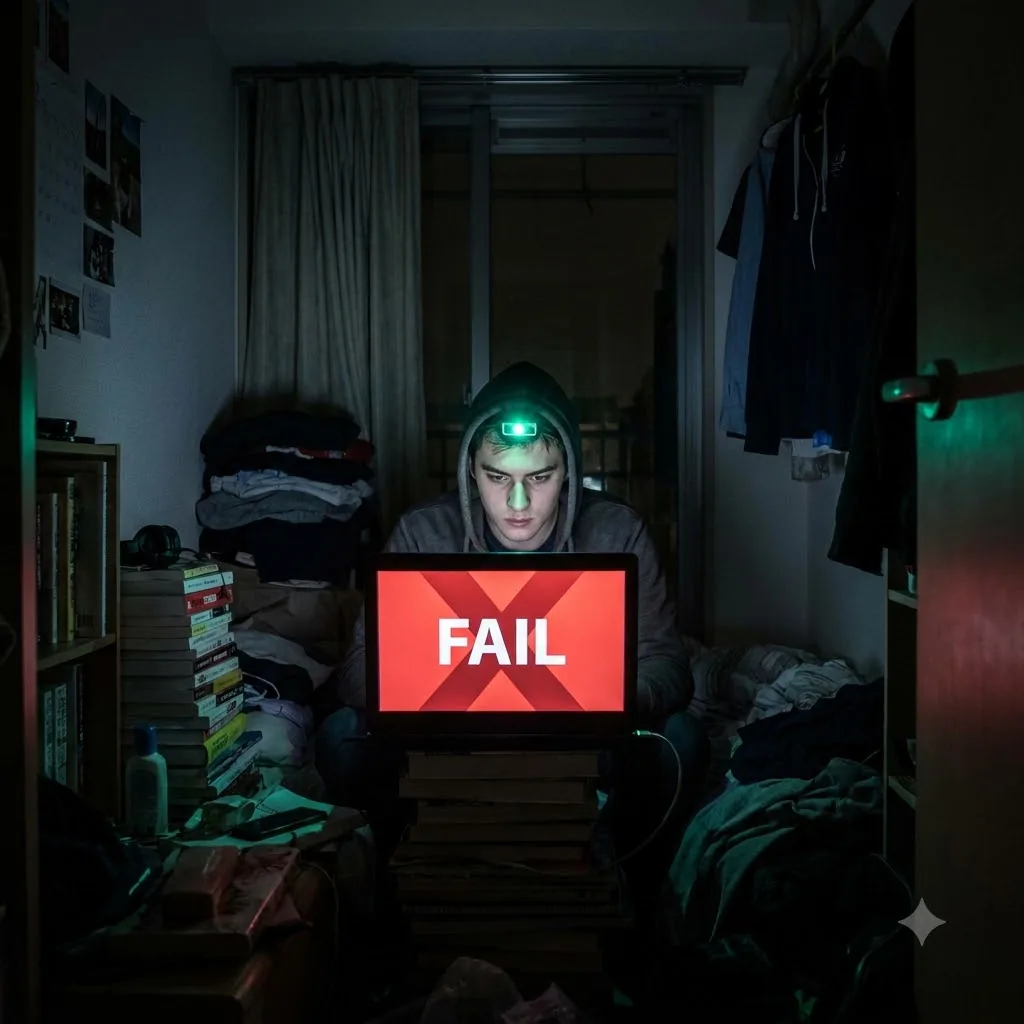
Story code: ST-000334
Part 4: The Root Protocol
Trent stared at the secondary monitor just off-screen. The pale blue light washed over his perfectly manicured face, revealing the sudden, glistening sheen of sweat breaking out on his forehead. Mateo watched the Zoom feed in complete silence. He kept his eyes averted from the lens, looking at the blank drywall, though his peripheral vision caught every twitch of Trent’s descending panic.
“No,” Trent whispered. The corporate warmth was entirely eradicated, replaced by a hollow, reedy wheeze. His hands flew across his keyboard. He was checking the SMTP logs on his local host machine. Mateo knew exactly what Trent was seeing: a flawless, irreversible outbound transfer protocol executing its final lines of code.
“Mateo,” Trent said, his voice cracking. He leaned so close to his webcam that the lens distorted his features into a grotesque, fish-eye mask of desperation. “Listen to me. Listen to me right now. You can fix this. You can send a follow-up email from the admin node. You can say the script was a penetration test. A glitch in the automated sandbox. I will send you the remaining three thousand. I will send you ten thousand.”
Mateo’s thumb continued its rhythmic four-four tap against his middle finger. The physical sensation grounded his nervous system against the chaotic, pleading noise coming through his headphones.
“The files are already in the Vice President’s inbox,” Mateo said. His voice remained flat, a stark contrast to Trent’s frantic oscillation in pitch. “The payload included the raw hex data of your shadow ledgers. A follow-up email claiming a glitch will not alter the mathematical reality of the federal invoices. Synapse Tech will audit your host IP by morning.”
“I will ruin you!” Trent screamed, slamming a fist down on his desk. The webcam shook violently. “I have the HR intake forms! I will flag your mother’s address to ICE right now!”
“If you contact federal authorities,” Mateo stated, tracing the faux-wood laminate grain of his desk, “you will draw immediate scrutiny to a network node that contains evidence of your own embezzlement from the Department of Homeland Security. You no longer possess leverage, Trent. You only possess liability.”
Trent froze. His mouth opened and closed. The terrifying logic of his own trap had inverted, locking him inside instead. If he went down, the very act of trying to drag Mateo with him would only guarantee a swifter, heavier federal indictment for himself. He was cornered, isolated by the architecture of his own greed.
“Please,” Trent whispered. The threat vanished, leaving only a pathetic, naked terror. “Mateo, please. I have equity vesting in two weeks. I can’t… I can’t go to prison.”
Mateo reached out and clicked the red button at the bottom of the Zoom interface. The window vanished. Trent’s pleading face was replaced by the sterile gray desktop of the virtual machine.
Mateo didn’t stop there. He executed a localized kill script, instantly severing the bespoke VPN tunnel. He uninstalled the virtual machine client, wiping the proprietary directory from his hard drive. The glowing green light on his webcam flickered, sputtered, and died.
To be absolutely certain, Mateo reached behind the monitor and physically yanked the USB cable of the webcam out of the port. The digital panopticon collapsed. He was the only one in the room again.
His phone buzzed against the desk. Trent’s name flashed on the caller ID. Mateo watched it ring in silence. When it went to voicemail, another notification immediately popped up. Then a text message. Then another call. Mateo picked up the device, navigated to the settings, and blocked the San Jose number entirely.
He opened his secure browser and logged into the newly generated crypto wallet. The blockchain ledger displayed the exact balance: 2,000 USDC. Trent had transferred it hours ago as a demonstration of good faith. Mateo held the decryption keys. Trent’s admin access was severed; the money was permanently secured. It wasn’t the five thousand dollars Elena Rostova required for the full emergency asylum appeal, but two thousand was enough to pay a preliminary retainer. It was enough for the attorney to file the initial motions and buy them three more months on the deportation clock. Three months for Mateo to find a legitimate contract.
Mateo closed the laptop. The room plunged into absolute darkness, save for the ambient amber glow of the streetlamp filtering through the thin apartment blinds. He exhaled, a long, shuddering breath that seemed to deflate the agonizing tension that had gripped his ribs for the past three days.
He stood up and quietly opened his bedroom door.
The apartment was silent. The heavy hum of the secondhand sewing machine had finally ceased. Mateo walked softly down the narrow hallway and into the cramped living space. His mother, Gabriela, had fallen asleep in the armchair next to her workstation. A half-finished pair of heavy denim jeans rested in her lap. Her head was tilted back, her breathing shallow and exhausted, but peaceful in the stillness of the early morning.
Mateo stepped closer. He didn’t wake her. He simply sat down on the worn linoleum floor next to her chair, wrapping his arms around his knees.
The systemic fear had not vanished. Tomorrow, they would still be undocumented. Tomorrow, they still had to navigate a world governed by hostile algorithmic filters and rigid neurotypical expectations. But tonight, Mateo had out-engineered the machine. He had stared into the mechanical eye of an apex predator, dismantled its trap, and walked away with the very resources it had used as bait.
He leaned his head against the armrest of his mother’s chair, listening to the quiet, steady rhythm of her breathing. The sound was infinitely more complex and beautiful than any load-balancing algorithm he had ever written. Mateo closed his eyes, and for the first time in weeks, allowed himself to rest.