Story code: ST-000338
Part 1: The Neon Warning
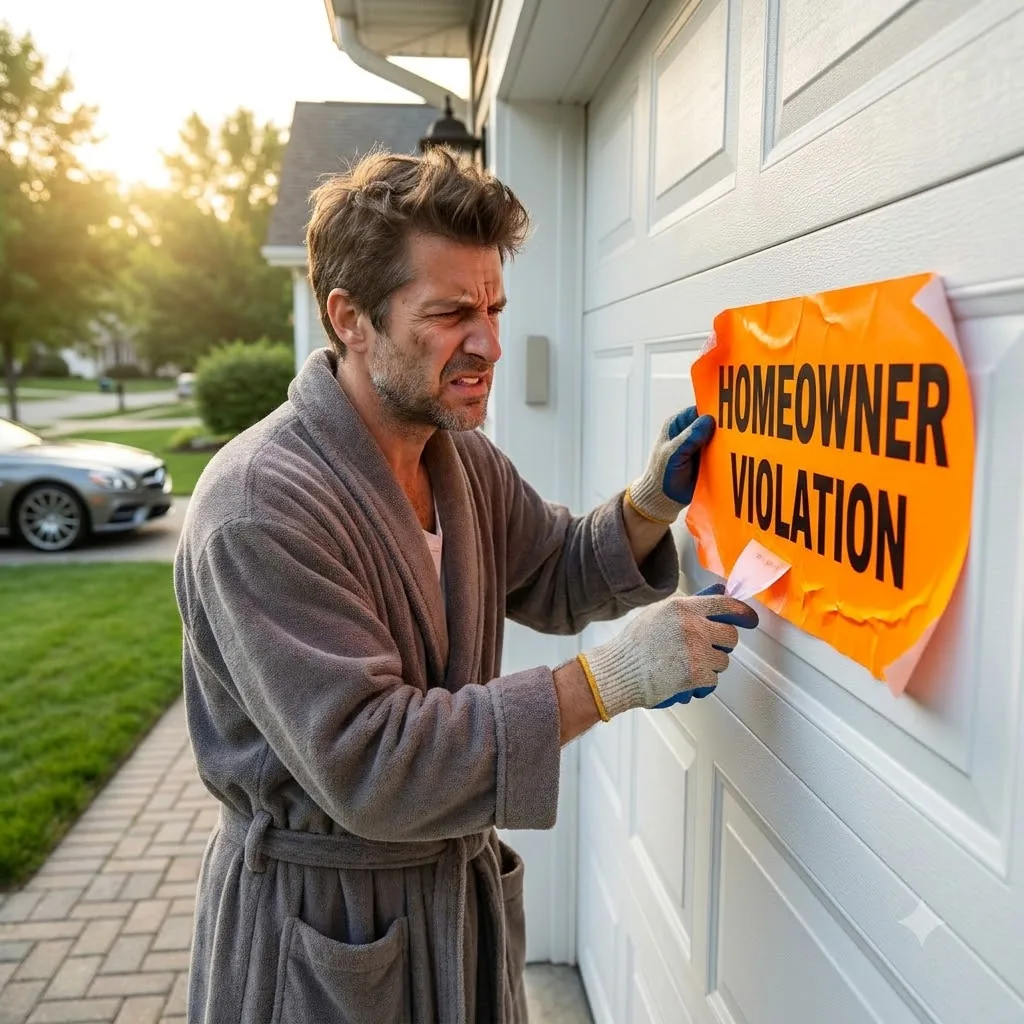
David scraped his thumbnail against the cold aluminum paneling of his garage door, wincing as the neon-orange adhesive packed tightly under his nail bed. The industrial glue fought back, tearing his skin as he dug deeper to lift the edge. It was the third fluorescent violation sticker slapped onto his pristine white paint in a single week. He gritted his teeth and peeled a massive, jagged strip away, the sound echoing like ripping canvas in the quiet suburban morning. The weatherproof vinyl curled back to reveal bold, block letters printed across the center. The assessment field demanded two thousand five hundred dollars.
The sheer size of the penalty made his chest seize. He balled the heavy, sticky vinyl into his fist and shoved it into his jacket pocket, marching up the concrete driveway to his side door. Inside the dimly lit kitchen, his phone lay on the island counter, the screen still glowing with his mobile banking dashboard. The available balance sat at a dismal forty-two dollars. The mortgage grace period ended in exactly nine days, and this new citation gave the neighborhood association immediate grounds to file a property lien. He turned on the kitchen sink and scrubbed his hands violently with harsh dish soap. He watched the hot water turn the stubborn orange glue into a gummy, useless paste, washing down the drain along with his sense of security.
His mind locked onto the upcoming financial close at his office. The massive corporate rollout he had spent six grueling months managing was finally crossing the finish line. The completion bonus attached to that single payout was the only thing standing between him and total ruin. It represented the last remaining wealth he could count on to keep a roof over his head. He just needed to survive until Friday, authorize the final vendor disbursements, and collect his check to zero out the sudden influx of relentless association fines.
David dried his hands on a rough kitchen towel and opened his company laptop right next to the sink, careful to avoid the lingering puddles of water. The master spreadsheet for the end-of-quarter disbursements loaded onto the screen in neat, alternating gray and white rows. As the lead disbursement officer for a major commercial developer, his entire day revolved around releasing massive corporate funds to verified third-party contractors. The pressure of the role usually exhausted him, but today it was his only salvation. He scrolled down to the final authorization form, double-checking the complex routing numbers for a large-scale landscaping and maintenance conglomerate. Once he clicked the final approval button on this specific file, his commission would automatically trigger, flooding his empty bank account with enough cash to save his home.
He pulled the crumpled orange violation sticker from his jacket pocket and flattened it out against the cold granite countertop, pressing his palms down on the stubborn curls of vinyl. The neighborhood association had been suffocating him for months with petty, escalating infractions that made no logical sense. First, they hit him with a fifty-dollar penalty for a trash bin left on the curb just ten minutes past the allowable window. Then came a two-hundred-dollar strike for a faint shadow on his driveway they aggressively claimed was an unapproved oil stain. Now, this catastrophic levy cited him for unauthorized exterior modifications. He had not changed a single thing about the outside of his house in five years, not even the color of the mulch. It was a blatant, targeted attack designed to bleed his accounts dry and force him out of the neighborhood entirely.
He ran his index finger along the bottom edge of the heavy vinyl sticker, searching for a grievance phone number, an appeal deadline, or any semblance of due process. The text merely listed a local municipal code and a severe warning about immediate foreclosure proceedings for unpaid balances. Beneath the threats, a thick black line held the physical signature of the association president who had personally authorized the brutal fine.
David stared at the dark blue ink looping across the obnoxious orange background. The signature featured a distinct, jagged swoop on the first letter, followed by a sharp, aggressive underline that tore slightly into the vinyl material, as if the person signing it had pressed the pen down with extreme force.
He slowly looked up from the kitchen counter to his laptop screen.
The final vendor authorization file for the massive commercial maintenance conglomerate was still open in his disbursement software. The digital contract displayed the corporate payee information, complete with a scanned authorization signature from the conglomerate’s regional director.
David looked back down at the neon sticker, then up at the bright monitor again.
The jagged swoop on the first letter and the sharp, aggressive underline on the digital file matched the sticker perfectly. The executive collecting the multi-million dollar corporate payout David was supposed to authorize at work was the exact same man signing the fraudulent fines pushing his home into foreclosure. He leaned closer to the glowing screen and read the typed name beneath the corporate payee signature, his hand freezing on the mouse as the name Arthur Vance appeared in stark black letters.
David scraped his thumbnail against the cold aluminum paneling of his garage door, wincing as the neon-orange adhesive packed tightly under his nail bed. The industrial glue fought back, tearing his skin as he dug deeper to lift the edge. It was the third fluorescent violation sticker slapped onto his pristine white paint in a single week. He gritted his teeth and peeled a massive, jagged strip away, the sound echoing like ripping canvas in the quiet suburban morning. The weatherproof vinyl curled back to reveal bold, block letters printed across the center. The assessment field demanded two thousand five hundred dollars.
The sheer size of the penalty made his chest seize. He balled the heavy, sticky vinyl into his fist and shoved it into his jacket pocket, marching up the concrete driveway to his side door. Inside the dimly lit kitchen, his phone lay on the island counter, the screen still glowing with his mobile banking dashboard. The available balance sat at a dismal forty-two dollars. The mortgage grace period ended in exactly nine days, and this new citation gave the neighborhood association immediate grounds to file a property lien. He turned on the kitchen sink and scrubbed his hands violently with harsh dish soap. He watched the hot water turn the stubborn orange glue into a gummy, useless paste, washing down the drain along with his sense of security.
His mind locked onto the upcoming financial close at his office. The massive corporate rollout he had spent six grueling months managing was finally crossing the finish line. The completion bonus attached to that single payout was the only thing standing between him and total ruin. It represented the last remaining wealth he could count on to keep a roof over his head. He just needed to survive until Friday, authorize the final vendor disbursements, and collect his check to zero out the sudden influx of relentless association fines.
David dried his hands on a rough kitchen towel and opened his company laptop right next to the sink, careful to avoid the lingering puddles of water. The master spreadsheet for the end-of-quarter disbursements loaded onto the screen in neat, alternating gray and white rows. As the lead disbursement officer for a major commercial developer, his entire day revolved around releasing massive corporate funds to verified third-party contractors. The pressure of the role usually exhausted him, but today it was his only salvation. He scrolled down to the final authorization form, double-checking the complex routing numbers for a large-scale landscaping and maintenance conglomerate. Once he clicked the final approval button on this specific file, his commission would automatically trigger, flooding his empty bank account with enough cash to save his home.
He pulled the crumpled orange violation sticker from his jacket pocket and flattened it out against the cold granite countertop, pressing his palms down on the stubborn curls of vinyl. The neighborhood association had been suffocating him for months with petty, escalating infractions that made no logical sense. First, they hit him with a fifty-dollar penalty for a trash bin left on the curb just ten minutes past the allowable window. Then came a two-hundred-dollar strike for a faint shadow on his driveway they aggressively claimed was an unapproved oil stain. Now, this catastrophic levy cited him for unauthorized exterior modifications. He had not changed a single thing about the outside of his house in five years, not even the color of the mulch. It was a blatant, targeted attack designed to bleed his accounts dry and force him out of the neighborhood entirely.
He ran his index finger along the bottom edge of the heavy vinyl sticker, searching for a grievance phone number, an appeal deadline, or any semblance of due process. The text merely listed a local municipal code and a severe warning about immediate foreclosure proceedings for unpaid balances. Beneath the threats, a thick black line held the physical signature of the association president who had personally authorized the brutal fine.
David stared at the dark blue ink looping across the obnoxious orange background. The signature featured a distinct, jagged swoop on the first letter, followed by a sharp, aggressive underline that tore slightly into the vinyl material, as if the person signing it had pressed the pen down with extreme force.
He slowly looked up from the kitchen counter to his laptop screen.
The final vendor authorization file for the massive commercial maintenance conglomerate was still open in his disbursement software. The digital contract displayed the corporate payee information, complete with a scanned authorization signature from the conglomerate’s regional director.
David looked back down at the neon sticker, then up at the bright monitor again.
The jagged swoop on the first letter and the sharp, aggressive underline on the digital file matched the sticker perfectly. The executive collecting the multi-million dollar corporate payout David was supposed to authorize at work was the exact same man signing the fraudulent fines pushing his home into foreclosure. He leaned closer to the glowing screen and read the typed name beneath the corporate payee signature, his hand freezing on the mouse as the name Arthur Vance appeared in stark black letters.