Story code: ST-000344
Part 1: The Weight of the Wrench
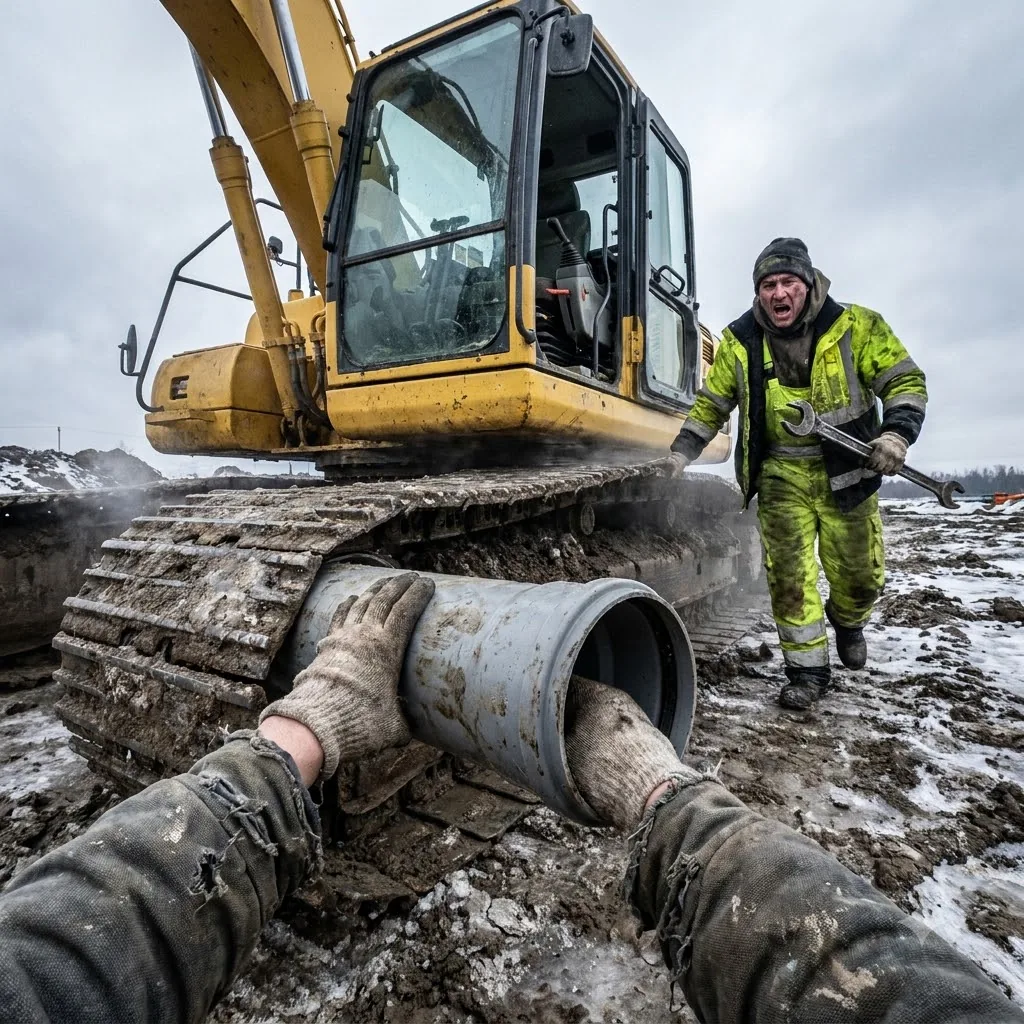
The diesel fumes burn the back of my throat while freezing mud numbs my legs against the steel treads of the fifty-ton Caterpillar excavator. The massive engine idles a few feet above my head, sending a terrifying, rhythmic vibration straight through my ribs and making my teeth clatter uncontrollably. A man in a dirt-stained high-vis vest stands just three feet away, gripping a heavy steel pipe wrench so tightly his knuckles shine stark white through a thick layer of black grease. His chest heaves, and thick tears track down his weathered face. His name tag reads Brent, and he is absolutely terrified. He swings the wrench at a nearby stump, violently splintering the rotting wood, before pointing the heavy metal tool directly at my face. He screams that his family is getting evicted on Friday and I am stealing the only paycheck keeping a roof over his children.
I shift my weight in the slush, trying to pull warmth back into my trapped right arm. I am locked to the heavy machinery with a reinforced steel U-lock, securing my wrist to the inner metal spokes of the excavator’s track. To make it harder for the police to remove me, the lock is threaded through a thick sleeve of PVC pipe. The metal of the machine is freezing, sucking the heat straight from my veins. My original plan felt so righteous this morning. I was going to sit here, delay the pipeline clearing crew, and force a peaceful but highly visible standoff. But the man towering over me does not look like a faceless corporate villain. He looks like a cornered animal.
Brent drops to his knees in the freezing mud. His heavy work boots, wrapped in silver duct tape at the toes, splash icy brown water onto my expensive Gore-Tex jacket. He begs me to unlock the chain. He tells me the site foreman warned him this morning that any delays would come directly out of his wages. He says his youngest daughter has a severe fever and he cannot afford to lose the medical insurance tied to this specific clearing contract.
The sheer desperation in his voice twists my stomach into a tight knot. I look up at the massive yellow arm of the machine casting a long, cold shadow over us. The mud around my legs is hardening as the temperature drops another few degrees. Brent scoots closer, the heavy wrench shaking violently in his grip. He tells me he will smash the lock himself if he has to. He says he will do whatever it takes to feed his kids. The raw panic in his eyes is entirely real. I feel a massive wave of profound guilt wash over me. I drove out here to protect the forest, but all I am doing is ruining the life of a guy who is barely scraping by.
I nod to him. I tell him to step back so I can reach my pockets. I tell him I will unlock the restraint and walk away immediately. Brent lets out a ragged, exhausted exhale and lowers the wrench, his shoulders slumping with intense relief. I slide my free left hand into my jacket pocket, my stiff fingers brushing against the small brass key. I prepare to undo the heavy lock and end the standoff.
A sharp burst of static crackles deep inside my right ear canal.
I flinch, pausing with my hand still deep in my pocket. A crisp, energetic voice rings out from the flesh-toned micro-earpiece hidden inside my ear. It is my producer, sitting warm and comfortable in a luxury editing van parked a mile down the access road. The voice tells me to stop moving right this second. The voice insists that the live footage is absolutely perfect. My producer explains that the stream metrics just tripled because the crying guy with the wrench is making incredible, high-tension television.
The voice directs me to tilt my chin up and look more frightened. The audio feed clicks again as my producer reminds me of the monetization thresholds we are trying to hit by the end of the month. He tells me to provoke the operator, to make him swing the wrench one more time so the hidden GoPro pinned to my collar catches the threat in high definition. The voice praises the production value of the freezing mud, calling the desperate worker a viral goldmine. He says the algorithm loves the class conflict.
I freeze, my fingers gripping the small brass key inside my pocket. The crushing realization hits me all at once. This entire protest was never about stopping a pipeline or saving the environment. It is a heavily produced content shoot, and I am the lead actor in a monetized, cynical hustle. I was sent here to ruin this man’s day for views.
Brent notices my hesitation. His relief vanishes, replaced instantly by a darker, wilder panic. He lifts the wrench again, stepping aggressively onto the metal tread right above my trapped arm. He screams that I am playing games with his life. He tells me he is absolutely done waiting. The voice in my earpiece laughs, telling me to hold my ground and get ready for the money shot. Brent raises the heavy steel wrench high above his head, aiming straight for the metal lock inches from my exposed wrist, his eyes locked on mine as the massive engine roars from a sudden, deafening surge of diesel power.
The diesel fumes burn the back of my throat while freezing mud numbs my legs against the steel treads of the fifty-ton Caterpillar excavator. The massive engine idles a few feet above my head, sending a terrifying, rhythmic vibration straight through my ribs and making my teeth clatter uncontrollably. A man in a dirt-stained high-vis vest stands just three feet away, gripping a heavy steel pipe wrench so tightly his knuckles shine stark white through a thick layer of black grease. His chest heaves, and thick tears track down his weathered face. His name tag reads Brent, and he is absolutely terrified. He swings the wrench at a nearby stump, violently splintering the rotting wood, before pointing the heavy metal tool directly at my face. He screams that his family is getting evicted on Friday and I am stealing the only paycheck keeping a roof over his children.
I shift my weight in the slush, trying to pull warmth back into my trapped right arm. I am locked to the heavy machinery with a reinforced steel U-lock, securing my wrist to the inner metal spokes of the excavator’s track. To make it harder for the police to remove me, the lock is threaded through a thick sleeve of PVC pipe. The metal of the machine is freezing, sucking the heat straight from my veins. My original plan felt so righteous this morning. I was going to sit here, delay the pipeline clearing crew, and force a peaceful but highly visible standoff. But the man towering over me does not look like a faceless corporate villain. He looks like a cornered animal.
Brent drops to his knees in the freezing mud. His heavy work boots, wrapped in silver duct tape at the toes, splash icy brown water onto my expensive Gore-Tex jacket. He begs me to unlock the chain. He tells me the site foreman warned him this morning that any delays would come directly out of his wages. He says his youngest daughter has a severe fever and he cannot afford to lose the medical insurance tied to this specific clearing contract.
The sheer desperation in his voice twists my stomach into a tight knot. I look up at the massive yellow arm of the machine casting a long, cold shadow over us. The mud around my legs is hardening as the temperature drops another few degrees. Brent scoots closer, the heavy wrench shaking violently in his grip. He tells me he will smash the lock himself if he has to. He says he will do whatever it takes to feed his kids. The raw panic in his eyes is entirely real. I feel a massive wave of profound guilt wash over me. I drove out here to protect the forest, but all I am doing is ruining the life of a guy who is barely scraping by.
I nod to him. I tell him to step back so I can reach my pockets. I tell him I will unlock the restraint and walk away immediately. Brent lets out a ragged, exhausted exhale and lowers the wrench, his shoulders slumping with intense relief. I slide my free left hand into my jacket pocket, my stiff fingers brushing against the small brass key. I prepare to undo the heavy lock and end the standoff.
A sharp burst of static crackles deep inside my right ear canal.
I flinch, pausing with my hand still deep in my pocket. A crisp, energetic voice rings out from the flesh-toned micro-earpiece hidden inside my ear. It is my producer, sitting warm and comfortable in a luxury editing van parked a mile down the access road. The voice tells me to stop moving right this second. The voice insists that the live footage is absolutely perfect. My producer explains that the stream metrics just tripled because the crying guy with the wrench is making incredible, high-tension television.
The voice directs me to tilt my chin up and look more frightened. The audio feed clicks again as my producer reminds me of the monetization thresholds we are trying to hit by the end of the month. He tells me to provoke the operator, to make him swing the wrench one more time so the hidden GoPro pinned to my collar catches the threat in high definition. The voice praises the production value of the freezing mud, calling the desperate worker a viral goldmine. He says the algorithm loves the class conflict.
I freeze, my fingers gripping the small brass key inside my pocket. The crushing realization hits me all at once. This entire protest was never about stopping a pipeline or saving the environment. It is a heavily produced content shoot, and I am the lead actor in a monetized, cynical hustle. I was sent here to ruin this man’s day for views.
Brent notices my hesitation. His relief vanishes, replaced instantly by a darker, wilder panic. He lifts the wrench again, stepping aggressively onto the metal tread right above my trapped arm. He screams that I am playing games with his life. He tells me he is absolutely done waiting. The voice in my earpiece laughs, telling me to hold my ground and get ready for the money shot. Brent raises the heavy steel wrench high above his head, aiming straight for the metal lock inches from my exposed wrist, his eyes locked on mine as the massive engine roars from a sudden, deafening surge of diesel power.