Story code: ST-000363
Part 1: The Barricade Drill
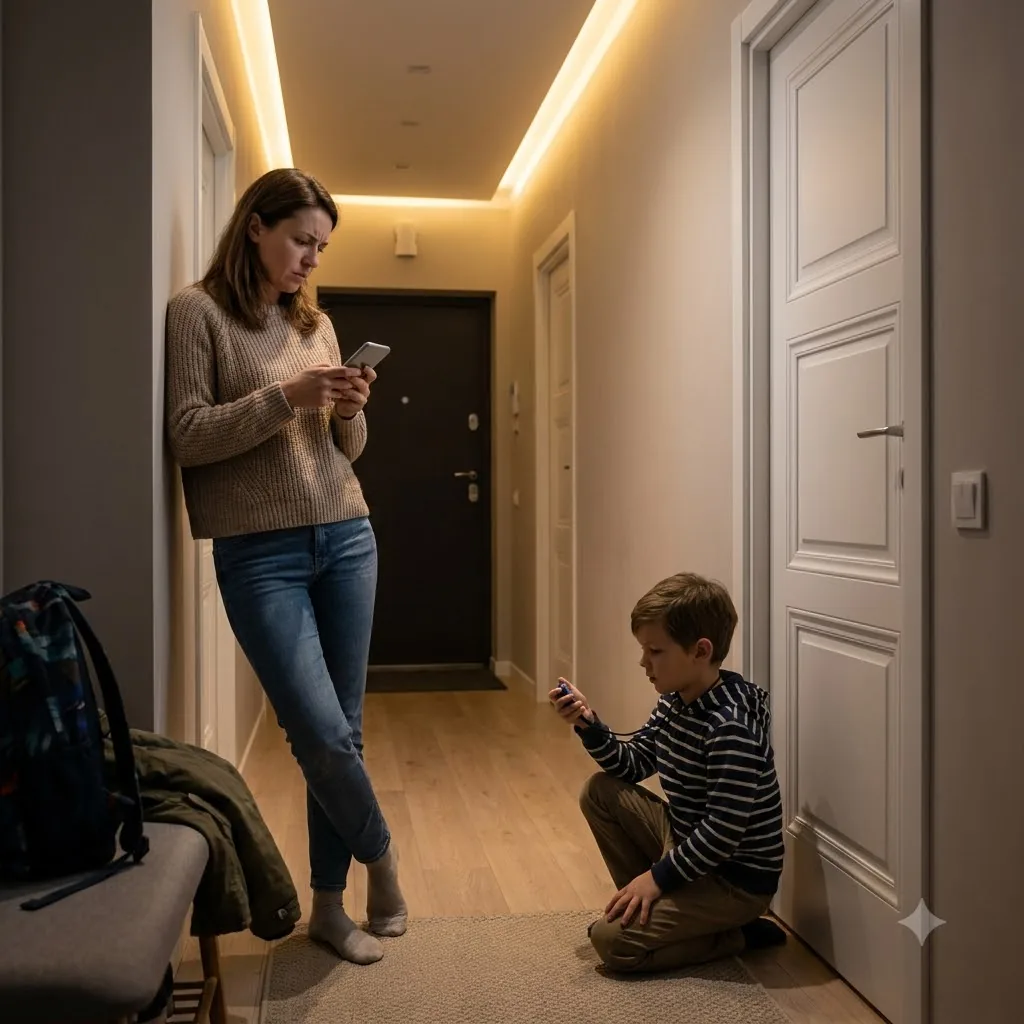
The digital stopwatch beeped once, a sharp sound that sent eight-year-old Leo diving toward the heavy oak console table in the hallway. He shoved his small shoulder against the wood, driving it an inch across the floorboards to block the front door, his eyes fixed on the ticking red numbers in his hand. Eliza stood frozen at the edge of the kitchen, watching her son pant through the barricade drill while a virtual city council meeting played silently on the glowing screen of her phone.
Leo moved with mechanical precision. He checked the deadbolt, sliding it locked and unlocked three times in rapid succession. Then he dragged a heavy canvas bag filled with canned goods out from the coat closet, wedging it against the base of the door. He clicked the stopwatch again. Two minutes and twelve seconds. He wrote the time down on a clipboard hanging from the coat rack.
Eliza kept her hands gripped tight around the edge of the granite kitchen island. She wanted to pull him away from the door and promise him nothing would ever get through it. But those promises held no weight in this house anymore. She simply watched him reset the heavy table and walk back to the starting line by the stairs.
On the phone resting by her knuckles, the council meeting transitioned to the next agenda item. A blue slide appeared on the screen, detailing a map of their neighborhood. The red highlighted square sat exactly ten yards from Eliza’s driveway. It was the vacant lot, a stretch of overgrown blackberry bushes and cracked concrete that the city had finally purchased.
She tapped the volume up a fraction. The tinny voice of Martin, a local housing advocate, drifted into the kitchen. Martin was praising the new shelter proposal, emphasizing the proximity to the transit line and the quiet residential safety of the street. Eliza knew his speech by heart. She had spent the last two years attending rallies with Martin, handing out flyers, and arguing with neighborhood associations to get this exact type of project funded.
Leo took his stance at the bottom of the stairs. He held the stopwatch up. The muscles in his jaw locked tight. He pressed the button and sprinted for the door again.
“This is a historic step for our community,” Martin said through the tiny speaker. “We are showing that we do not turn our backs on vulnerable families. We build them a safe harbor.”
Eliza watched her son drag the heavy bag of cans across the floor. His breathing was ragged, carrying a desperate edge that echoed off the high ceiling. He shoved the canvas sack so hard it tore against a stray nail on the baseboard. A can of soup rolled across the hallway, hitting the wall with a dull thud. Leo flinched at the noise, his eyes darting frantically to the front windows.
The street outside remained completely still. A neighbor’s sprinkler ticked back and forth on the adjacent lawn. Eliza swallowed hard, tasting bile in the back of her throat. She looked at the schematic on her phone. A three-story building with a capacity for eighty residents. Eighty strangers coming and going at all hours, right next to the bedroom window of a boy who timed his own survival drills on a Tuesday afternoon.
The council president took the microphone. He announced that the public comment period would close in five minutes. Only two hands were raised in the virtual queue. After that, they would vote to break ground.
A heavy diesel engine rumbled at the end of the street. Eliza heard it approaching before she saw it. A large delivery truck turned the corner, its tires grinding heavily against the asphalt. As it passed their house, the driver hit the air brakes.
A massive, pneumatic hiss shattered the quiet, followed by the aggressive clatter of the empty metal trailer bouncing over a pothole. To Eliza, the sound was merely loud.
To Leo, the sudden violent noise ripped right through his reality.
He dropped the stopwatch. It cracked against the floorboards. He threw himself onto the ground, flattening his body against the hardwood. His hands clamped viciously over his ears. He pulled his knees tight to his chest, making himself as small as possible. A low, keening sound escaped his throat, a noise of pure, unadulterated terror. He squeezed his eyes shut, shaking violently as if the house were crumbling down around him.
Eliza abandoned the kitchen counter. She sprinted down the hallway and dropped to her knees beside him. She reached out, placing her hands on his trembling back. The muscle spasms under his thin t-shirt were rigid, completely locked down in panic. She whispered softly, telling him he was safe, telling him the noise was gone, but her voice could not penetrate the walls of his flashback. He scrambled backward, trying to push himself under the tight clearance of the console table, scratching his arms on the rough wood.
Eliza pulled him gently into her chest. He fought her for a second before collapsing against her shoulder, his chest heaving with silent sobs. She rocked him on the floor of the hallway.
From the kitchen counter, the council president’s voice drifted down the hall. He stated that the final caller had passed, and he was opening the floor for a motion to approve the shelter construction on the adjacent lot.
Eliza stared at the front door. She looked at the heavy canvas bag, the deadbolts, and the boy shivering in her arms. She pictured eighty unfamiliar adults walking past that door every single day. She pictured the noise, the unpredictability, the constant movement outside their perimeter.
She kissed the top of Leo’s head and gently lowered him to the floor. He stayed curled in a ball, his hands still covering his ears.
Eliza stood up. She walked back into the kitchen. Her hands were perfectly steady. She picked up the phone. On the screen, Martin was smiling, waiting for the vote he had worked so hard to secure. Eliza tapped the icon to raise her virtual hand.
The council president paused. He noted a late entry in the queue and unmuted her line.
Eliza stared at the screen. She spoke clearly into the microphone. “Council members, my name is Eliza Thorne, and I am calling to register my formal opposition to this project.”
A heavy silence fell over the digital meeting. Martin’s smile dropped instantly.
Eliza did not stop. She began listing the structural flaws of the proposed building, deliberately using the exact zoning technicalities she and Martin had spent months learning how to bypass.
Martin’s face flashed across the main view of the meeting. He leaned close to his camera, his expression twisting from confusion into sharp, aggressive recognition as he unmuted his own microphone.
“Eliza,” Martin interrupted, his voice echoing loudly in the quiet kitchen. “I know exactly what you are doing right now.”
The digital stopwatch beeped once, a sharp sound that sent eight-year-old Leo diving toward the heavy oak console table in the hallway. He shoved his small shoulder against the wood, driving it an inch across the floorboards to block the front door, his eyes fixed on the ticking red numbers in his hand. Eliza stood frozen at the edge of the kitchen, watching her son pant through the barricade drill while a virtual city council meeting played silently on the glowing screen of her phone.
Leo moved with mechanical precision. He checked the deadbolt, sliding it locked and unlocked three times in rapid succession. Then he dragged a heavy canvas bag filled with canned goods out from the coat closet, wedging it against the base of the door. He clicked the stopwatch again. Two minutes and twelve seconds. He wrote the time down on a clipboard hanging from the coat rack.
Eliza kept her hands gripped tight around the edge of the granite kitchen island. She wanted to pull him away from the door and promise him nothing would ever get through it. But those promises held no weight in this house anymore. She simply watched him reset the heavy table and walk back to the starting line by the stairs.
On the phone resting by her knuckles, the council meeting transitioned to the next agenda item. A blue slide appeared on the screen, detailing a map of their neighborhood. The red highlighted square sat exactly ten yards from Eliza’s driveway. It was the vacant lot, a stretch of overgrown blackberry bushes and cracked concrete that the city had finally purchased.
She tapped the volume up a fraction. The tinny voice of Martin, a local housing advocate, drifted into the kitchen. Martin was praising the new shelter proposal, emphasizing the proximity to the transit line and the quiet residential safety of the street. Eliza knew his speech by heart. She had spent the last two years attending rallies with Martin, handing out flyers, and arguing with neighborhood associations to get this exact type of project funded.
Leo took his stance at the bottom of the stairs. He held the stopwatch up. The muscles in his jaw locked tight. He pressed the button and sprinted for the door again.
“This is a historic step for our community,” Martin said through the tiny speaker. “We are showing that we do not turn our backs on vulnerable families. We build them a safe harbor.”
Eliza watched her son drag the heavy bag of cans across the floor. His breathing was ragged, carrying a desperate edge that echoed off the high ceiling. He shoved the canvas sack so hard it tore against a stray nail on the baseboard. A can of soup rolled across the hallway, hitting the wall with a dull thud. Leo flinched at the noise, his eyes darting frantically to the front windows.
The street outside remained completely still. A neighbor’s sprinkler ticked back and forth on the adjacent lawn. Eliza swallowed hard, tasting bile in the back of her throat. She looked at the schematic on her phone. A three-story building with a capacity for eighty residents. Eighty strangers coming and going at all hours, right next to the bedroom window of a boy who timed his own survival drills on a Tuesday afternoon.
The council president took the microphone. He announced that the public comment period would close in five minutes. Only two hands were raised in the virtual queue. After that, they would vote to break ground.
A heavy diesel engine rumbled at the end of the street. Eliza heard it approaching before she saw it. A large delivery truck turned the corner, its tires grinding heavily against the asphalt. As it passed their house, the driver hit the air brakes.
A massive, pneumatic hiss shattered the quiet, followed by the aggressive clatter of the empty metal trailer bouncing over a pothole. To Eliza, the sound was merely loud.
To Leo, the sudden violent noise ripped right through his reality.
He dropped the stopwatch. It cracked against the floorboards. He threw himself onto the ground, flattening his body against the hardwood. His hands clamped viciously over his ears. He pulled his knees tight to his chest, making himself as small as possible. A low, keening sound escaped his throat, a noise of pure, unadulterated terror. He squeezed his eyes shut, shaking violently as if the house were crumbling down around him.
Eliza abandoned the kitchen counter. She sprinted down the hallway and dropped to her knees beside him. She reached out, placing her hands on his trembling back. The muscle spasms under his thin t-shirt were rigid, completely locked down in panic. She whispered softly, telling him he was safe, telling him the noise was gone, but her voice could not penetrate the walls of his flashback. He scrambled backward, trying to push himself under the tight clearance of the console table, scratching his arms on the rough wood.
Eliza pulled him gently into her chest. He fought her for a second before collapsing against her shoulder, his chest heaving with silent sobs. She rocked him on the floor of the hallway.
From the kitchen counter, the council president’s voice drifted down the hall. He stated that the final caller had passed, and he was opening the floor for a motion to approve the shelter construction on the adjacent lot.
Eliza stared at the front door. She looked at the heavy canvas bag, the deadbolts, and the boy shivering in her arms. She pictured eighty unfamiliar adults walking past that door every single day. She pictured the noise, the unpredictability, the constant movement outside their perimeter.
She kissed the top of Leo’s head and gently lowered him to the floor. He stayed curled in a ball, his hands still covering his ears.
Eliza stood up. She walked back into the kitchen. Her hands were perfectly steady. She picked up the phone. On the screen, Martin was smiling, waiting for the vote he had worked so hard to secure. Eliza tapped the icon to raise her virtual hand.
The council president paused. He noted a late entry in the queue and unmuted her line.
Eliza stared at the screen. She spoke clearly into the microphone. “Council members, my name is Eliza Thorne, and I am calling to register my formal opposition to this project.”
A heavy silence fell over the digital meeting. Martin’s smile dropped instantly.
Eliza did not stop. She began listing the structural flaws of the proposed building, deliberately using the exact zoning technicalities she and Martin had spent months learning how to bypass.
Martin’s face flashed across the main view of the meeting. He leaned close to his camera, his expression twisting from confusion into sharp, aggressive recognition as he unmuted his own microphone.
“Eliza,” Martin interrupted, his voice echoing loudly in the quiet kitchen. “I know exactly what you are doing right now.”