Story code: ST-000392
Part 1: The Four-Minute Impound
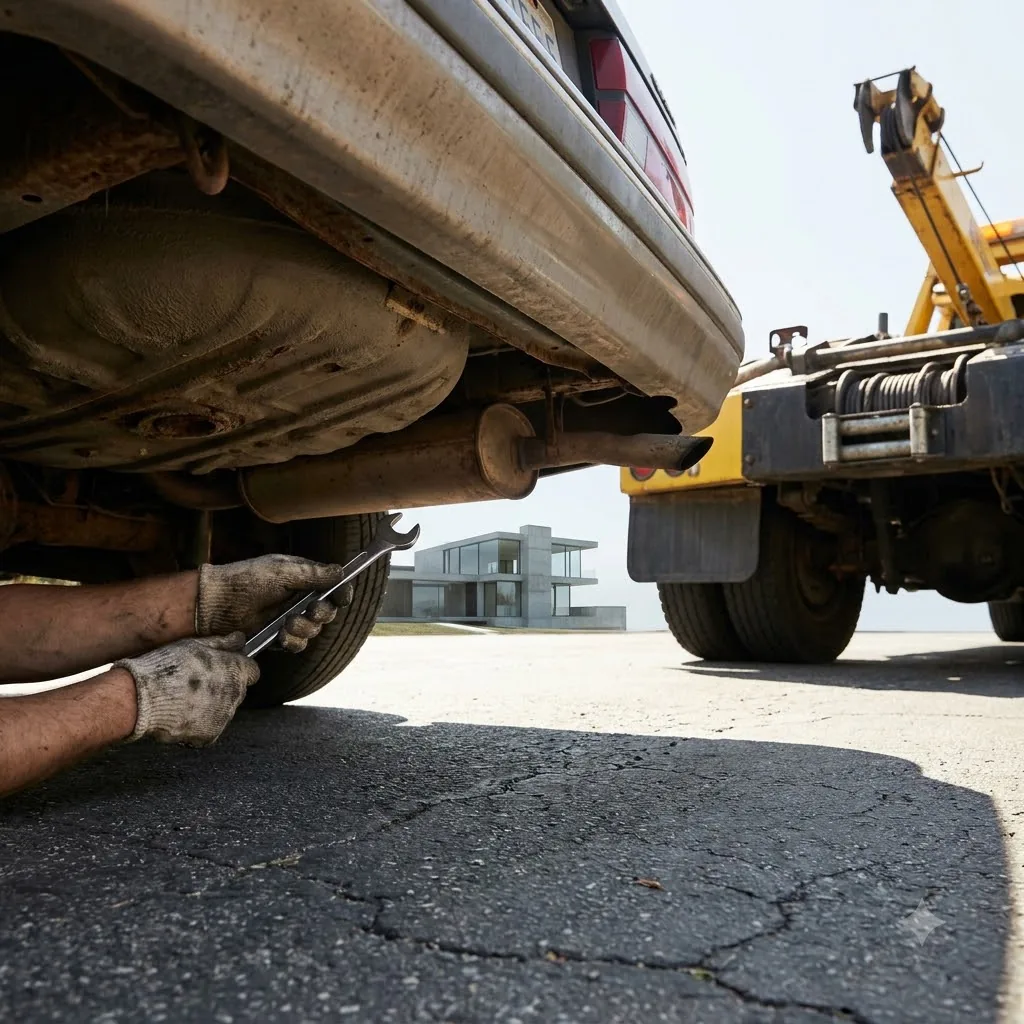
Marcus wedged his shoulder blades firmly against the cracked concrete of his driveway, his muscles straining as he torqued a heavy wrench on the sway bar link of a rusted 2006 Civic. The satisfying click of the socket seating properly was instantly drowned out by a sudden, high-pitched hydraulic whine, followed by a massive shadow that blotted out the late morning sun. Heavy diesel exhaust rolled over the pavement just as a thick steel tow hook dropped with a metallic clank inches from his boots.
He scrambled sideways on his plastic creeper, scraping his elbow against the rough cement to get clear of the undercarriage. A towering city flatbed truck sat idling parallel to his property line, its amber light bar flashing brightly against the weathered siding of his modest ranch home. A man in a high-visibility Department of Transportation vest was already pulling the winch remote from his belt, paying out a braided steel cable toward the Civic’s front bumper.
Marcus demanded the operator stop immediately, wiping a gritty mixture of rust and chassis grease from his forehead. The operator did not pause his work, expertly looping a heavy nylon strap through the lower control arm. The city worker pointed a gloved finger toward the street, his flat tone indicating the vehicle violated municipal code and was slated for immediate removal.
Marcus stepped directly between the operator and the car, pointing out that the vehicle was parked squarely on his private driveway. There was no street obstruction. There was no public safety hazard.
The operator sighed, pulling a portable thermal printer from the truck’s dash. He tore off a curling sheet of paper and shoved it at Marcus. The bold citation header read ‘Unlicensed Commercial Automotive Repair in a Residential Zone,’ coupled with a secondary violation for ‘Hazardous Fluids Endangering the Public Right of Way.’
Marcus stared down at the dry pavement. Aside from a faded, ten-year-old oil stain near the garage door, the concrete was immaculate. He explained this to the driver, gesturing broadly to the carefully laid out drip pans and his neatly organized rolling tool chest.
The operator shook his head, tapped a rubberized button on his remote control, and the steel cable pulled taut with a violent snap. The Civic’s suspension groaned loudly as the front tires scraped forward. The driver stated that any arguments had to be directed to a hearing officer downtown, adding that he was just acting on an urgent priority dispatch from the city’s 311 citizen reporting system.
Marcus looked down at the curled slip of paper. He scanned past the boilerplate legal threats and the staggering four-hundred-dollar base impound fee, his eyes locking onto the tiny dispatch details printed at the very bottom. The automated system recorded the citizen complaint at exactly ten fourteen in the morning.
Marcus checked the digital display on his scratched Casio watch. It read exactly ten eighteen.
A four-minute response time for a standard citizen complaint was a physical impossibility. Bureaucracy took weeks to generate a simple inspector visit. A four-minute turnaround for a commercial tow truck to arrive in a quiet suburban cul-de-sac meant the vehicle had to have been idling just blocks away, waiting for a predetermined signal.
The hydraulic winch screamed as the Civic’s front wheels crested the steep metal incline of the flatbed. Marcus tuned out the deafening noise, his gaze shifting slowly from the departing tow truck to the exact property line directly to his left.
His neighbor, Elias, had purchased the adjacent double-lot six months ago, immediately erecting a pristine white vinyl privacy fence. Elias had mentioned preserving property values three distinct times in the last month alone, always delivering the message with a tight, unblinking smile.
Marcus scanned the gleaming white fascia board of Elias’s newly renovated brick home. Tucked securely under the eaves hung a sophisticated black dome security camera. A steady red LED ring pulsed constantly in the deep shadow of the roofline. The high-definition lens was angled dead center on Marcus’s driveway, capturing the precise spot where the Civic had been parked.
As Marcus stared at the device, the black dome swiveled slightly on its axis, tracking his exact position on the concrete.
The towing operator slammed the flatbed hydraulic levers into place, the heavy steel bed leveling out with a thunderous crash. The driver climbed into the cab and engaged the loud air brakes, preparing to haul away the vehicle Marcus had promised to return to a struggling single mother by noon.
Marcus looked at the heavy wrench still gripped tightly in his right fist. He watched the departing flatbed, then turned his attention back to the pulsing red light mounted under his neighbor’s eaves. The camera remained locked directly on him, an unblinking digital eye feeding a live stream to an unseen enemy who had somehow managed to weaponize the city bureaucracy itself.
Marcus let the wrench slip from his fingers, allowing the heavy steel to clatter loudly against the driveway. He turned his back on the disappearing city tow truck, walked purposefully past his open tool chest, and took a deliberate step off his cracked concrete to cross the invisible line onto the pristine green sod of Elias’s property.
Marcus wedged his shoulder blades firmly against the cracked concrete of his driveway, his muscles straining as he torqued a heavy wrench on the sway bar link of a rusted 2006 Civic. The satisfying click of the socket seating properly was instantly drowned out by a sudden, high-pitched hydraulic whine, followed by a massive shadow that blotted out the late morning sun. Heavy diesel exhaust rolled over the pavement just as a thick steel tow hook dropped with a metallic clank inches from his boots.
He scrambled sideways on his plastic creeper, scraping his elbow against the rough cement to get clear of the undercarriage. A towering city flatbed truck sat idling parallel to his property line, its amber light bar flashing brightly against the weathered siding of his modest ranch home. A man in a high-visibility Department of Transportation vest was already pulling the winch remote from his belt, paying out a braided steel cable toward the Civic’s front bumper.
Marcus demanded the operator stop immediately, wiping a gritty mixture of rust and chassis grease from his forehead. The operator did not pause his work, expertly looping a heavy nylon strap through the lower control arm. The city worker pointed a gloved finger toward the street, his flat tone indicating the vehicle violated municipal code and was slated for immediate removal.
Marcus stepped directly between the operator and the car, pointing out that the vehicle was parked squarely on his private driveway. There was no street obstruction. There was no public safety hazard.
The operator sighed, pulling a portable thermal printer from the truck’s dash. He tore off a curling sheet of paper and shoved it at Marcus. The bold citation header read ‘Unlicensed Commercial Automotive Repair in a Residential Zone,’ coupled with a secondary violation for ‘Hazardous Fluids Endangering the Public Right of Way.’
Marcus stared down at the dry pavement. Aside from a faded, ten-year-old oil stain near the garage door, the concrete was immaculate. He explained this to the driver, gesturing broadly to the carefully laid out drip pans and his neatly organized rolling tool chest.
The operator shook his head, tapped a rubberized button on his remote control, and the steel cable pulled taut with a violent snap. The Civic’s suspension groaned loudly as the front tires scraped forward. The driver stated that any arguments had to be directed to a hearing officer downtown, adding that he was just acting on an urgent priority dispatch from the city’s 311 citizen reporting system.
Marcus looked down at the curled slip of paper. He scanned past the boilerplate legal threats and the staggering four-hundred-dollar base impound fee, his eyes locking onto the tiny dispatch details printed at the very bottom. The automated system recorded the citizen complaint at exactly ten fourteen in the morning.
Marcus checked the digital display on his scratched Casio watch. It read exactly ten eighteen.
A four-minute response time for a standard citizen complaint was a physical impossibility. Bureaucracy took weeks to generate a simple inspector visit. A four-minute turnaround for a commercial tow truck to arrive in a quiet suburban cul-de-sac meant the vehicle had to have been idling just blocks away, waiting for a predetermined signal.
The hydraulic winch screamed as the Civic’s front wheels crested the steep metal incline of the flatbed. Marcus tuned out the deafening noise, his gaze shifting slowly from the departing tow truck to the exact property line directly to his left.
His neighbor, Elias, had purchased the adjacent double-lot six months ago, immediately erecting a pristine white vinyl privacy fence. Elias had mentioned preserving property values three distinct times in the last month alone, always delivering the message with a tight, unblinking smile.
Marcus scanned the gleaming white fascia board of Elias’s newly renovated brick home. Tucked securely under the eaves hung a sophisticated black dome security camera. A steady red LED ring pulsed constantly in the deep shadow of the roofline. The high-definition lens was angled dead center on Marcus’s driveway, capturing the precise spot where the Civic had been parked.
As Marcus stared at the device, the black dome swiveled slightly on its axis, tracking his exact position on the concrete.
The towing operator slammed the flatbed hydraulic levers into place, the heavy steel bed leveling out with a thunderous crash. The driver climbed into the cab and engaged the loud air brakes, preparing to haul away the vehicle Marcus had promised to return to a struggling single mother by noon.
Marcus looked at the heavy wrench still gripped tightly in his right fist. He watched the departing flatbed, then turned his attention back to the pulsing red light mounted under his neighbor’s eaves. The camera remained locked directly on him, an unblinking digital eye feeding a live stream to an unseen enemy who had somehow managed to weaponize the city bureaucracy itself.
Marcus let the wrench slip from his fingers, allowing the heavy steel to clatter loudly against the driveway. He turned his back on the disappearing city tow truck, walked purposefully past his open tool chest, and took a deliberate step off his cracked concrete to cross the invisible line onto the pristine green sod of Elias’s property.