Story code: ST-000405
Part 4: The Erasure
“Since you are refusing the care plan, and actively creating a threatening environment,” Chloe said, her voice shaking with a perfectly rehearsed, weaponized fear. “I must demand your company badge. Immediately.”
I looked at the small, plastic rectangle clipped to my belt. It was my physical key to the building, the elevators, the secure servers, and the last three years of my life. If I hesitated, she would open that frosted glass door and scream. If I reached for it too quickly, the silent camera hidden in the faux succulents would record a sudden, aggressive lunge.
I kept my movements agonizingly slow. I brought my right hand to my waist, pinched the plastic clip, and pulled. The retractable nylon cord hissed briefly before I detached the entire mechanism. I reached forward, keeping my elbow bent so I did not extend my arm too far, and placed the badge on the very edge of the bamboo coffee table.
Chloe did not touch it. She kept her back pressed firmly against the door. “Now, stand up. Turn around. Walk out the door and keep your hands where I can see them.”
I pushed myself up from the oversized beanbag chair. It was a clumsy, undignified movement, exactly as the furniture was designed to enforce. I turned my back to her. The heavy magnetic lock clicked. The door swung open, and the suffocating scent of synthetic eucalyptus was instantly replaced by the stale, refrigerated air of the main floor.
I stepped out. Chloe followed, keeping a wide, theatrical distance between us.
The open-plan office, usually a hive of cross-talk and ringing headsets, was completely silent. It was not the silence of an empty room; it was the heavy, suffocating silence of fifty people holding their breath. I walked down the main aisle. No one was looking at me. Everyone’s eyes were locked onto their glowing monitors, their postures unnaturally rigid.
A corporate narrative is a terrifyingly efficient virus. I did not need to see their Slack screens to know what had been broadcast while I was locked in the Sanctuary. The hushed warnings about my “crisis.” The directives not to engage, to give me “space to process.” By refusing to sign a false confession of mental illness, I had inadvertently validated their script. To them, I was not a top performer being robbed of his equity; I was a volatile, toxic element being neutralized for their safety.
I passed the strategy pod. Todd was sitting at his new desk-my old desk, I realized. He had his noise-canceling headphones on, his eyes fixed on a spreadsheet I had built from scratch last week. He did not look up. Beside him, Richard, the executive who had praised my unrivaled precision just forty-six hours ago, stood with his arms crossed. Richard offered me a slow, sorrowful nod-the kind reserved for viewing a corpse at a funeral-before turning his back entirely.
I reached my former workstation. A man in a navy-blue windbreaker with the building’s security logo stood silently beside it. Resting on my empty ergonomic chair was a standard white cardboard banker’s box. It looked impossibly small. Inside was a spare phone charger, a mechanical keyboard I had bought with my own money, a framed photograph of my dog, and my personal smartphone.
“Please take your belongings, sir,” the security guard said. His tone was polite but firm. He positioned himself squarely between me and the server rack.
I did not look back at Chloe. I picked up the cardboard box. The weight of it was pathetic. Three years of seventy-hour weeks, weekends sacrificed to Tokyo time zones, four million dollars in client expansions-it all reduced to three pounds of cheap electronics and a wooden picture frame.
I walked toward the elevators. The guard trailed exactly three paces behind me, his heavy boots thudding softly on the gray acoustic carpet. As the elevator doors slid open, I glanced back one final time.
Chloe was standing at the end of the aisle. Richard had his hand on her shoulder, leaning in to listen as she wiped an imaginary tear from her cheek. She was already securing her place in the executive bonus pool, fueled by the two hundred and twelve thousand dollars of unvested equity I was leaving behind.
The stainless-steel doors closed, cutting off the view.
We rode down in absolute silence. In the main lobby, sitting on a leather bench near the reception desk, were two EMTs with a collapsible stretcher. They watched me walk out, the security guard escorting me all the way to the revolving glass doors to ensure I left the premises.
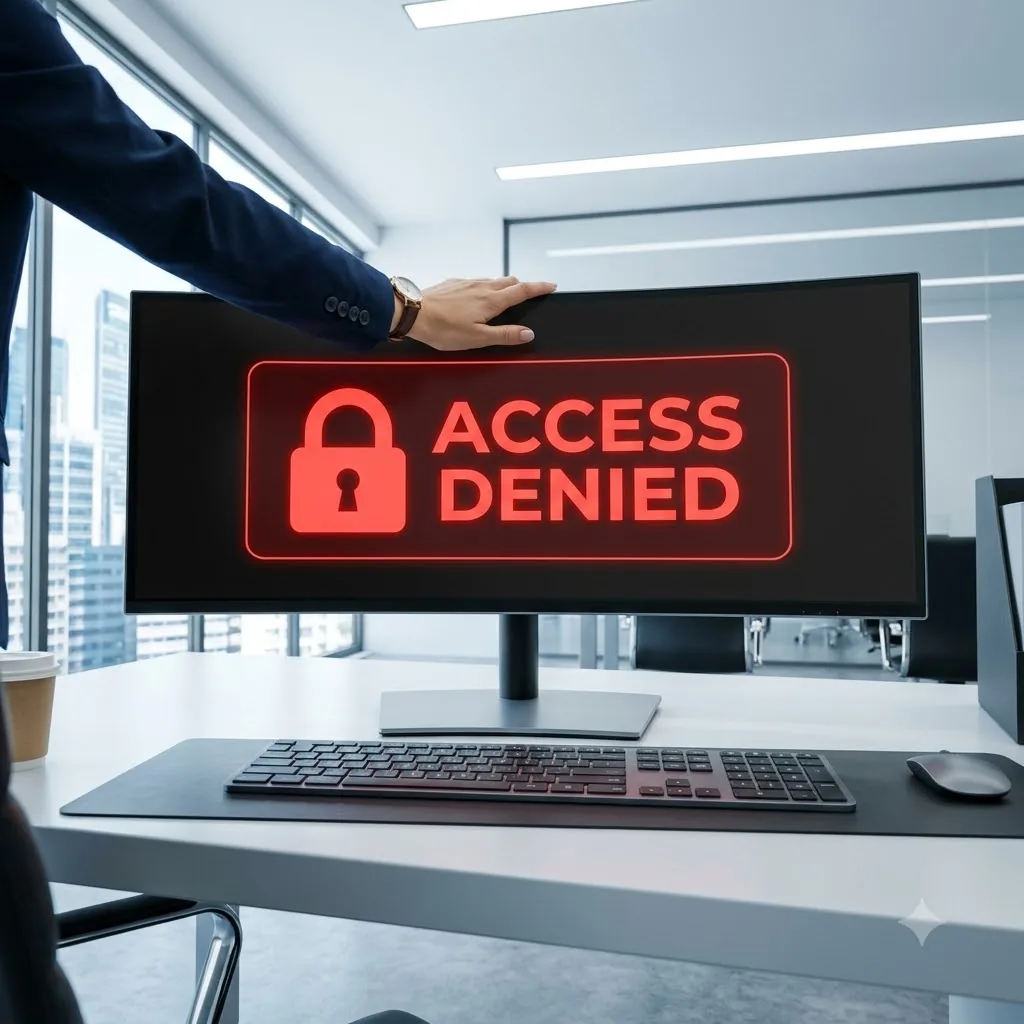
I stepped out onto the concrete pavement. The mid-afternoon sun was blinding, completely indifferent to the fact that I had just been professionally erased. I set the cardboard box down on a stone planter and picked up my phone. The screen flashed as the mobile device management software completed its final remote wipe protocol. My corporate email icon vanished. The Slack app dissolved. All my contacts, my calendar, my client notes-deleted in a matter of seconds.
I stood on the sidewalk, holding a blank phone, entirely locked out of the life I had built. The system was functioning exactly as they designed it.