Story code: ST-000411
Part 1: The Null-Engagement Zone
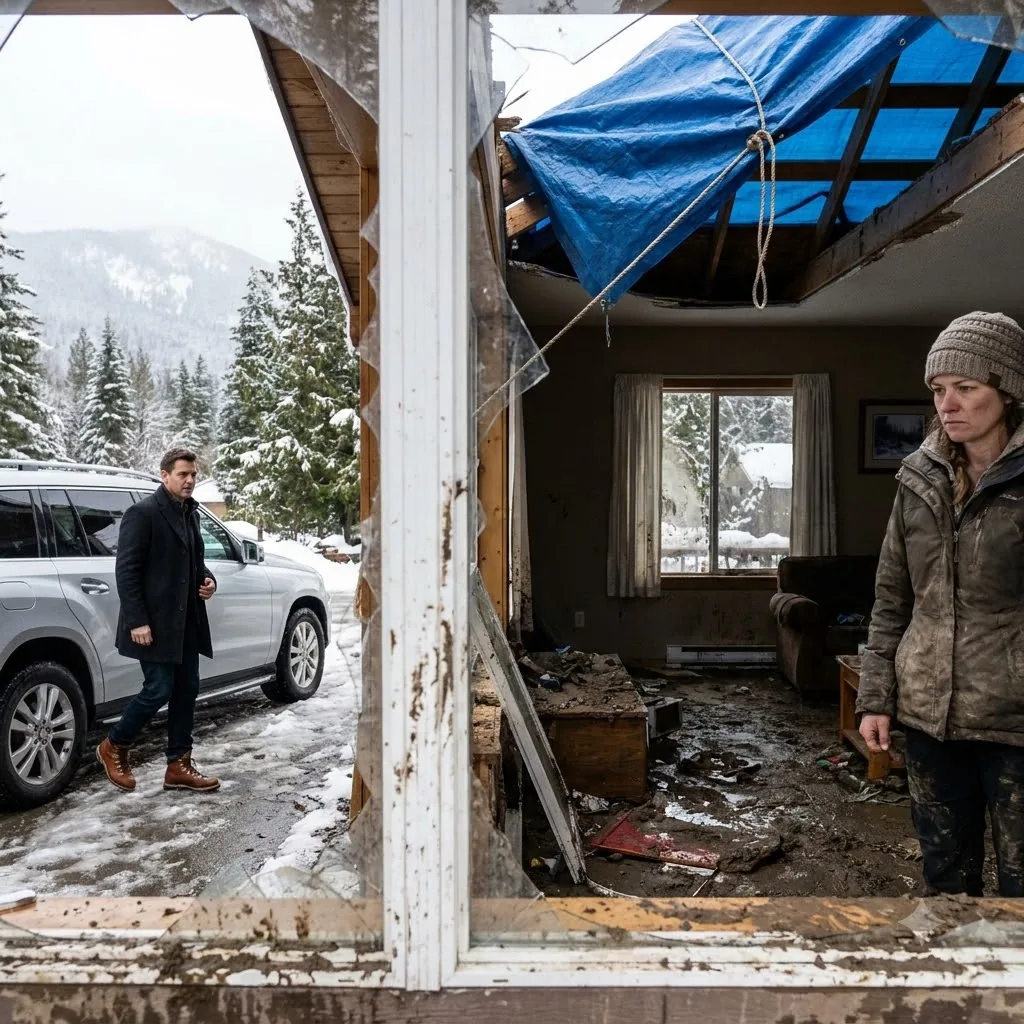
Maya stood ankle-deep in the cold, hardening sludge that used to be her living room, gripping her solar-charged phone while the insurance agent on the line cited a lack of telemetry data.
“According to the third-party risk assessment algorithm, the structure at this address registers as a null-engagement zone,” the voice said, echoing slightly through the tinny speaker.
Maya kicked at a piece of shattered drywall, watching a thick brown puddle seep over the toe of her work boot. The mudslide had torn through the back half of her cabin three days ago, dragging a massive, century-old Douglas fir straight through her kitchen. The tree trunk now rested on her kitchen island, surrounded by a brutal trail of uprooted earth, broken glass, and shredded insulation that stretched across her braided rugs.
“I am standing inside the structure right now,” Maya said. “Half of it is missing. The roof is currently supported by a tree trunk.”
“I understand you are reporting physical damage, ma’am,” the agent said. The typing on his end sounded rhythmic, steady, and entirely detached. “However, your policy requires primary residence verification before any disaster funds can be released. The underwriter uses a localized tracking aggregate to confirm occupancy. For the past thirty-six months, this geographic coordinate has produced zero ad-impression pings, zero smart-meter fluctuations, and a complete absence of mobile location telemetry.”
Maya stared at the ruined refrigerator lying on its side in the mud, its heavy door bent outward. The smell of wet rot, shattered pine sap, and stagnant water hung heavy in the air. She tightened her grip on the phone, feeling the slick coating of dirt on the plastic casing.
“I pay my premiums every month via postal money order,” Maya said.
“Payment history does not override the behavioral data index,” the agent replied smoothly. “The data broker flagged the property as an abandoned asset. Without a verifiable digital footprint linking your consumer habits to the physical space, the algorithm automatically categorizes the claim as a fraudulent filing on a vacant structure.”
A heavy chunk of mud detached from the ceiling and slapped against the ruined floorboards, sending a spray of dirty water onto her jeans. Maya let out a slow, measured breath. She had spent years ensuring her existence generated absolutely no algorithmic ripples. She had stripped the smart chips out of her appliances, used cash for every transaction in town, and routed her single phone line through a series of physical scramblers. Her reasons were her own. The total isolation of the mountain cabin had been perfect.
Now, the absolute success of her digital erasure was being weaponized against her.
“The house is not vacant,” Maya said, her voice dropping to a harsh whisper. “I have clothing in the closet. I have dishes shattered all over the floor. Send an adjuster out here to look at the mud.”
“Physical debris does not establish sustained residency under the new digital compliance guidelines,” the agent recited. “The lack of continuous localized data-such as grocery delivery pings, streaming service IP logs, or smart-thermostat adjustments-indicates no human activity. The algorithm concludes you do not exist at this address.”
Maya squeezed her eyes shut. The sheer bureaucratic absurdity pressed against her temples like a vise. Her home was destroyed, her sanctuary ripped apart by the earth itself, and this sterile voice in a distant call center was telling her the dirt and the devastation were not real enough.
“I need you to override the algorithm,” Maya said. “Look at the satellite imagery. The mudslide made national news. You can see the scar on the mountain from space.”
“Satellite imagery only confirms a geological event occurred,” the agent said. “It does not verify your continuous existence within the structure prior to the event. In fact, your complete lack of targeted advertising profiles triggers a severe anomaly alert in our fraud detection matrix.”
Maya opened her eyes and looked down. Half-buried in the sludge near the fireplace rested a small metal lockbox. The mudslide had torn it from its hiding place beneath the floorboards. It was the one thing she desperately needed to keep hidden from corporate scans. Her zero footprint was not a quirk of a rugged mountain lifestyle. It was a strict, unyielding necessity.
“There must be an appeals process,” Maya said.
The typing on the other end stopped. A brief, electronic chime sounded over the line.
“There is an escalation protocol,” the agent said. “I can transfer this file to the Corporate Audit Division. However, you must consent to a full localized data extraction. An auditor will physically attach a telemetry siphon to your personal devices and structural framework to rebuild your historical data profile.”
Maya stared at the lockbox in the mud. Letting a corporate auditor scrape her devices and reconstruct her hidden past would tear down the firewall she had spent five years building.
“I am initiating the escalation transfer now,” the agent continued. “Please hold for the on-site extraction coordinator.”
The line clicked, replaced by a hollow, ringing silence.
Before Maya could pull the phone away from her ear, the heavy, rhythmic crunch of thick tires rolling over shattered timber echoed from the front yard. She turned toward the gaping hole where her front door used to be. A sleek, matte-black utility vehicle with no license plates ground to a halt directly over her ruined flowerbeds. The driver side door swung open, and a figure in a sharp grey suit stepped down into the mud.
Maya stood ankle-deep in the cold, hardening sludge that used to be her living room, gripping her solar-charged phone while the insurance agent on the line cited a lack of telemetry data.
“According to the third-party risk assessment algorithm, the structure at this address registers as a null-engagement zone,” the voice said, echoing slightly through the tinny speaker.
Maya kicked at a piece of shattered drywall, watching a thick brown puddle seep over the toe of her work boot. The mudslide had torn through the back half of her cabin three days ago, dragging a massive, century-old Douglas fir straight through her kitchen. The tree trunk now rested on her kitchen island, surrounded by a brutal trail of uprooted earth, broken glass, and shredded insulation that stretched across her braided rugs.
“I am standing inside the structure right now,” Maya said. “Half of it is missing. The roof is currently supported by a tree trunk.”
“I understand you are reporting physical damage, ma’am,” the agent said. The typing on his end sounded rhythmic, steady, and entirely detached. “However, your policy requires primary residence verification before any disaster funds can be released. The underwriter uses a localized tracking aggregate to confirm occupancy. For the past thirty-six months, this geographic coordinate has produced zero ad-impression pings, zero smart-meter fluctuations, and a complete absence of mobile location telemetry.”
Maya stared at the ruined refrigerator lying on its side in the mud, its heavy door bent outward. The smell of wet rot, shattered pine sap, and stagnant water hung heavy in the air. She tightened her grip on the phone, feeling the slick coating of dirt on the plastic casing.
“I pay my premiums every month via postal money order,” Maya said.
“Payment history does not override the behavioral data index,” the agent replied smoothly. “The data broker flagged the property as an abandoned asset. Without a verifiable digital footprint linking your consumer habits to the physical space, the algorithm automatically categorizes the claim as a fraudulent filing on a vacant structure.”
A heavy chunk of mud detached from the ceiling and slapped against the ruined floorboards, sending a spray of dirty water onto her jeans. Maya let out a slow, measured breath. She had spent years ensuring her existence generated absolutely no algorithmic ripples. She had stripped the smart chips out of her appliances, used cash for every transaction in town, and routed her single phone line through a series of physical scramblers. Her reasons were her own. The total isolation of the mountain cabin had been perfect.
Now, the absolute success of her digital erasure was being weaponized against her.
“The house is not vacant,” Maya said, her voice dropping to a harsh whisper. “I have clothing in the closet. I have dishes shattered all over the floor. Send an adjuster out here to look at the mud.”
“Physical debris does not establish sustained residency under the new digital compliance guidelines,” the agent recited. “The lack of continuous localized data-such as grocery delivery pings, streaming service IP logs, or smart-thermostat adjustments-indicates no human activity. The algorithm concludes you do not exist at this address.”
Maya squeezed her eyes shut. The sheer bureaucratic absurdity pressed against her temples like a vise. Her home was destroyed, her sanctuary ripped apart by the earth itself, and this sterile voice in a distant call center was telling her the dirt and the devastation were not real enough.
“I need you to override the algorithm,” Maya said. “Look at the satellite imagery. The mudslide made national news. You can see the scar on the mountain from space.”
“Satellite imagery only confirms a geological event occurred,” the agent said. “It does not verify your continuous existence within the structure prior to the event. In fact, your complete lack of targeted advertising profiles triggers a severe anomaly alert in our fraud detection matrix.”
Maya opened her eyes and looked down. Half-buried in the sludge near the fireplace rested a small metal lockbox. The mudslide had torn it from its hiding place beneath the floorboards. It was the one thing she desperately needed to keep hidden from corporate scans. Her zero footprint was not a quirk of a rugged mountain lifestyle. It was a strict, unyielding necessity.
“There must be an appeals process,” Maya said.
The typing on the other end stopped. A brief, electronic chime sounded over the line.
“There is an escalation protocol,” the agent said. “I can transfer this file to the Corporate Audit Division. However, you must consent to a full localized data extraction. An auditor will physically attach a telemetry siphon to your personal devices and structural framework to rebuild your historical data profile.”
Maya stared at the lockbox in the mud. Letting a corporate auditor scrape her devices and reconstruct her hidden past would tear down the firewall she had spent five years building.
“I am initiating the escalation transfer now,” the agent continued. “Please hold for the on-site extraction coordinator.”
The line clicked, replaced by a hollow, ringing silence.
Before Maya could pull the phone away from her ear, the heavy, rhythmic crunch of thick tires rolling over shattered timber echoed from the front yard. She turned toward the gaping hole where her front door used to be. A sleek, matte-black utility vehicle with no license plates ground to a halt directly over her ruined flowerbeds. The driver side door swung open, and a figure in a sharp grey suit stepped down into the mud.