Story code: ST-000426
Part 1: Pending Board Review
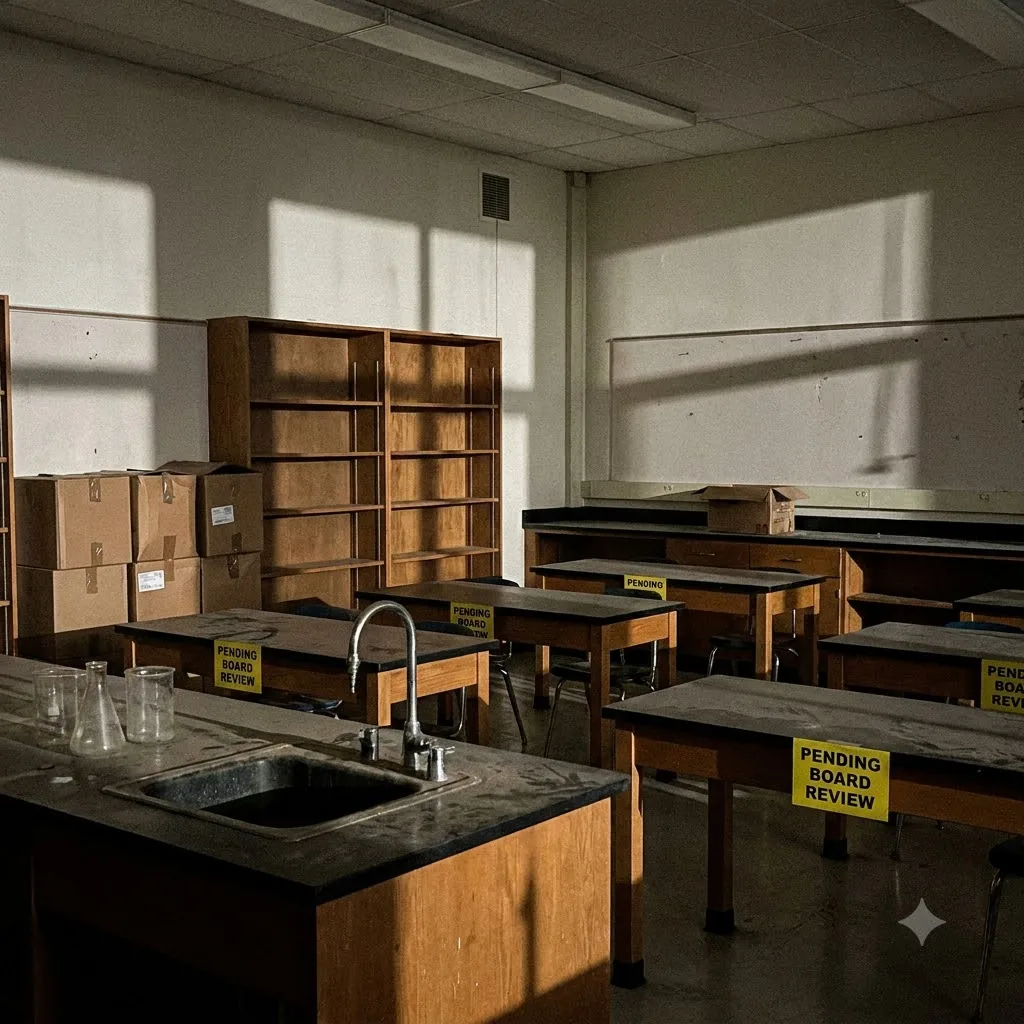
I unlocked the door to Room 204 at six-forty-five on a Monday morning and stepped into the eerie aftermath of an unannounced raid. The three tall oak bookshelves at the back of my Earth Science classroom, usually packed with field guides, water testing manuals, and geology texts, were completely bare. In their place sat a half-dozen heavy cardboard banker’s boxes, taped shut and shoved roughly into the corner. I dropped my insulated coffee mug on the nearest table, the metal clattering loudly in the empty room.
I walked down the center aisle, my boots squeaking against the polished linoleum. On the upper right corner of all thirty-two student lab desks, someone had slapped bright yellow vinyl stickers. I leaned in close, smelling the sharp, chemical tang of fresh industrial adhesive, and read the bold black text printed across the bright vinyl. *Pending Board Review.*
My hands grew cold. I turned toward my personal teaching desk at the front of the room. The bottom right drawer, the one I kept locked, was forced open. The metal latch hung loose, bent backward by some kind of pry tool. The hanging files containing my upcoming unit on local watershed ecology had been completely removed. I pulled my phone from my pocket and refreshed my email inbox, my thumb swiping down the screen in rapid succession. There were zero messages from the administration, the superintendent, or the school board.
I stood in the center of my gutted classroom, trying to process the sheer scale and aggression of the intrusion. A localized panic over curriculum had been sweeping through neighboring districts for months, with angry crowds packing gymnasiums to demand the removal of certain history books and library novels. Those incidents were loud, public, and highly debated. I taught dirt, rocks, and the water cycle. I could not fathom a reality where basic soil permeability tests triggered a midnight sweep of my classroom.
I walked over to the stack of boxes and tried to lift the top lid. The heavy packing tape held firm. Underneath the clear tape, I could see the edge of my topographic maps of the county, specifically the quadrant covering the eastern industrial zone. Next to the maps were my boxes of pH testing strips, heavy metal reagent kits, and even the collection of sedimentary rock samples from the windowsill. All of it was marked with the same yellow board review stickers, treated as though it were dangerous contraband.
Someone had executed a targeted, surgical strike on my curriculum over the weekend. I needed answers, and I needed them before the first bell rang and my students walked into a room that looked like an active crime scene.
I left Room 204 and marched down the main corridor toward the administration wing. The school was still mostly empty, the fluorescent lights humming in the quiet hallways. I passed the English department and glanced through the narrow vertical windows of their doors. Their bookshelves were overflowing with paperback novels. I passed the biology lab. The anatomical models, microscopes, and genetics posters were untouched. There were no yellow stickers anywhere else in the building. This was not a sweeping district mandate or a broad cultural initiative. This was an attack solely on me.
I pushed through the double glass doors of the main office. The space smelled of stale coffee and printer toner. Mrs. Gable, the head secretary who usually greeted me with a barrage of weekend updates, froze in her chair. Her hands hovered rigidly over her keyboard. She stared at my face for a fraction of a second before dropping her gaze to her desk blotter, refusing to make eye contact. She did not say good morning or offer her usual warm smile. She simply lifted a trembling index finger and pointed toward Principal Davis’s closed office door.
I did not bother knocking. I shoved the heavy wooden door open, fully prepared to demand a furious explanation from my boss regarding the vandalism of my classroom. The words died in my throat before I could utter a single syllable.
Principal Davis sat behind his sprawling mahogany desk, his face pale and slick with a thin layer of sweat. He looked like a man who had not slept in days, his shoulders slumped in defeat and his tie loosened haphazardly around his collar. However, he was clearly not the one running the meeting.
Sitting opposite him in the leather guest chair was a man I had never seen in person, though his face was deeply familiar from recent local news broadcasts. He wore a bespoke charcoal suit that radiated an intimidating level of wealth, providing a sharp contrast to the faded motivational posters and scuffed baseboards of the public school office. His posture was relaxed and utterly dominant in the small space. He was Leland Cross’s lead corporate defamation attorney.
Spread out across Principal Davis’s desk were not official school board complaints or angry emails from concerned parents. The lawyer had arrayed my personal, hand-annotated lesson plans across the polished wood. These were my private binders detailing our upcoming month-long unit on groundwater runoff, complete with my red-ink margin notes about the Leland Cross chemical plant situated just upstream from the town reservoir.
The corporate attorney leaned forward, adjusting his gold cufflinks, and rested his manicured hand flat against my stolen intellectual property. He looked up at me with a cold, practiced smile and tapped an expensive fountain pen against the cover of my binder.
“Mr. Vance, take a seat and close the door, as we have a substantial amount of adjusting to do to your syllabus.”
I unlocked the door to Room 204 at six-forty-five on a Monday morning and stepped into the eerie aftermath of an unannounced raid. The three tall oak bookshelves at the back of my Earth Science classroom, usually packed with field guides, water testing manuals, and geology texts, were completely bare. In their place sat a half-dozen heavy cardboard banker’s boxes, taped shut and shoved roughly into the corner. I dropped my insulated coffee mug on the nearest table, the metal clattering loudly in the empty room.
I walked down the center aisle, my boots squeaking against the polished linoleum. On the upper right corner of all thirty-two student lab desks, someone had slapped bright yellow vinyl stickers. I leaned in close, smelling the sharp, chemical tang of fresh industrial adhesive, and read the bold black text printed across the bright vinyl. *Pending Board Review.*
My hands grew cold. I turned toward my personal teaching desk at the front of the room. The bottom right drawer, the one I kept locked, was forced open. The metal latch hung loose, bent backward by some kind of pry tool. The hanging files containing my upcoming unit on local watershed ecology had been completely removed. I pulled my phone from my pocket and refreshed my email inbox, my thumb swiping down the screen in rapid succession. There were zero messages from the administration, the superintendent, or the school board.
I stood in the center of my gutted classroom, trying to process the sheer scale and aggression of the intrusion. A localized panic over curriculum had been sweeping through neighboring districts for months, with angry crowds packing gymnasiums to demand the removal of certain history books and library novels. Those incidents were loud, public, and highly debated. I taught dirt, rocks, and the water cycle. I could not fathom a reality where basic soil permeability tests triggered a midnight sweep of my classroom.
I walked over to the stack of boxes and tried to lift the top lid. The heavy packing tape held firm. Underneath the clear tape, I could see the edge of my topographic maps of the county, specifically the quadrant covering the eastern industrial zone. Next to the maps were my boxes of pH testing strips, heavy metal reagent kits, and even the collection of sedimentary rock samples from the windowsill. All of it was marked with the same yellow board review stickers, treated as though it were dangerous contraband.
Someone had executed a targeted, surgical strike on my curriculum over the weekend. I needed answers, and I needed them before the first bell rang and my students walked into a room that looked like an active crime scene.
I left Room 204 and marched down the main corridor toward the administration wing. The school was still mostly empty, the fluorescent lights humming in the quiet hallways. I passed the English department and glanced through the narrow vertical windows of their doors. Their bookshelves were overflowing with paperback novels. I passed the biology lab. The anatomical models, microscopes, and genetics posters were untouched. There were no yellow stickers anywhere else in the building. This was not a sweeping district mandate or a broad cultural initiative. This was an attack solely on me.
I pushed through the double glass doors of the main office. The space smelled of stale coffee and printer toner. Mrs. Gable, the head secretary who usually greeted me with a barrage of weekend updates, froze in her chair. Her hands hovered rigidly over her keyboard. She stared at my face for a fraction of a second before dropping her gaze to her desk blotter, refusing to make eye contact. She did not say good morning or offer her usual warm smile. She simply lifted a trembling index finger and pointed toward Principal Davis’s closed office door.
I did not bother knocking. I shoved the heavy wooden door open, fully prepared to demand a furious explanation from my boss regarding the vandalism of my classroom. The words died in my throat before I could utter a single syllable.
Principal Davis sat behind his sprawling mahogany desk, his face pale and slick with a thin layer of sweat. He looked like a man who had not slept in days, his shoulders slumped in defeat and his tie loosened haphazardly around his collar. However, he was clearly not the one running the meeting.
Sitting opposite him in the leather guest chair was a man I had never seen in person, though his face was deeply familiar from recent local news broadcasts. He wore a bespoke charcoal suit that radiated an intimidating level of wealth, providing a sharp contrast to the faded motivational posters and scuffed baseboards of the public school office. His posture was relaxed and utterly dominant in the small space. He was Leland Cross’s lead corporate defamation attorney.
Spread out across Principal Davis’s desk were not official school board complaints or angry emails from concerned parents. The lawyer had arrayed my personal, hand-annotated lesson plans across the polished wood. These were my private binders detailing our upcoming month-long unit on groundwater runoff, complete with my red-ink margin notes about the Leland Cross chemical plant situated just upstream from the town reservoir.
The corporate attorney leaned forward, adjusting his gold cufflinks, and rested his manicured hand flat against my stolen intellectual property. He looked up at me with a cold, practiced smile and tapped an expensive fountain pen against the cover of my binder.
“Mr. Vance, take a seat and close the door, as we have a substantial amount of adjusting to do to your syllabus.”