Story code: ST-000178
Part 1: The Bag and the Jargon
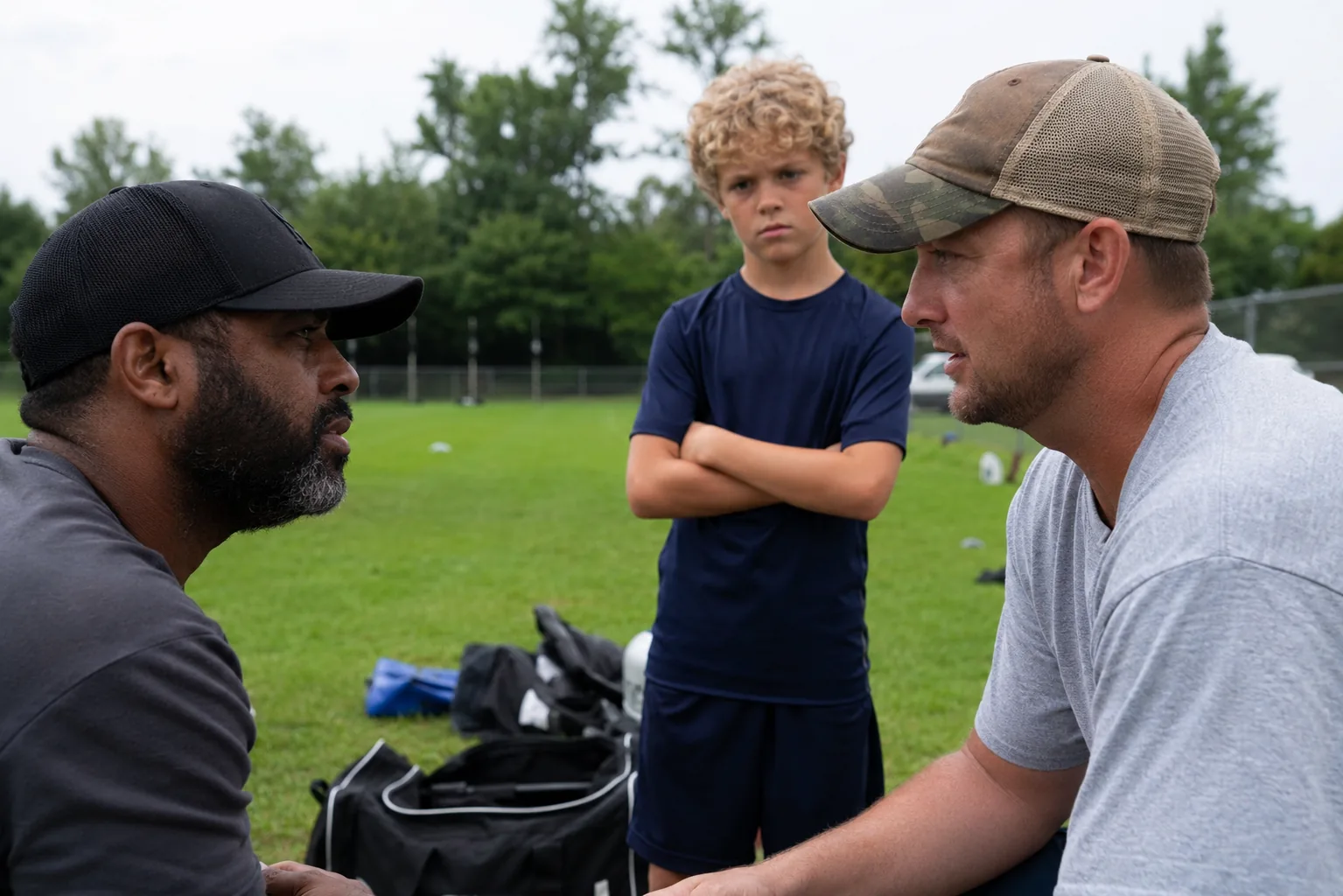
Derek Shaw was standing over Noah Reed at the sports_achievement_pressure_youth_league_field_false_expertise_verbal_snare micro-location, talking so hard over him that Noah never got a clean sentence out, and the trophy bag in Noah’s hands looked smaller every time Derek tapped the cones like he owned them. I was by the bench with the score sheets clipped to the sports_achievement_pressure_trophy_bag_false_expertise_verbal_snare bag, watching the sports parent relationship turn into a public lesson in who got to speak and who did not. Coach Ellis had the whistle in his hand, but Derek kept using coaching words like a shield, and the whole drill line had to wait while he made Noah stand there and take it.
It started with Noah asking one plain question. He held the bag against his leg, eyes down, and said, “Do I go in on the first rep or the second?” That was all it took for Derek to lean in and start talking like he was running a clinic instead of a sideline. He talked about foot angle, timing windows, and spacing lanes. He talked around Noah, not to him. Every time Noah opened his mouth, Derek raised his voice another notch and filled the gap with more terms, faster than before.
I saw Coach Ellis look up from the drill line once, then back down at the cones. He did not interrupt. He kept the line moving with two fingers up, short and flat, while the kids waited by the painted hash marks. Noah stayed where he was, gripping the trophy bag strap so tight the nylon folded under his hand. He nodded when Derek pointed at the turf, then nodded again when Derek said the first rep was about “pre-load discipline” and the second was about “clean release mechanics.” Nobody else said anything. The only sound was cleats against turf and Derek’s voice rolling over everybody else.
Then Derek used a term none of us had heard before. He said Noah had to watch for a “blincher gate” on the turn-in, like it was the most normal coaching phrase in the world. He said it twice, louder the second time, and looked at Coach Ellis like he expected backup. Coach Ellis just held the whistle and kept his eyes on Derek. I saw Noah blink once, then look down at his shoes. He did not ask again. The way Derek said it made the question feel already answered, like the mistake was Noah’s for not knowing it.
Derek kept going. He said the blincher gate showed up when a player rushed the bag handoff and “dropped the line through the pocket.” He pointed at the cone layout as if the ground itself could confirm him. Noah’s mouth opened, then closed. His fingers slid over the zipper on the trophy bag. The kids behind him shifted their weight and waited for the next rep, but Derek had turned the whole sideline into his stage.
I said, “What does that mean?” Not loud. Just enough to cut a seam in the noise.
Derek turned toward me like I had interrupted a lesson. “It means he needs to stay inside the gate and not float the pocket,” he said. He said it with the same firm tone he used for everything else, as if repeating it made it real.
Noah looked up at that, just a little. Coach Ellis did too. Derek kept his shoulders square and his hand on the cone stack, and he said the blincher gate was “basic field language” if you had ever coached the pattern right. Then he pointed at the bag in Noah’s hand and told him to get ready for the rep.
I wrote the next line on the score sheet because I wanted it down exactly as it happened: Derek had just named a thing nobody else could verify, and he said it like challenge itself was proof. Coach Ellis blew one short whistle. The line reset. Noah stayed there with the bag, and Derek stood waiting like the field already agreed with him. What nobody had said yet was whether the blincher gate existed anywhere except Derek Shaw’s mouth.
Derek Shaw was standing over Noah Reed at the sports_achievement_pressure_youth_league_field_false_expertise_verbal_snare micro-location, talking so hard over him that Noah never got a clean sentence out, and the trophy bag in Noah’s hands looked smaller every time Derek tapped the cones like he owned them. I was by the bench with the score sheets clipped to the sports_achievement_pressure_trophy_bag_false_expertise_verbal_snare bag, watching the sports parent relationship turn into a public lesson in who got to speak and who did not. Coach Ellis had the whistle in his hand, but Derek kept using coaching words like a shield, and the whole drill line had to wait while he made Noah stand there and take it.
It started with Noah asking one plain question. He held the bag against his leg, eyes down, and said, “Do I go in on the first rep or the second?” That was all it took for Derek to lean in and start talking like he was running a clinic instead of a sideline. He talked about foot angle, timing windows, and spacing lanes. He talked around Noah, not to him. Every time Noah opened his mouth, Derek raised his voice another notch and filled the gap with more terms, faster than before.
I saw Coach Ellis look up from the drill line once, then back down at the cones. He did not interrupt. He kept the line moving with two fingers up, short and flat, while the kids waited by the painted hash marks. Noah stayed where he was, gripping the trophy bag strap so tight the nylon folded under his hand. He nodded when Derek pointed at the turf, then nodded again when Derek said the first rep was about “pre-load discipline” and the second was about “clean release mechanics.” Nobody else said anything. The only sound was cleats against turf and Derek’s voice rolling over everybody else.
Then Derek used a term none of us had heard before. He said Noah had to watch for a “blincher gate” on the turn-in, like it was the most normal coaching phrase in the world. He said it twice, louder the second time, and looked at Coach Ellis like he expected backup. Coach Ellis just held the whistle and kept his eyes on Derek. I saw Noah blink once, then look down at his shoes. He did not ask again. The way Derek said it made the question feel already answered, like the mistake was Noah’s for not knowing it.
Derek kept going. He said the blincher gate showed up when a player rushed the bag handoff and “dropped the line through the pocket.” He pointed at the cone layout as if the ground itself could confirm him. Noah’s mouth opened, then closed. His fingers slid over the zipper on the trophy bag. The kids behind him shifted their weight and waited for the next rep, but Derek had turned the whole sideline into his stage.
I said, “What does that mean?” Not loud. Just enough to cut a seam in the noise.
Derek turned toward me like I had interrupted a lesson. “It means he needs to stay inside the gate and not float the pocket,” he said. He said it with the same firm tone he used for everything else, as if repeating it made it real.
Noah looked up at that, just a little. Coach Ellis did too. Derek kept his shoulders square and his hand on the cone stack, and he said the blincher gate was “basic field language” if you had ever coached the pattern right. Then he pointed at the bag in Noah’s hand and told him to get ready for the rep.
I wrote the next line on the score sheet because I wanted it down exactly as it happened: Derek had just named a thing nobody else could verify, and he said it like challenge itself was proof. Coach Ellis blew one short whistle. The line reset. Noah stayed there with the bag, and Derek stood waiting like the field already agreed with him. What nobody had said yet was whether the blincher gate existed anywhere except Derek Shaw’s mouth.