Story code: ST-001157
Part 3: The Network Does Not Lie
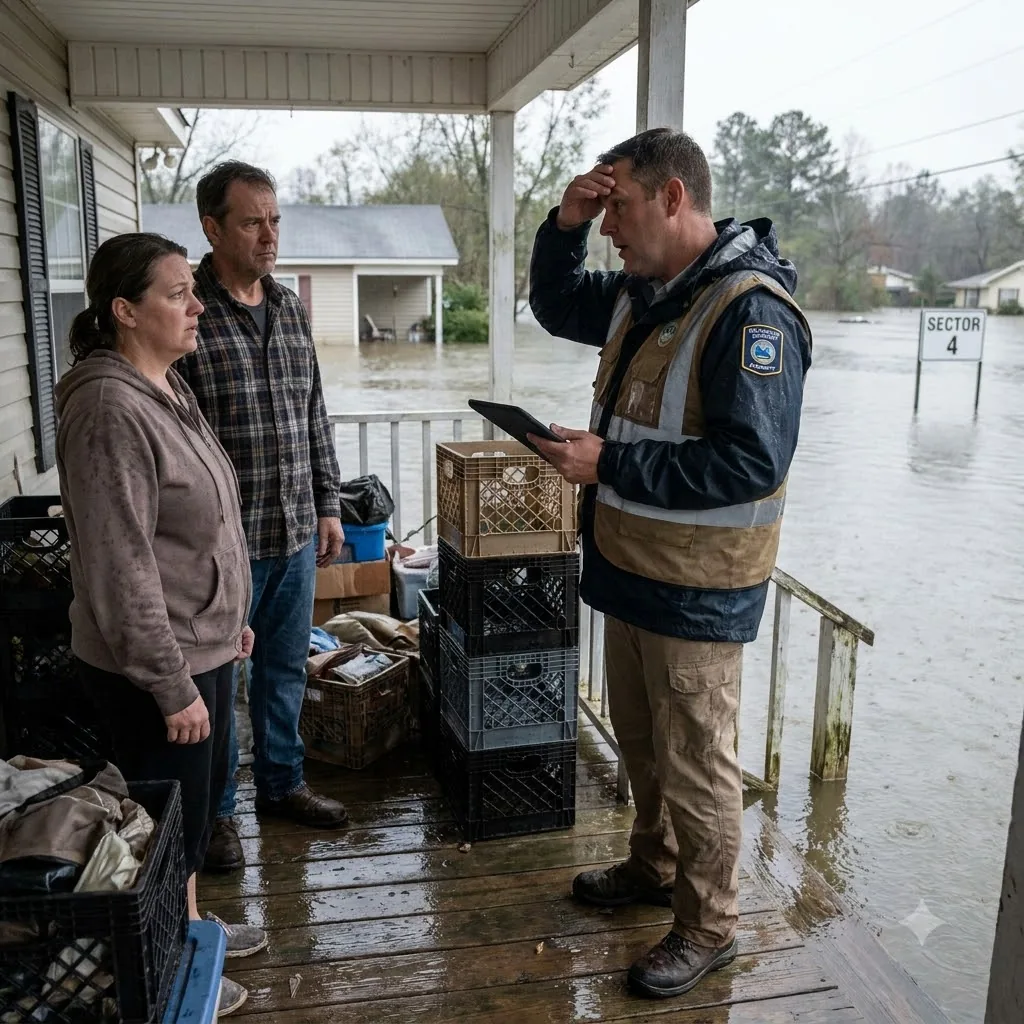
The terminal log from Vance’s device, retrieved during the subsequent administrative review, paints a clear picture of the tactical dilemma he faced on that flooded porch. The rain continued to drum against the corrugated metal roof, splashing into the six inches of standing water where Sarah Miller, Leo Miller, and Marcus Vance stood.
“Pull up the database, Mr. Vance,” Sarah said. Her voice, preserved on the audio file, was flat, devoid of the panic that usually characterizes family evacuations in Sector 4. “If code 104-B is an active regulation, it will be in the local cache. The offline system is updated every morning at 0400 hours.”
Vance did not look up from his screen. His thumb hovered over the search bar, but he did not type. The video recording from the porch security camera shows a clear reflection of the screen in the window behind him: the network indicator icon in the upper-right corner of his tablet was solid green, indicating a strong, active connection to the sector hub. The digital forensics team later extracted the event logs from Vance’s model-7 terminal, confirming that at 14:32:11, the device recorded a network latency of only 12 milliseconds-well within the parameters for a standard query.
“The database is currently restricted to essential routing logistics,” Vance said. He adjusted his collar, which was dark with sweat and rain. “Local policy queries are deprioritized during active flood cycles to preserve bandwidth.”
“That’s not how the local hub operates,” Leo said. He stepped forward, his wet boots squeaking against the wood. He pointed a finger at the screen reflection. “That green bar means you have full access. You have the policy directory cached right there. Type ‘104-B’ and let us see the classification.”
Vance clicked his stylus against the plastic casing of the tablet. The rapid, rhythmic tapping filled the silence between the gusts of wind. He did not zoom in or navigate away from the home screen. “I am not required to run database searches on demand for evacuees. My assessment is final. You can leave the tote or remain here for the next transport cycle.”
“If you refuse to show us the code, and you refuse to sign the transit clearance, I will file an immediate procedural block,” Sarah said. She reached into her pocket and pulled out her personal mobile device, holding it up to capture the serial number printed on the shoulder strap of Vance’s utility vest. “The system allows residents to log a gatekeeping dispute directly from the porch. The moment I upload this video and your badge number, the regional hub will freeze this entire sector’s evacuation log for a manual audit.”
The video shows Vance’s hand freezing mid-click. An audit meant that every passenger manifest he had processed that day-including the ones where he had turned people away with similar unverified restrictions-would be pulled for review.
“You’re disrupting an emergency evacuation,” Vance said, his voice dropping to a low, tight whisper.
“We are asking for a policy search,” Sarah replied. She tapped her screen, preparing the upload. “Type the code, Mr. Vance. Let the database prove you right.”
Vance slowly lowered the stylus to the screen. He entered the search term: ‘104-B’. The system took less than a second to process. The screen reflection in the window showed a red banner flashing across his display. The words were legible: *No matching records found in Sector 4 Directory.*