Story code: ST-000625
Part 4: The Public Record
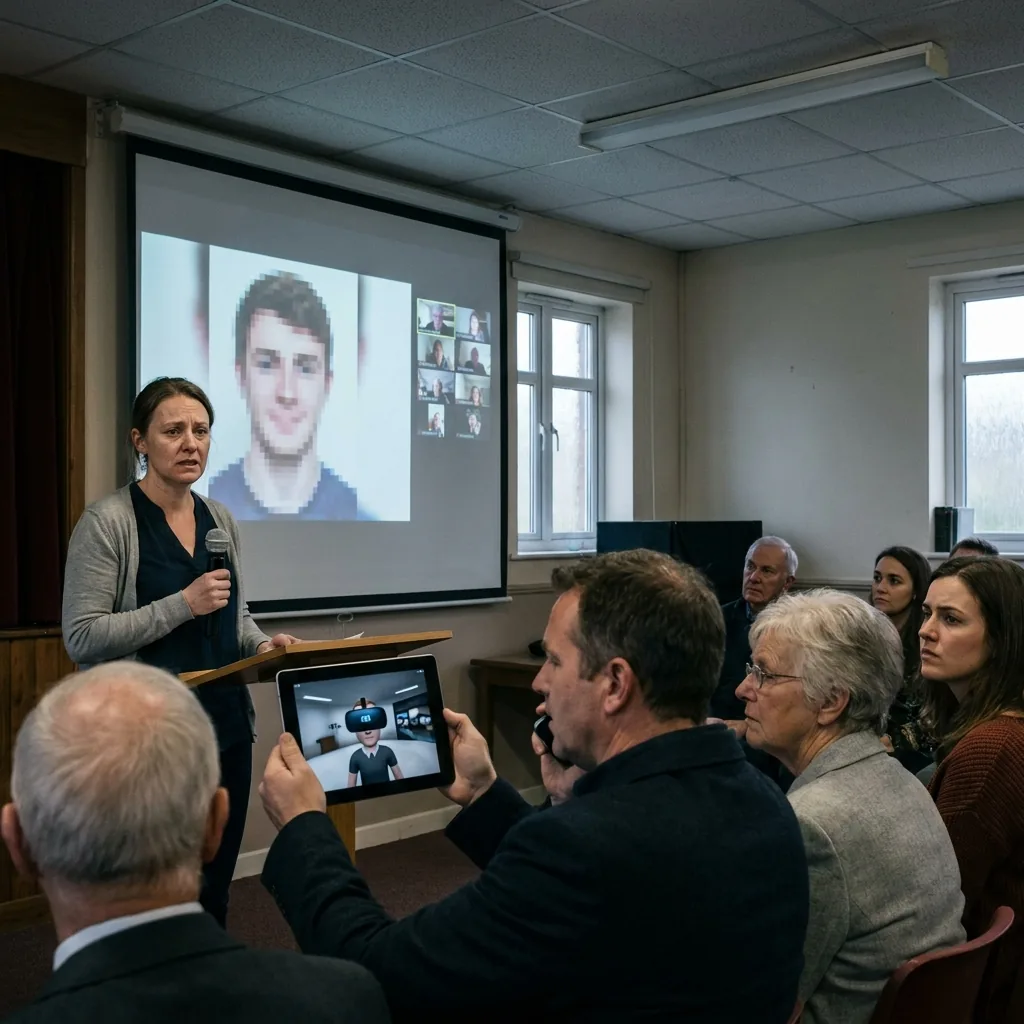
I did not mute the stream. That was the choice. I moved the cursor to the support note and read it aloud so nobody could later say the Phoenix headset had been gossip or guessing. “Device transfer pending account heir confirmation.” Then I said, into the microphone this time, “I’m not finishing this service under the wrong record.” Linda stood up so fast her chair legs scraped the church hall floor hard enough to turn heads at the buffet line. “You are not naming my son by some game handle in his own memorial.” “It isn’t a game handle if it paid for room access, stored tributes, and has his recorded voice attached to it,” I said. Pastor Greg lifted one hand between us, more traffic officer than pastor now. “State what you’re doing, Mara. Clearly.” So I did it clearly. I said the memorial stream would pause its planned order. I said the public tribute room would remain visible, but I was adding a spoken correction to the record: Evan Jensen maintained another profile on the same VR memorial platform, used a private room tied to that profile, and left material intended for people the family had not known about. I said Noah Vale had not entered by mistake and had identified the wrong goodbye because he had access to the other room and because that room itself carried the phrase he named. That paid off the first wrong detail in the only way the room would accept now: not by trust, but by visible architecture. The lantern room existed. The video inside it existed. Noah knew the false goodbye because he had heard the other one in the place Evan built for it. The chat changed again after that. Less guessing. More screenshots. I could see remote guests clipping the correction in real time. Tessa reached past me and turned the donation QR sign flat on the table so it faced down. “We need to stop taking money until this is sorted,” she said. That was PKG-004 landing in plain sight. Linda’s first cover story had kept the stream running under a false memorial package story, and now the donation table had to close in the middle of the service. Two people near the door asked whether contributions already sent were still going to the headset and room charges. I said I would post an accounting after I pulled the payment trail. I could hear how ugly that sounded in a church hall, but it was better than pretending the question had not been asked. Then I did the part that made it irreversible. On the shared screen, with everyone watching, I selected account actions and removed all saved payment methods from the memorial platform profile. The site warned that recurring room fees and linked device services would end unless a new payer was assigned. I left the warning visible. Then I changed the host password and read the support line into the mic again before sending it: “Any private-room content requests or device transfers must be submitted to the estate contact in writing.” Noah’s image flickered once as if he had shifted in his chair. For the first time all afternoon, he looked less like the person pressing and more like the person boxed in by the same record. “Mara, if you cut billing now, the room locks in forty-eight hours.” “Then send your request in writing,” I said. “With whatever belongs to you listed by date.” He nodded once. No speech about love. No confession. No rescue. Just a nod because the platform had already stripped the moment down to process. Linda did not nod. She took her purse from the chair and walked out past the dessert table without waiting for Pastor Greg to stop her. Several relatives watched her go and stayed where they were. Tessa stayed beside me. That was the other payoff. The first public crack had turned into a line people had to choose on camera, and she did not move back to Linda’s side. Pastor Greg stepped to the microphone and said we would close with prayer only, no more prerecorded farewells. He kept it brief. Nobody asked him to restore the original order after that. The real cost showed up after the hall thinned out. Because I had frozen the account, the platform email began arriving before we finished packing the trays: recurring environment fees ending, linked device access suspended pending documentation, public memorial add-ons under review because billing sources were disputed. The meal donations had to be counted separately from memorial expenses now. The extra headset in Phoenix could not be transferred until I answered support with death certificate paperwork and a list of disputed charges. Tessa stood with me at the folding table and wrote down every visible amount from the dashboard before the session timed out. Linda texted once from the parking lot: You humiliated your brother. I answered with the correction statement I had just posted to the stream page and nothing else. By evening, the memorial replay carried my note under the title. Not the clean version. Not the church program wording. A public correction attached to my brother’s name and to mine, with donations paused and account access locked until records were sorted. That was the freedom in it. Nobody in the family could force me to keep hosting a lie after I had turned the password, frozen the charges, and left the proof where every guest had already seen it. What it bought me was uglier. Forty-eight hours to inventory a stranger-linked headset, a second room full of tributes, and months of bills that had started on a card Tessa could identify and ended on a wallet nobody in our hall could explain cleanly. When I carried the boxed leftover centerpieces toward my car, people spoke to me more carefully than they had that morning. Nobody used LanternHarbor out loud. They did not need to. The public record had done that part.