Story code: ST-000741
Part 1: The Basement Claim
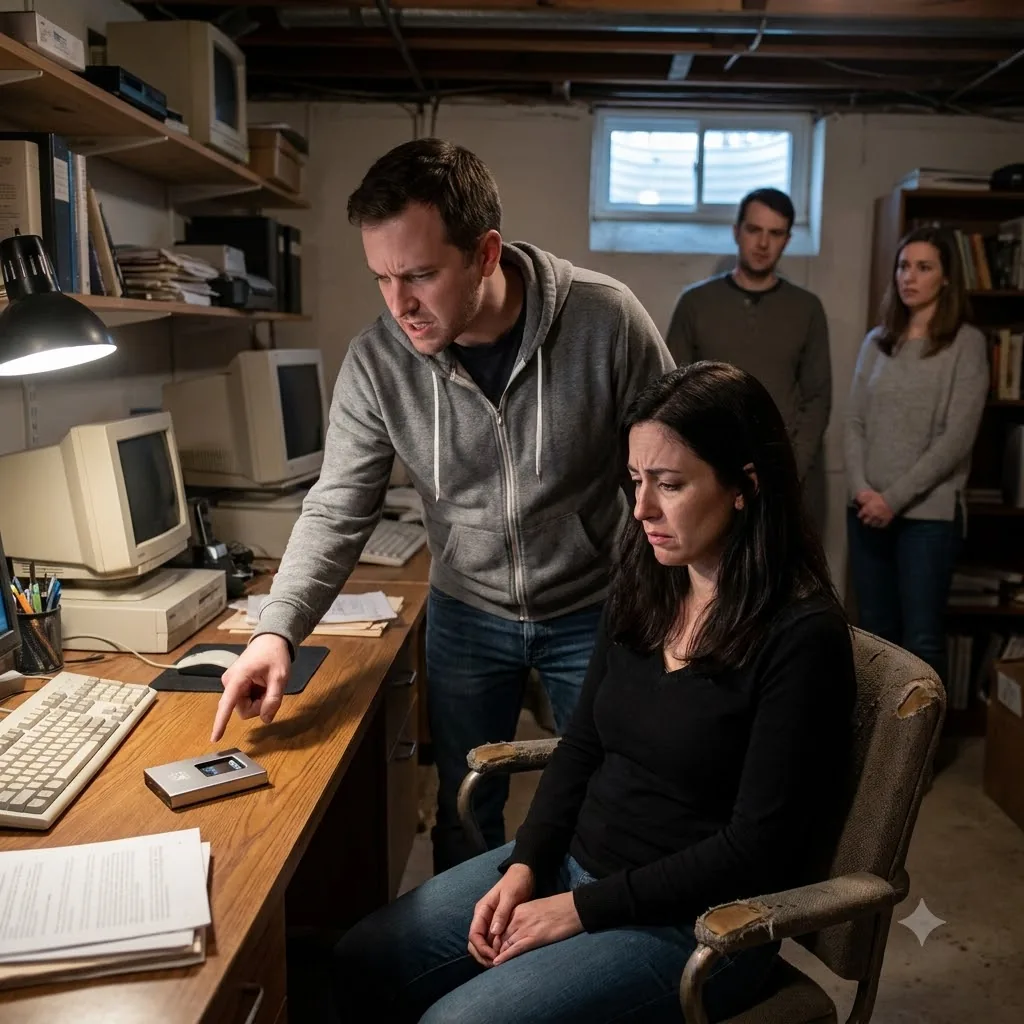
Cal pointed at the hardware wallet on my desk and said, in front of Mara, Dean, and two people I barely knew, that I had stolen from his crypto investment. We were in the basement office, where I was trying to finish a normal task with a spreadsheet open, a charging cable tangled under a stack of bills, and the wallet sitting beside my keyboard like it had been there all week. Before I could even stand up, he was already acting like the room had seen enough.
He said it loud enough for the whole basement to hear. He said I had been in the account. He said the wallet was missing value because I had touched it. He kept one hand on the back of my chair like he owned the space, and the other hand kept chopping toward the little device on the desk. Every time he repeated it, his voice got flatter and harder, like volume alone could turn a claim into proof.
Mara stopped looking at me and started looking at him. Dean leaned closer to the wallet without touching it. One of the people by the stairs made that small face people make when they decide not to get involved. I could see, in the first ten seconds, how fast the room was rearranging itself around Cal’s version. Nobody asked what task I was doing. Nobody asked why the wallet was already plugged in. They just waited for me to answer the accusation he had dropped in the middle of an ordinary workday.
I did not move the wallet. I did not reach for the cable. I kept my hands where they were and said, as evenly as I could, that he should stop talking like he had checked anything. That was enough to make him talk over me.
He said I knew exactly what I had done. He said family did not do this. He said the numbers were off and the wallet was mine to explain. He kept using words like obvious and stolen, and every one of them landed in the room before any actual check could happen. Mara folded her arms. Dean looked from my face to the device to the open laptop screen, as if the screen itself might settle it.
I was sitting there with the spreadsheet still open because I had been reconciling a transfer log for the basement office accounts. The numbers on my screen were ordinary: dates, amounts, little notes I had typed in myself. Nothing dramatic. Nothing hidden. Just the kind of work nobody notices until it is suddenly useful. Cal knew enough about the room to make his accusation sound immediate, but he did not know that I had already been tracking the transaction that morning, line by line, because the wallet had not behaved the way he said it should.
That was the part that kept snagging on his claim. The hardware wallet was not empty. It was not missing from the desk. It was right there, lit up, connected, and showing the same routine screen it had shown when I started the reconciliation. If I had supposedly stolen from it, why was the device still on the same check screen I had left it on before Cal came downstairs? Why did the access log on my laptop show the last entry exactly where I had left it, with no fresh transaction under my name?
Cal saw me glance at the screen and snapped, “Don’t touch it now.” He said it like I had already tried. I had not moved. I had not even taken my hands off the chair arms. But the room had already heard his version, and once that happens, people start treating any stillness like a trick.
Dean finally asked one question, quiet and plain: “Did you open the wallet since lunch?” Cal answered for me before I could speak. He said of course I had. He said that was the whole point. The answer did not fit the screen on my laptop, and it did not fit the state of the wallet sitting under the basement light. The contradiction was right there in front of everyone, small and ordinary enough to be ignored, except it would not line up with what Cal was saying.
Cal pointed at the hardware wallet on my desk and said, in front of Mara, Dean, and two people I barely knew, that I had stolen from his crypto investment. We were in the basement office, where I was trying to finish a normal task with a spreadsheet open, a charging cable tangled under a stack of bills, and the wallet sitting beside my keyboard like it had been there all week. Before I could even stand up, he was already acting like the room had seen enough.
He said it loud enough for the whole basement to hear. He said I had been in the account. He said the wallet was missing value because I had touched it. He kept one hand on the back of my chair like he owned the space, and the other hand kept chopping toward the little device on the desk. Every time he repeated it, his voice got flatter and harder, like volume alone could turn a claim into proof.
Mara stopped looking at me and started looking at him. Dean leaned closer to the wallet without touching it. One of the people by the stairs made that small face people make when they decide not to get involved. I could see, in the first ten seconds, how fast the room was rearranging itself around Cal’s version. Nobody asked what task I was doing. Nobody asked why the wallet was already plugged in. They just waited for me to answer the accusation he had dropped in the middle of an ordinary workday.
I did not move the wallet. I did not reach for the cable. I kept my hands where they were and said, as evenly as I could, that he should stop talking like he had checked anything. That was enough to make him talk over me.
He said I knew exactly what I had done. He said family did not do this. He said the numbers were off and the wallet was mine to explain. He kept using words like obvious and stolen, and every one of them landed in the room before any actual check could happen. Mara folded her arms. Dean looked from my face to the device to the open laptop screen, as if the screen itself might settle it.
I was sitting there with the spreadsheet still open because I had been reconciling a transfer log for the basement office accounts. The numbers on my screen were ordinary: dates, amounts, little notes I had typed in myself. Nothing dramatic. Nothing hidden. Just the kind of work nobody notices until it is suddenly useful. Cal knew enough about the room to make his accusation sound immediate, but he did not know that I had already been tracking the transaction that morning, line by line, because the wallet had not behaved the way he said it should.
That was the part that kept snagging on his claim. The hardware wallet was not empty. It was not missing from the desk. It was right there, lit up, connected, and showing the same routine screen it had shown when I started the reconciliation. If I had supposedly stolen from it, why was the device still on the same check screen I had left it on before Cal came downstairs? Why did the access log on my laptop show the last entry exactly where I had left it, with no fresh transaction under my name?
Cal saw me glance at the screen and snapped, “Don’t touch it now.” He said it like I had already tried. I had not moved. I had not even taken my hands off the chair arms. But the room had already heard his version, and once that happens, people start treating any stillness like a trick.
Dean finally asked one question, quiet and plain: “Did you open the wallet since lunch?” Cal answered for me before I could speak. He said of course I had. He said that was the whole point. The answer did not fit the screen on my laptop, and it did not fit the state of the wallet sitting under the basement light. The contradiction was right there in front of everyone, small and ordinary enough to be ignored, except it would not line up with what Cal was saying.