Story code: ST-000124
Part 3: The File That Would Not Match
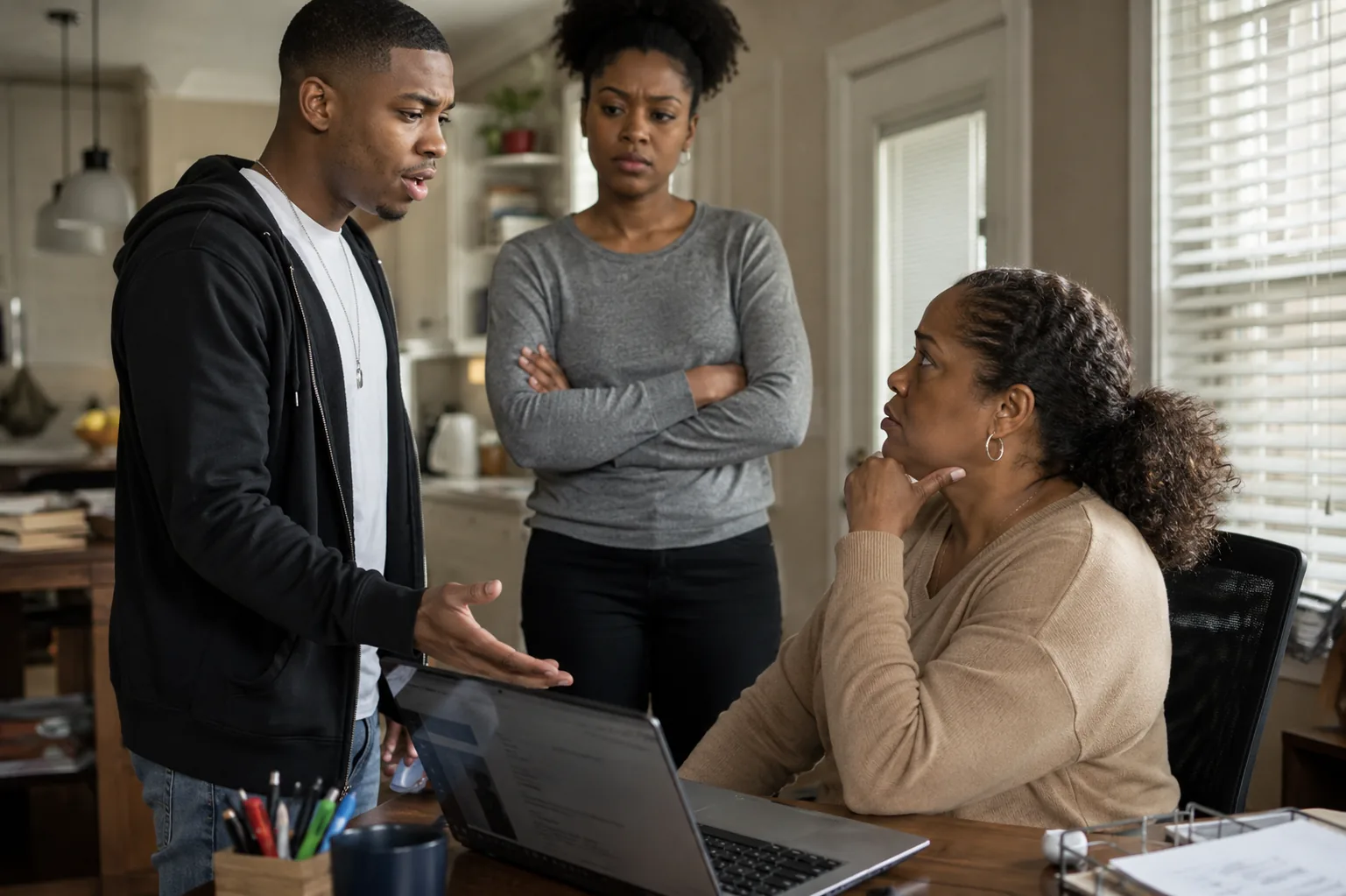
The laptop stayed open on the family desk, but the room had changed shape around it. Nobody was standing as close now. Tasha had pulled her chair in from the side instead of leaning over the keyboard. Eli had moved the receipt and the draft history into two neat piles, one beside the touchpad and one beside the coffee cup ring that marked the desk. Devin was still there, but he was no longer talking over the screen. He kept glancing at the file list and then at the browser bar, as if the next click might restore the version of the story he had already started losing.
I stayed where I could see the edits. The account trail was enough to show the order of things, but the stronger proof sat in the work itself. The draft folder held the same routine I used every day: rename, save, preview, upload, check, then return to the queue. The labels were simple. The timestamps were not. They showed one run from my login, another from a device connected through the same desk, and then a gap where somebody had tried to keep the trail blurred by opening and closing the wrong windows in the wrong order. That kind of mess is easy to make if you are trying to look busy. It is harder to fake if you are trying to finish a post from start to end.
Eli clicked into the file properties and stopped at the version history. He did not narrate it like he was making a speech. He just read what the screen gave him. One version had the captions in my format. Another had the images shifted in the way I lined them up before upload. The final note was missing the one clean edit that always came last: the rename I used so the backup could be found later if something got deleted. That was the missing skill in plain view. Devin had copied enough of the visible work to stand near it, but he had not carried the last step that tied the draft to the account.
My aunt finally asked the question that had been waiting on the edge of the desk. Who had been changing the names on the files? Devin answered too fast. He said he had just been helping. He said he had only moved things around. He said the important part was that the work was done. But the trail on the screen showed more than movement. It showed access. It showed sequence. It showed that the same saved routine was being handled by someone who knew enough to imitate the front end and not enough to finish the back end. That was when the pressure turned from a claim into a failure that could be replayed.
Tasha leaned closer to the monitor and tapped the version line with one finger. She was not accusing. She was reading. The screen showed the account owner line again, the draft rename pattern again, and the upload path that matched my desk notes from that morning. Then it showed Devin’s shortcut: a copy of the file with the middle step missing, as if he had picked up the shape of the work without learning the part that made it actually function. Nobody had to explain what that meant. The proof lane had started contradicting the public story, and it was doing it with timestamps, file names, and the kind of gap only the real operator would notice.
Devin reached for the laptop lid again, but this time my aunt put her hand on it first. She did not slam it. She just held it open. That small motion kept the screen facing the room. The receipt, the account trail, the version history, and the draft folder all stayed visible at once. The room did not need a speech after that. The record had already started speaking for itself.
Then Eli opened the backup folder, and there it was: the clean rename pattern sitting in the sequence under my login, followed by a later attempt that broke the pattern halfway through. The same file, two handling styles, one that matched the work and one that did not. Devin had not just taken credit. He had been relying on me staying out of the exact place where the mismatch could be seen. Once the backup folder appeared, that dependence was no longer hidden.
My aunt looked from the backup line to Devin’s hands, then back to the screen. Tasha lowered her phone and started recording the monitor instead of the room. The file that would not match had done the job the receipt started. It tied the credit to the work and the work to the person who could actually move it through the desk. And now the question had changed again: if Devin could not reproduce the workflow from the backup, what happened the first time he had to keep the account moving without me standing beside him?