Story code: ST-000075
Part 4: Held in the Drawer
The answer landed flat in the room. Dr. Shah repeated it into the phone without changing his voice. “The family is withdrawing the consult.” He listened for a beat, then said, “Understood.” He did not raise his volume. He did not argue. He just wrote one line on the chart with the phone still at his ear.
I watched his pen move across the paper. Not fast. Not dramatic. Just the kind of line that ends a thing.
The outside voice said something I could not make out, and Dr. Shah answered with the same steady clinic tone he had used from the start. He confirmed the withdrawal. He confirmed the hold. He confirmed that no vial would be opened without the review that had been requested and then stopped. Then he set the phone down.
Evan took a breath like he was about to speak again, but Dr. Shah got there first. “The medication stays locked,” he said. “The consult is closed until you restart it properly or release the request entirely.”
Evan looked at the drawer where I had put the vial. His hand came off the counter, then went back again. “That is not what I said.”
“It is what you just said,” Dr. Shah answered.
I opened the drawer only enough to check that the vial was still inside and the latch had caught. The seal was still intact. The label was still facing out. Then I closed it and turned the key in the lock. The click was small, but it carried.
Nina had not spoken since the withdrawal. She sat with her hands on her lap and watched the drawer, then Dr. Shah, then her father. When Dr. Shah slid the treatment line down the screen and marked it on hold, she leaned forward once and stopped herself.
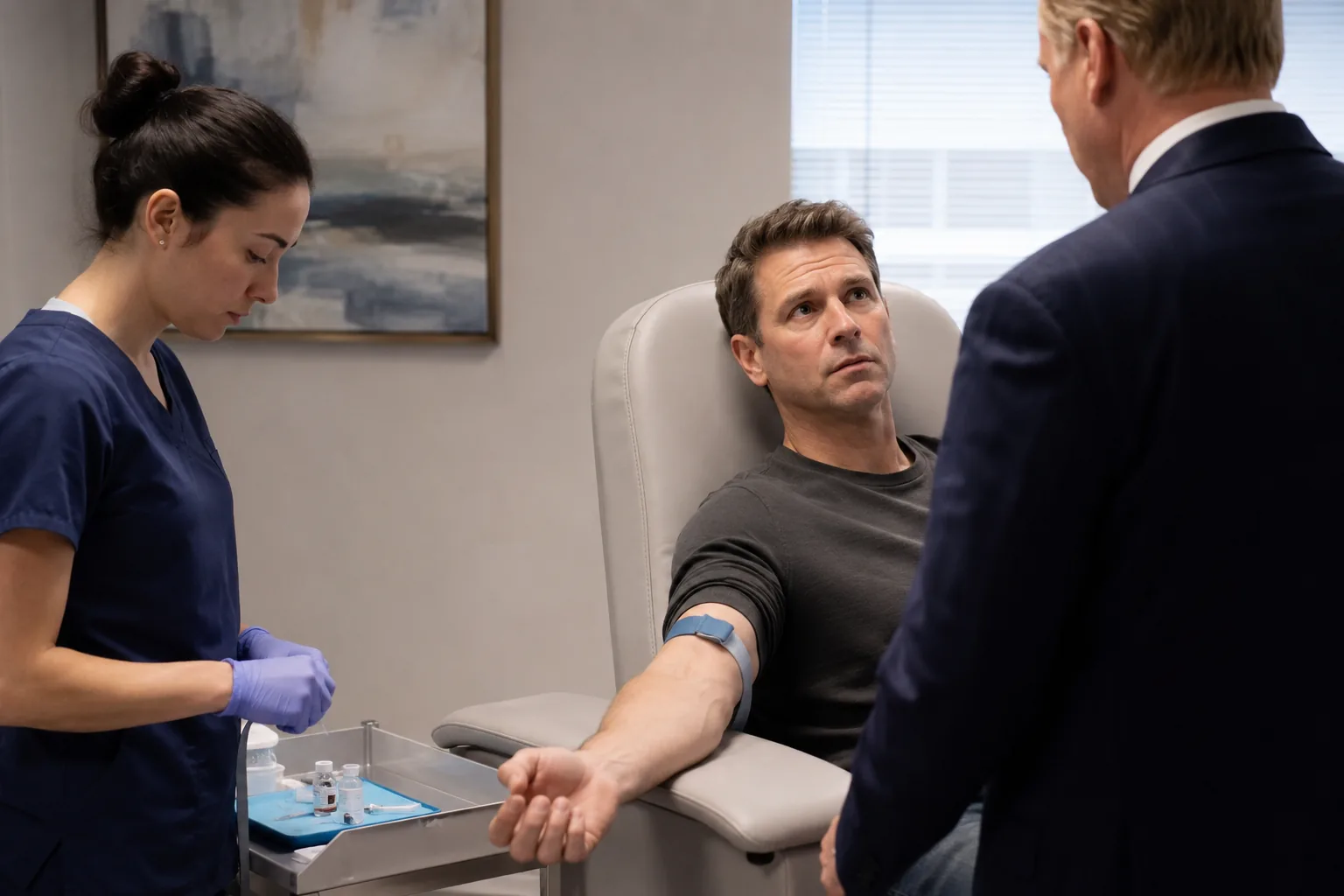
The next step was all process. Dr. Shah printed the routine verification note and held it on the counter while he read it aloud: consult requested, consult withdrawn, medication not released. No one in the room interrupted him. He asked me to initial the hold, and I did. He asked Nina to confirm she understood the delay in treatment. She nodded once, small and sharp.
Evan reached for the paper when Dr. Shah set it down, but the doctor pulled it back before his fingers touched the edge. “Not until you sign the refusal to continue the consult,” he said.
That was the only time Evan’s control slipped in a way you could hear. He laughed once, short and empty, then stopped. He looked at the drawer again, then at the paper, and his shoulders went rigid. “No,” he said. “Cancel it.”
“It is already canceled,” Dr. Shah said.
He took the chart to the scanner by the sink and fed the page through. The machine whirred, bright and ordinary. Then he shut the screen, and the treatment room lost the little flicker of motion it had been holding for the last hour.
The vial stayed locked in the drawer. The consult slot on the wall schedule changed from active to held. Nina’s place on the treatment board was cleared for the afternoon. Evan stood there with his hands empty, looking at the closed cabinet where the exact help he had demanded was no longer available to him.
That was the end of the room’s version of his emergency. Not a speech. Not a fight. Just the drawer locked, the note filed, and the clinic moving on without opening the vial.