Story code: ST-001102
Part 1: Locked Out
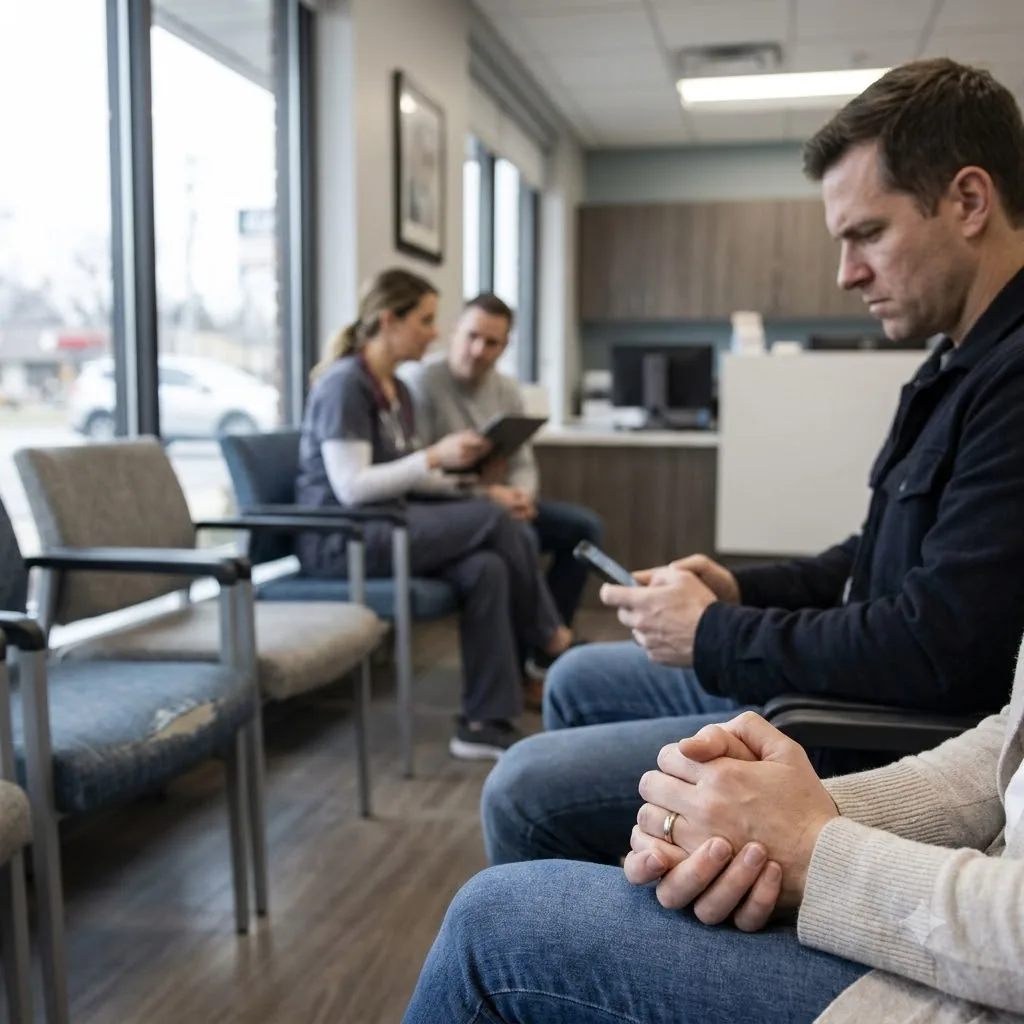
I was sitting in the sterile waiting room of the Pacific Reproductive Center, preparing for our final embryo transfer, when I discovered my husband, Mark, had secretly locked me out of my patient portal to alter our embryo consent forms. The clinic nurse had just asked me to verify our digital paperwork, but my credentials had been changed without my permission, threatening my control over my own body. Sitting next to me under the harsh clinic lights, Mark calmly scrolled through his phone, acting as if nothing had happened. The ambient hum of the clinic’s air conditioning filled the waiting room as I tried the password reset option. Instead of sending the link to my primary email, the screen displayed a masked recovery address ending in his private business domain. It was an account I had never linked to my personal medical profile.
“Mark,” I said, keeping my voice level, though my hands were cold. “Did you change the login for our patient portal?”
Mark did not look up immediately. He finished typing a message, locked his screen with a soft click, and then turned to me with his usual supportive, polished smile. “I updated some of the security settings last night, Elena. The clinic sent an alert about a data security threat, so I consolidated our logins to my secure business server. It’s safer that way.”
“You changed my password without telling me?” I asked, my thumb hovering over the tablet screen.
“It’s our joint account,” he replied, his tone smooth and reasonable, the exact voice he used when managing his corporate clients. “We are in this together. The doctor is waiting, so let’s not get sidetracked by administrative details.”
I walked over to the front desk, my heels clicking on the polished linoleum. I spoke quietly to the receptionist, asking for a temporary override code to access my profile. She typed rapidly, her eyes scanning the monitor before she looked up with a brief flicker of hesitation. “I can reset it for you, Mrs. Vance, but the system shows the password change was authorized last night at 11:42 PM, along with a completed update to the embryo disposition terms.”
My chest tightened. “The embryo disposition terms?”
“Yes, the Embryo Consent Form,” she said, pointing to the clinic’s tablet on the counter. “It looks like the signed copy was submitted and finalized.”
I took the tablet back to my seat, my throat tight. I logged in using the temporary code and opened the document history. The Embryo Consent Form was marked as complete. I scrolled down to the legal clauses, searching for what had changed. The section detailing the fate of our frozen embryos in the event of a divorce or separation had been altered. The option we had agreed upon-mutual consent for any future use or disposal-was unchecked. Instead, a new box was checked: unilateral authority granted to Mark Vance. At the bottom of the page, my digital signature was stamped in clean, blue electronic ink, dated last night when I was already asleep. I looked over at Mark, who was checking his watch, completely unaware that I was staring at the forged document. The portal had recorded the digital signature, but it also recorded the network details of the device that had authorized the change, and I needed to know exactly where that signature came from.
I was sitting in the sterile waiting room of the Pacific Reproductive Center, preparing for our final embryo transfer, when I discovered my husband, Mark, had secretly locked me out of my patient portal to alter our embryo consent forms. The clinic nurse had just asked me to verify our digital paperwork, but my credentials had been changed without my permission, threatening my control over my own body. Sitting next to me under the harsh clinic lights, Mark calmly scrolled through his phone, acting as if nothing had happened. The ambient hum of the clinic’s air conditioning filled the waiting room as I tried the password reset option. Instead of sending the link to my primary email, the screen displayed a masked recovery address ending in his private business domain. It was an account I had never linked to my personal medical profile.
“Mark,” I said, keeping my voice level, though my hands were cold. “Did you change the login for our patient portal?”
Mark did not look up immediately. He finished typing a message, locked his screen with a soft click, and then turned to me with his usual supportive, polished smile. “I updated some of the security settings last night, Elena. The clinic sent an alert about a data security threat, so I consolidated our logins to my secure business server. It’s safer that way.”
“You changed my password without telling me?” I asked, my thumb hovering over the tablet screen.
“It’s our joint account,” he replied, his tone smooth and reasonable, the exact voice he used when managing his corporate clients. “We are in this together. The doctor is waiting, so let’s not get sidetracked by administrative details.”
I walked over to the front desk, my heels clicking on the polished linoleum. I spoke quietly to the receptionist, asking for a temporary override code to access my profile. She typed rapidly, her eyes scanning the monitor before she looked up with a brief flicker of hesitation. “I can reset it for you, Mrs. Vance, but the system shows the password change was authorized last night at 11:42 PM, along with a completed update to the embryo disposition terms.”
My chest tightened. “The embryo disposition terms?”
“Yes, the Embryo Consent Form,” she said, pointing to the clinic’s tablet on the counter. “It looks like the signed copy was submitted and finalized.”
I took the tablet back to my seat, my throat tight. I logged in using the temporary code and opened the document history. The Embryo Consent Form was marked as complete. I scrolled down to the legal clauses, searching for what had changed. The section detailing the fate of our frozen embryos in the event of a divorce or separation had been altered. The option we had agreed upon-mutual consent for any future use or disposal-was unchecked. Instead, a new box was checked: unilateral authority granted to Mark Vance. At the bottom of the page, my digital signature was stamped in clean, blue electronic ink, dated last night when I was already asleep. I looked over at Mark, who was checking his watch, completely unaware that I was staring at the forged document. The portal had recorded the digital signature, but it also recorded the network details of the device that had authorized the change, and I needed to know exactly where that signature came from.