Story code: ST-000694
Part 1: He Brought an Audience
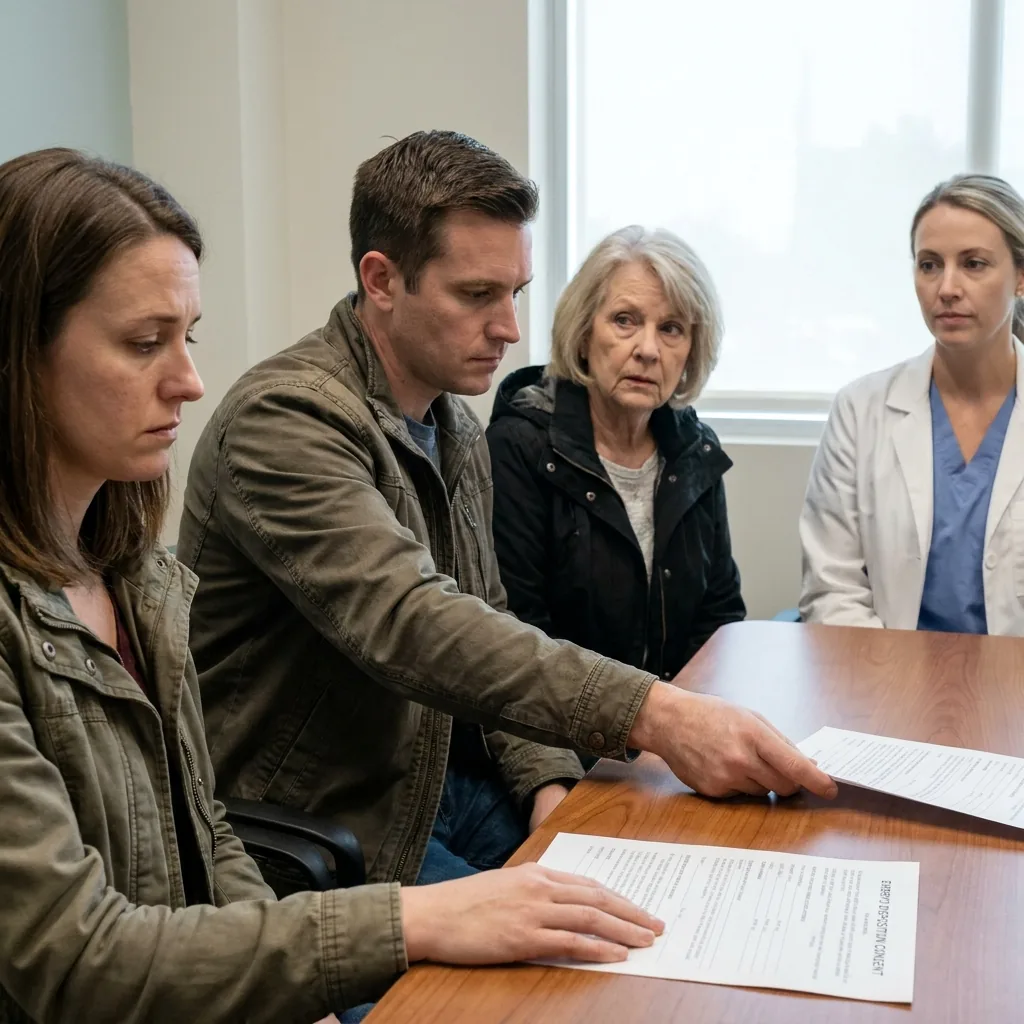
My husband slid an embryo consent form across a fertility clinic table and said, loud enough for his aunt and the coordinator to hear, that after everything he had given up for our baby, the least I could do was stop making this harder. We were ten feet from the lab hallway, with nurses walking by and someone at the next desk feeding coins into the snack machine, and he was using a private medical decision like a loyalty test. The worst part was that he had not brought me there to decide anything together. He had brought witnesses.
I kept my hands flat on the clinic folder in front of me because if I touched the form too fast, I knew he would act like that meant I was overreacting.
Marisol Vega, the clinic coordinator, sat across from us with the kind of calm face people in medical offices learn to wear. She had already explained that the appointment was to review embryo storage, next steps, and updated consent. Neutral. Simple. Routine.
Evan had turned it into a speech.
“I changed my schedule for this,” he said, tapping the paper with two fingers. “I picked up extra work. I stopped traveling. I put every plan on hold. I have done everything possible to get us here.”
Linda Mercer, his aunt, tightened both hands around her handbag strap and gave me the look people use when they want credit for being gentle while they corner you. “Nina, sweetheart, I know this is emotional, but after all he’s done, maybe today just needs to be the day you move forward.”
There it was. Gratitude, dressed up as maturity.
I looked down at the form again. My name was printed where it should have been. So was his. Boxes. Initial lines. Language about disposition options and future consent. Nothing on that page said I owed anyone obedience because he had spent months keeping score.
“I’m not making a scene,” I said, keeping my voice level. “I’m reading what I’m being asked to sign.”
“You’ve been reading for weeks,” Evan said. “At some point, it becomes avoidance.”
He leaned back as if he were the patient one, the exhausted one, the man carrying us both. He had that tone he used in front of other people, the one that made every sentence sound like evidence he should be thanked for.
Marisol slid the form a few inches closer to me, not him. “Take the time you need,” she said. “Consent has to be clear.”
It was a small move, but I noticed it. So did Evan. His hand came off the paper.
He laughed once through his nose. “Clear? It is clear. We made embryos together. We agreed we wanted a child. We have spent years and a lot of money getting to this point.”
He said money the way some people say devotion, like the number itself proved his character.
I lined up the corners of the folder with the edge of the table and tried to keep the room from tilting into the version of the story he wanted. We had come in through the bright reception area together. He had held the door for Linda. He had carried the folder. He had asked me in the elevator if I was going to “do this calmly today.” At the time I thought he meant the appointment.
Now I understood he meant the performance.
Linda looked at me instead of the form. “Nobody is saying you owe him,” she said, which is exactly what people say when that is the pressure they are applying. “But relationships are about appreciating sacrifice.”
I felt my jaw tighten. “This isn’t about appreciation. This is about whether I consent.”
Evan spoke over me before the last word fully landed. “And what about my consent to this whole process? What about the years I have been supporting you through every appointment, every medication change, every disappointment?”
Supporting me. In front of staff, in front of family, he made it sound like fertility treatment had happened to him as an act of heroism instead of to us as a shared choice. He kept reaching for the form while talking, touching the bottom edge, straightening it, claiming it without actually picking it up.
Marisol paused before she answered. “Today is specifically about current embryo consent. If either party needs private discussion time, we can arrange that.”
“No,” Evan said immediately. “That’s not necessary.”
Of course he said no. A private room without an audience would ruin the effect.
I finally looked straight at him. “Then stop explaining your resume and tell me what option you’re asking me to choose.”
For one second, he was quiet.
Then he smiled in that thin, patient way that never reached his eyes. “I’m asking you not to forget who made this possible.”
That sentence sat in the room longer than anything else he had said. Linda stopped adjusting her bag. Even Marisol’s pen stayed still over her notepad.
Because the form in front of me was supposed to be about embryos, storage, consent, and next steps.
But Evan had just said the real thing out loud. He was not asking for a decision. He was asking for submission.
And when I said, very carefully, “If this has been such a burden on you, we can talk about removing that burden,” he didn’t look relieved at all.
My husband slid an embryo consent form across a fertility clinic table and said, loud enough for his aunt and the coordinator to hear, that after everything he had given up for our baby, the least I could do was stop making this harder. We were ten feet from the lab hallway, with nurses walking by and someone at the next desk feeding coins into the snack machine, and he was using a private medical decision like a loyalty test. The worst part was that he had not brought me there to decide anything together. He had brought witnesses.
I kept my hands flat on the clinic folder in front of me because if I touched the form too fast, I knew he would act like that meant I was overreacting.
Marisol Vega, the clinic coordinator, sat across from us with the kind of calm face people in medical offices learn to wear. She had already explained that the appointment was to review embryo storage, next steps, and updated consent. Neutral. Simple. Routine.
Evan had turned it into a speech.
“I changed my schedule for this,” he said, tapping the paper with two fingers. “I picked up extra work. I stopped traveling. I put every plan on hold. I have done everything possible to get us here.”
Linda Mercer, his aunt, tightened both hands around her handbag strap and gave me the look people use when they want credit for being gentle while they corner you. “Nina, sweetheart, I know this is emotional, but after all he’s done, maybe today just needs to be the day you move forward.”
There it was. Gratitude, dressed up as maturity.
I looked down at the form again. My name was printed where it should have been. So was his. Boxes. Initial lines. Language about disposition options and future consent. Nothing on that page said I owed anyone obedience because he had spent months keeping score.
“I’m not making a scene,” I said, keeping my voice level. “I’m reading what I’m being asked to sign.”
“You’ve been reading for weeks,” Evan said. “At some point, it becomes avoidance.”
He leaned back as if he were the patient one, the exhausted one, the man carrying us both. He had that tone he used in front of other people, the one that made every sentence sound like evidence he should be thanked for.
Marisol slid the form a few inches closer to me, not him. “Take the time you need,” she said. “Consent has to be clear.”
It was a small move, but I noticed it. So did Evan. His hand came off the paper.
He laughed once through his nose. “Clear? It is clear. We made embryos together. We agreed we wanted a child. We have spent years and a lot of money getting to this point.”
He said money the way some people say devotion, like the number itself proved his character.
I lined up the corners of the folder with the edge of the table and tried to keep the room from tilting into the version of the story he wanted. We had come in through the bright reception area together. He had held the door for Linda. He had carried the folder. He had asked me in the elevator if I was going to “do this calmly today.” At the time I thought he meant the appointment.
Now I understood he meant the performance.
Linda looked at me instead of the form. “Nobody is saying you owe him,” she said, which is exactly what people say when that is the pressure they are applying. “But relationships are about appreciating sacrifice.”
I felt my jaw tighten. “This isn’t about appreciation. This is about whether I consent.”
Evan spoke over me before the last word fully landed. “And what about my consent to this whole process? What about the years I have been supporting you through every appointment, every medication change, every disappointment?”
Supporting me. In front of staff, in front of family, he made it sound like fertility treatment had happened to him as an act of heroism instead of to us as a shared choice. He kept reaching for the form while talking, touching the bottom edge, straightening it, claiming it without actually picking it up.
Marisol paused before she answered. “Today is specifically about current embryo consent. If either party needs private discussion time, we can arrange that.”
“No,” Evan said immediately. “That’s not necessary.”
Of course he said no. A private room without an audience would ruin the effect.
I finally looked straight at him. “Then stop explaining your resume and tell me what option you’re asking me to choose.”
For one second, he was quiet.
Then he smiled in that thin, patient way that never reached his eyes. “I’m asking you not to forget who made this possible.”
That sentence sat in the room longer than anything else he had said. Linda stopped adjusting her bag. Even Marisol’s pen stayed still over her notepad.
Because the form in front of me was supposed to be about embryos, storage, consent, and next steps.
But Evan had just said the real thing out loud. He was not asking for a decision. He was asking for submission.
And when I said, very carefully, “If this has been such a burden on you, we can talk about removing that burden,” he didn’t look relieved at all.