Story code: ST-000715
Part 1: He Came Through the Line Door Shouting
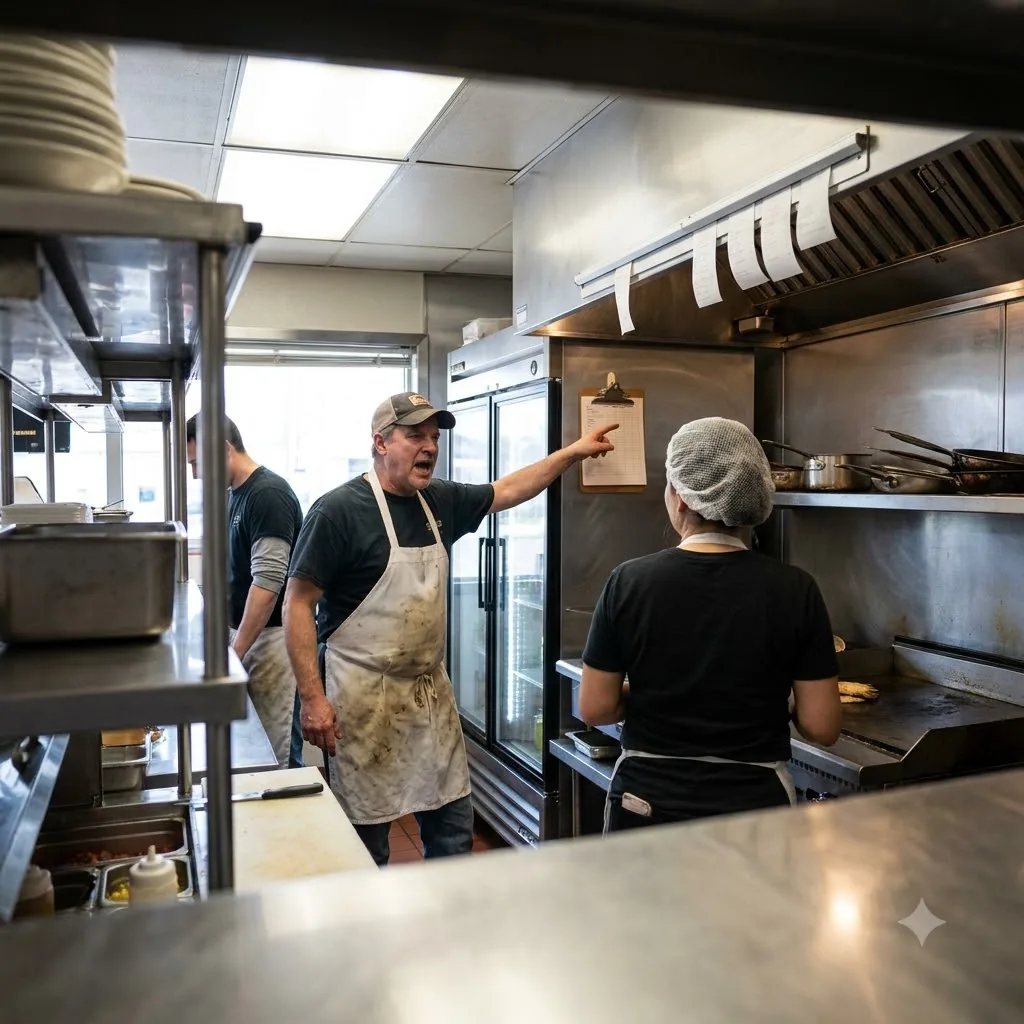
Dale came through the line door pointing at the prep list and said we had to cut every hold time and push all the cold prep now because a health inspector was “already on the block,” and he said it loud enough to stop Luis with a hotel pan in his hands. In our diner kitchen, with bacon snapping on the flat top and tickets clicking onto the rail, he told me to break the order on the board and start moving food that was not due yet, and he did it like I was the problem for even looking at the times Rina had written down. Then, when Rina said, “Do you want me to call upfront and get the inspector sent straight back here?” he snapped, “No, no, don’t do that,” which made the whole room go still for half a second.
I was at the stainless table with the onions half done and the prep list clipped under a magnet by the reach-in. Rina had marked every item with a time in dry erase, short clean lines in blue. Chicken salad at ten thirty. Slaw at eleven. Sliced tomatoes in the noon slot because the lunch rush always dries them out if we cut them too early.
Dale slapped the edge of the list with two fingers.
“Forget the board,” he said. “Move all perishables now. If they walk in and see this half done, we’re dead.”
He did not put on an apron. He did not wash his hands. He stood just outside the wet patch by the sink and kept looking past us toward the back hall, then up at the clock over expo.
Luis set the hotel pan down on the lower shelf and looked at Rina.
Rina did not raise her voice. “Who told you they’re here?”
“I got a call.” Dale cut the words short and waved at the table. “This isn’t a debate. Move.”
So the room moved, because when somebody throws inspector into a kitchen at 10:18 on a hot morning, nobody gets to stand there and build a careful argument. I pulled lids. Luis cleared space. Rina erased two lines off the board and wrote rush across the margin. The normal order broke open in under thirty seconds.
That was the first harm of it. Once the order goes, everything else follows. The sliced pickles got pushed ahead of the soup base. The chicken salad came out before the celery was finished. Luis left the onions I had already started because Dale wanted every cold item visible and lined up. Tickets kept coming. A server cracked the door and asked for a side of rye toast, and Rina said, “Two minutes,” without looking up.
Dale stayed in the doorway like he was directing traffic he did not have to touch.
“Faster,” he said.
I said, “If they’re really coming back here, we need labels first.”
“Do the food first.” He tapped the prep list again. “You can sticker it after.”
That was another rule break, and he knew it, because he kept his finger on the paper instead of on any container. Rina looked at him, then at the board, then at the clock.
“What number called you?” she asked.
Dale gave a quick shake of his head like the question was stupid. “Front got word. I got word. It doesn’t matter.”
Luis wiped his hands on his apron and reached for the cambros. I started chopping faster, shorter strokes, pushing tomatoes into a sixth pan with the side of my knife. The whole kitchen got louder because urgent work always sounds louder, even when nobody is yelling. Metal lids knocked. The printer spit three tickets in a row. The fryer timer went off and nobody moved for it until the second beep.
Rina crossed to expo, tore the tickets, and came right back. “If an inspector is on the block, I need Carla up front to send them straight through.”
Dale turned toward her so fast his shoe squeaked on the tile.
“No. Leave the front out of it.”
She picked up a marker. “Why?”
“Because they’ll see a mess if people start running around. Just handle the list.”
He said handle the list like the list itself had caused the problem. He kept using that phrase. Handle the list. Push the cold prep. Fix this now. But he would not say the inspector’s name, would not say what had triggered the visit, would not let Rina involve the front, and would not step into the kitchen to touch a single pan.
The breakfast rail started stacking. Luis went back to eggs, then got pulled off again when Dale saw the slaw still dry in the bowl.
“That should already be done,” Dale said.
Rina looked at the board. “It was scheduled for eleven.”
“Not anymore.”
She put the cap back on the marker with one clean click. “Then I’m calling for help.”
This time she did not ask his permission. She reached for the wall phone by the dish pit, the old beige one with the greasy cord stretched thin near the cradle.
Dale took three fast steps and put his hand over the receiver before she could lift it.
“No outside calls,” he said.
The fryer beeped again. Luis stopped with a tray halfway to the line. I still had my knife in my hand, tomatoes wet under my palm, and all I could look at was Dale blocking the exact help he had just used to scare the room into breaking its own order. If the emergency was real, why was the only thing he moved that fast to stop the phone?
Dale came through the line door pointing at the prep list and said we had to cut every hold time and push all the cold prep now because a health inspector was “already on the block,” and he said it loud enough to stop Luis with a hotel pan in his hands. In our diner kitchen, with bacon snapping on the flat top and tickets clicking onto the rail, he told me to break the order on the board and start moving food that was not due yet, and he did it like I was the problem for even looking at the times Rina had written down. Then, when Rina said, “Do you want me to call upfront and get the inspector sent straight back here?” he snapped, “No, no, don’t do that,” which made the whole room go still for half a second.
I was at the stainless table with the onions half done and the prep list clipped under a magnet by the reach-in. Rina had marked every item with a time in dry erase, short clean lines in blue. Chicken salad at ten thirty. Slaw at eleven. Sliced tomatoes in the noon slot because the lunch rush always dries them out if we cut them too early.
Dale slapped the edge of the list with two fingers.
“Forget the board,” he said. “Move all perishables now. If they walk in and see this half done, we’re dead.”
He did not put on an apron. He did not wash his hands. He stood just outside the wet patch by the sink and kept looking past us toward the back hall, then up at the clock over expo.
Luis set the hotel pan down on the lower shelf and looked at Rina.
Rina did not raise her voice. “Who told you they’re here?”
“I got a call.” Dale cut the words short and waved at the table. “This isn’t a debate. Move.”
So the room moved, because when somebody throws inspector into a kitchen at 10:18 on a hot morning, nobody gets to stand there and build a careful argument. I pulled lids. Luis cleared space. Rina erased two lines off the board and wrote rush across the margin. The normal order broke open in under thirty seconds.
That was the first harm of it. Once the order goes, everything else follows. The sliced pickles got pushed ahead of the soup base. The chicken salad came out before the celery was finished. Luis left the onions I had already started because Dale wanted every cold item visible and lined up. Tickets kept coming. A server cracked the door and asked for a side of rye toast, and Rina said, “Two minutes,” without looking up.
Dale stayed in the doorway like he was directing traffic he did not have to touch.
“Faster,” he said.
I said, “If they’re really coming back here, we need labels first.”
“Do the food first.” He tapped the prep list again. “You can sticker it after.”
That was another rule break, and he knew it, because he kept his finger on the paper instead of on any container. Rina looked at him, then at the board, then at the clock.
“What number called you?” she asked.
Dale gave a quick shake of his head like the question was stupid. “Front got word. I got word. It doesn’t matter.”
Luis wiped his hands on his apron and reached for the cambros. I started chopping faster, shorter strokes, pushing tomatoes into a sixth pan with the side of my knife. The whole kitchen got louder because urgent work always sounds louder, even when nobody is yelling. Metal lids knocked. The printer spit three tickets in a row. The fryer timer went off and nobody moved for it until the second beep.
Rina crossed to expo, tore the tickets, and came right back. “If an inspector is on the block, I need Carla up front to send them straight through.”
Dale turned toward her so fast his shoe squeaked on the tile.
“No. Leave the front out of it.”
She picked up a marker. “Why?”
“Because they’ll see a mess if people start running around. Just handle the list.”
He said handle the list like the list itself had caused the problem. He kept using that phrase. Handle the list. Push the cold prep. Fix this now. But he would not say the inspector’s name, would not say what had triggered the visit, would not let Rina involve the front, and would not step into the kitchen to touch a single pan.
The breakfast rail started stacking. Luis went back to eggs, then got pulled off again when Dale saw the slaw still dry in the bowl.
“That should already be done,” Dale said.
Rina looked at the board. “It was scheduled for eleven.”
“Not anymore.”
She put the cap back on the marker with one clean click. “Then I’m calling for help.”
This time she did not ask his permission. She reached for the wall phone by the dish pit, the old beige one with the greasy cord stretched thin near the cradle.
Dale took three fast steps and put his hand over the receiver before she could lift it.
“No outside calls,” he said.
The fryer beeped again. Luis stopped with a tray halfway to the line. I still had my knife in my hand, tomatoes wet under my palm, and all I could look at was Dale blocking the exact help he had just used to scare the room into breaking its own order. If the emergency was real, why was the only thing he moved that fast to stop the phone?