Story code: ST-000730
Part 1: The Screen Went Public
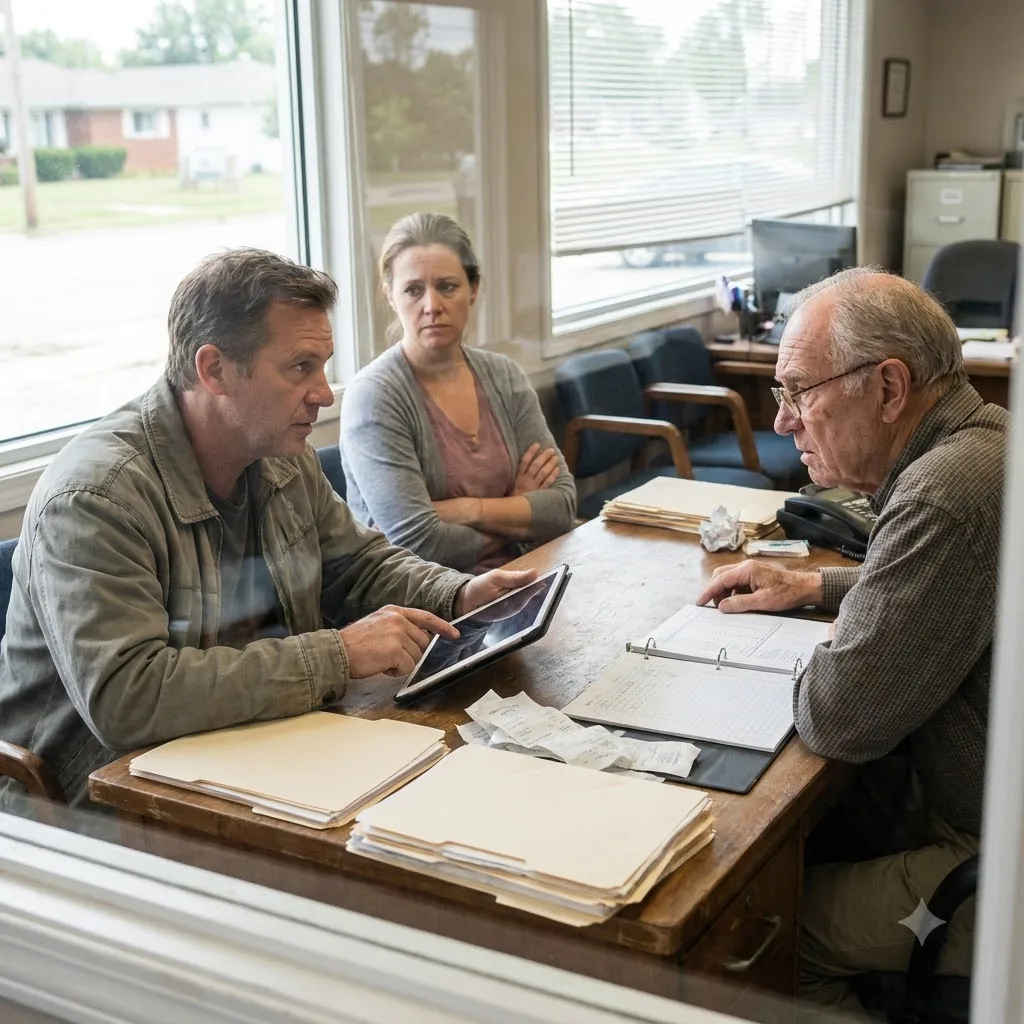
Dale was halfway through tapping the estate ledger open on his tablet in Mr. Lane’s tax preparer office when Tessa’s phone screen lit up the whole room with our private mess, and suddenly the ledger I had only seen spread across a desk in plain daylight was being treated like group-chat entertainment. One second I was standing beside a stack of receipts under the fluorescent lights, watching the ordinary office noise of printers and keyboards; the next, the screen in Tessa’s hand showed a recording of us, the ledger, and my own face, all cropped tight like somebody had built a joke out of our family records.
I said, “Tessa, put that down.”
She did not. Her thumb kept moving fast over the screen, and I could see the chat bubbles jumping under the video. Mr. Lane looked up from behind his desk, then looked down again at the screen like he had decided the fastest way through the moment was to become paperwork-shaped and invisible. Dale snapped, “Turn it off,” but he said it in that polished voice he used when he wanted a room to think he was still in control.
The video was on a loop. It showed the ledger open to a page with column after column of dates, amounts, and names. It showed my hand pointing at one line. It did not show the note clipped at the bottom edge. It did not show the second page on the desk. It did not show why I had been standing there in the first place. All the screen gave anyone in that office was a clean, ugly little story: somebody in the family had been caught with a secret book and now it was everybody’s business.
Tessa lifted her chin toward me without putting the phone away. “People are already asking,” she said.
“Who?” I asked.
She tilted the screen so I could see the names stacking under the post. Not one of them was a lawyer or an accountant. It was cousins, friends, somebody from church, a woman I barely knew from the grocery store parking lot. The comments were not careful. They were laughing. One person sent a string of fire emojis. Another wrote, “Why is the tax lady hiding that much money?”
I looked at Dale. He had his hand flat on the desk, fingers spread over a neat pile of forms. His other hand hovered near the tablet, not touching it. “This is not the version people need to see,” he said.
That was the first thing that made my stomach go hard. He did not ask who posted it. He did not ask how it got out. He said version, like the whole problem was formatting.
Mr. Lane finally stood up. “We are not doing this in my office,” he said, each word clipped. He glanced toward the front window, where the blinds were half open and anybody in the parking lot could have seen the same glow from Tessa’s phone if they had been looking in. “Whatever this is, it stops now.”
Nobody stopped it. The screen kept refreshing. The chat kept moving. Every new message pulled the room farther away from the workday it had been ten seconds before.
I reached for the tablet, and Dale pulled it back toward his chest. “Mara, wait,” he said.
“Wait for what?”
He did not answer that. He turned the tablet so the edge of the ledger was hidden from me, but the angle only made it obvious there was more below the frame. I could see the top of another page under his thumb. I could see the corner of a yellow sticky note with one word on it, half covered and half gone.
Tessa laughed once, sharp and short, and then stopped when nobody else joined her. “If you’d just let me explain,” she said.
“Explain what?” Mr. Lane asked, still looking at the phone. “Because from where I’m standing, somebody has put a private office matter on a public feed.”
That was the thing I could not get past. If this was just a joke, why had Dale already hidden part of the ledger from me before the video ever played? And if the whole story was on that screen, why did the bottom half look like the part that would change everything?
Dale was halfway through tapping the estate ledger open on his tablet in Mr. Lane’s tax preparer office when Tessa’s phone screen lit up the whole room with our private mess, and suddenly the ledger I had only seen spread across a desk in plain daylight was being treated like group-chat entertainment. One second I was standing beside a stack of receipts under the fluorescent lights, watching the ordinary office noise of printers and keyboards; the next, the screen in Tessa’s hand showed a recording of us, the ledger, and my own face, all cropped tight like somebody had built a joke out of our family records.
I said, “Tessa, put that down.”
She did not. Her thumb kept moving fast over the screen, and I could see the chat bubbles jumping under the video. Mr. Lane looked up from behind his desk, then looked down again at the screen like he had decided the fastest way through the moment was to become paperwork-shaped and invisible. Dale snapped, “Turn it off,” but he said it in that polished voice he used when he wanted a room to think he was still in control.
The video was on a loop. It showed the ledger open to a page with column after column of dates, amounts, and names. It showed my hand pointing at one line. It did not show the note clipped at the bottom edge. It did not show the second page on the desk. It did not show why I had been standing there in the first place. All the screen gave anyone in that office was a clean, ugly little story: somebody in the family had been caught with a secret book and now it was everybody’s business.
Tessa lifted her chin toward me without putting the phone away. “People are already asking,” she said.
“Who?” I asked.
She tilted the screen so I could see the names stacking under the post. Not one of them was a lawyer or an accountant. It was cousins, friends, somebody from church, a woman I barely knew from the grocery store parking lot. The comments were not careful. They were laughing. One person sent a string of fire emojis. Another wrote, “Why is the tax lady hiding that much money?”
I looked at Dale. He had his hand flat on the desk, fingers spread over a neat pile of forms. His other hand hovered near the tablet, not touching it. “This is not the version people need to see,” he said.
That was the first thing that made my stomach go hard. He did not ask who posted it. He did not ask how it got out. He said version, like the whole problem was formatting.
Mr. Lane finally stood up. “We are not doing this in my office,” he said, each word clipped. He glanced toward the front window, where the blinds were half open and anybody in the parking lot could have seen the same glow from Tessa’s phone if they had been looking in. “Whatever this is, it stops now.”
Nobody stopped it. The screen kept refreshing. The chat kept moving. Every new message pulled the room farther away from the workday it had been ten seconds before.
I reached for the tablet, and Dale pulled it back toward his chest. “Mara, wait,” he said.
“Wait for what?”
He did not answer that. He turned the tablet so the edge of the ledger was hidden from me, but the angle only made it obvious there was more below the frame. I could see the top of another page under his thumb. I could see the corner of a yellow sticky note with one word on it, half covered and half gone.
Tessa laughed once, sharp and short, and then stopped when nobody else joined her. “If you’d just let me explain,” she said.
“Explain what?” Mr. Lane asked, still looking at the phone. “Because from where I’m standing, somebody has put a private office matter on a public feed.”
That was the thing I could not get past. If this was just a joke, why had Dale already hidden part of the ledger from me before the video ever played? And if the whole story was on that screen, why did the bottom half look like the part that would change everything?