Story code: ST-001297
Part 2: The Transaction Trail
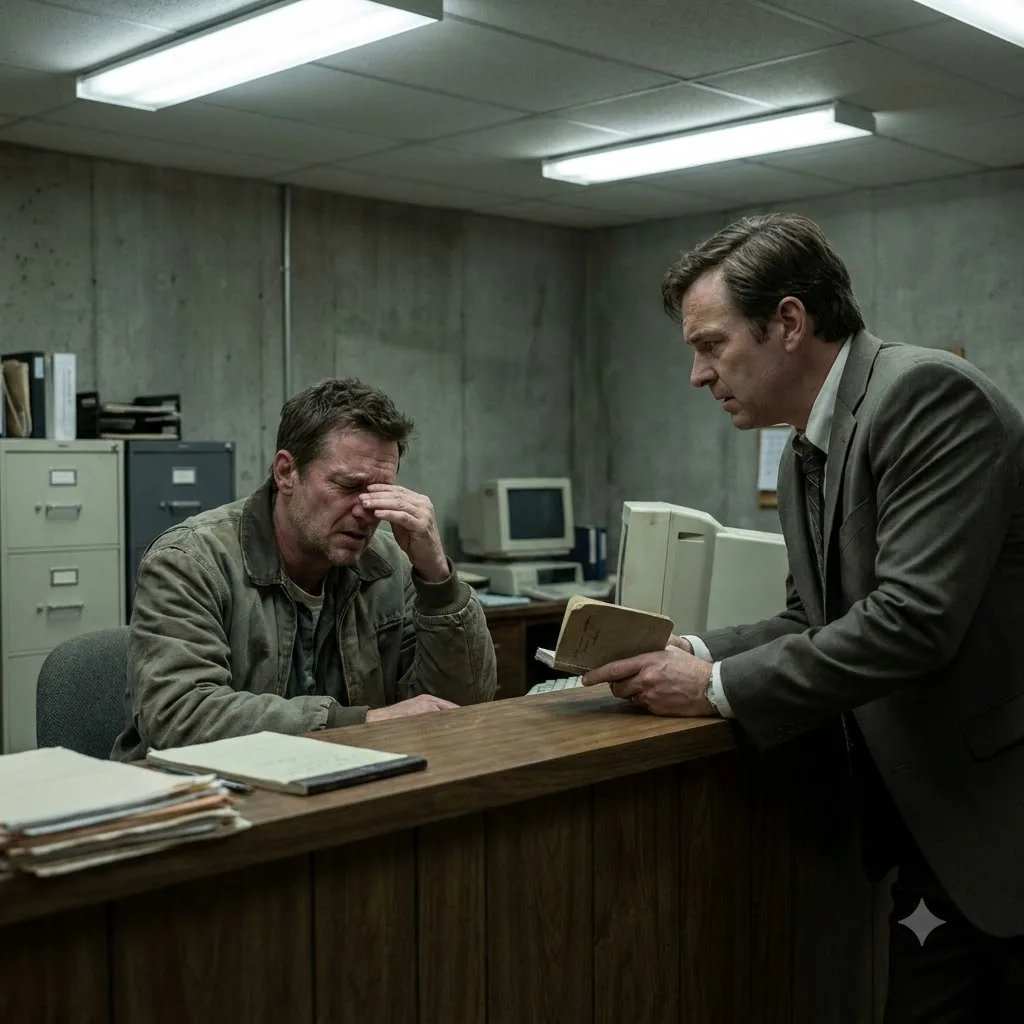
The reconstruction of the basement office confrontation continues at 10:28 AM, according to the security feed. Mark Miller stepped closer to the wooden counter, keeping his eyes fixed on Tyler Vance.
“If the cooling-off protocol is active for the firm,” Mark said, “then no outgoing transfers from any cold-storage device should be authorized. That is the baseline for any security hold.”
Tyler shifted his weight from one foot to the other behind the service counter. “I told you, the operational wallets require utility access. We have smart contracts to fulfill. You’re trying to force an issue during a market dip.”
“Let’s look at the ledger,” Mark said. He reached across the counter and tapped the monitor screen displaying the local node activity. “Open the transaction registry. Let’s see if the system actually blocked all other movements.”
Tyler did not move to touch the keyboard. Instead, he stepped back, crossing his arms over his branded gilet. “I am not pulling up proprietary transaction logs during an active security window, Mark. That violates client privacy protocols and internal compliance rules.”
Liam Vance’s forensic review of the local network logs paints a different picture. At exactly 10:31 AM, while Tyler claimed a total security lock was in place, the primary operational hardware wallet executed three outgoing transfers of eighty ether each to a private external address. The digital signatures on those transactions matched the private key stored on the second hardware wallet-the one Tyler controlled.
On the video feed, Mark took out his own tablet and logged into the public block explorer. He compared the transaction timestamps with the local vault log. “Three transfers went out ten minutes ago, Tyler. From your wallet. While mine is locked in this drawer under a ‘compliance hold.’ You are moving funds while blocking mine.”
Tyler’s breathing became visibly shallow. He tapped his foot against the concrete floor, his hand returning to his phone to slide his thumb across the glass. “Those were pre-authorized liquidity movements. They don’t count as standard withdrawals. They are system operations.”
“A withdrawal is a withdrawal under our agreement,” Mark said. “The rules state that any partner can demand a physical audit of the storage vaults at any time during business hours. I am demanding the audit now. Open the drawer.”
Tyler did not reach for the keycard on his lanyard. “The system has automated controls. Once a hold is triggered, the electronic drawer lock cannot be overridden manually. It’s programmed into the hardware. My hands are tied.”
The security camera footage shows Tyler pointing to the red status light on the metal drawer. However, the system logs retrieved during the audit reveal that no automated lockout command was active. The electronic security log shows that the lock command was manually sent to the drawer at 10:08 AM-just six minutes before Mark entered the basement office-and it was initiated from Tyler’s personal administrator profile.
Mark leaned over the counter, his eyes fixed on Tyler’s hand. “Unlock it, Tyler. We both know the system doesn’t lock itself.”
Tyler remained stationary behind the counter, his eyes darting toward the server rack as the terminal screen flashed with a new transaction alert. The network log showed another outbound transfer from Tyler’s account initiated right from his phone, directly contradicting his claim that the system was frozen.