Story code: ST-001182
Part 1: The Balcony Breach
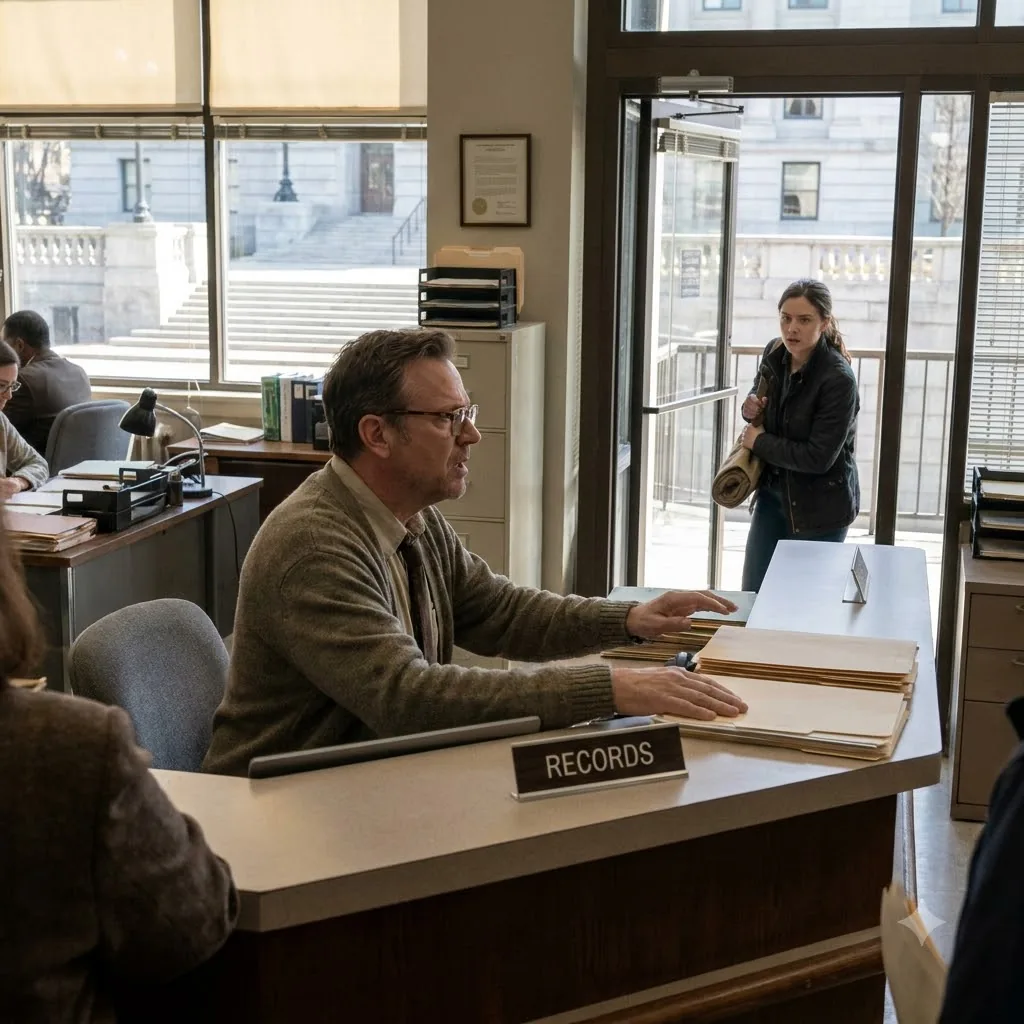
I was sorting the morning zoning files at my Records Desk when I saw Chloe, my supervisor Arthur’s activist niece, slip past the restricted balcony door with a heavy roll of canvas tucked under her coat. Arthur was down the hall in the breakroom, completely unaware that his private office boundary had just been breached and his professional security credentials compromised. Chloe clicked the heavy deadbolt behind her, immediately threatening Arthur’s career as she began unfurling a massive, green-painted protest banner over the stone balustrade of the City Council steps.
Through the glass partition of the records office, I watched her movements. She wore a dark, oversized utility jacket. She dragged the bundle to the edge of the stone balcony. The fabric scraped against the concrete with a dry, heavy sound. She didn’t look back toward the office. Her hands moved quickly, tying thick nylon ropes to the metal brackets of the flagpoles.
Arthur walked back into the suite holding a paper coffee cup. He stopped when he saw the open blinds of the balcony office. His gaze traveled to the window, then down to his empty belt loop where his heavy brass key ring usually hung. He set the cup down on the nearest filing cabinet. The paper cup buckled slightly, spilling a brown puddle onto the laminate surface.
“Arthur,” I said, pointing toward the computer monitor on my desk. “The balcony door sensor just triggered.”
Arthur did not look at the monitor. His hands went into his trouser pockets, pulling them inside out. He patted his chest, his breathing loud and shallow in the quiet room. “I had it at my desk,” he muttered, his voice barely above a whisper. “I left it in the top drawer during the morning meeting.”
Outside, the massive banner began to drop. The words CLIMATE EMERGENCY: OUR LIVES, YOUR LAWS rolled downward, visible to the crowd gathering on the steps below. The heavy canvas snapped in the wind, the brass grommets clanging against the limestone pillars.
Below on the plaza, pedestrians stopped. People pulled out their phones, pointing up toward our second-story windows. The security panel on my wall began to beep, a steady, high-pitched alert indicating an unauthorized exterior display. I clicked the active log on my screen. The line item blinked in bright red. The system had registered a physical swipe at the balcony door lock.
“Arthur,” I said, pointing at the glowing text. “The log says it was you.”
Arthur stared at the screen. The red text reflected in his eyes. He took a slow step backward, his shoulder blades pressing against the wooden frame of the office door. The access trail pointed directly to him, even though he stood beside me, empty-handed and silent. His fingers gripped the edge of my desk so hard his knuckles turned white.
“We need to go out there,” I said, standing up from my chair.
Arthur did not move toward the balcony. He kept his eyes locked on the blinking red entry log. “If they check the card history, Jim,” he whispered, his voice cracking slightly, “it’s my signature on the authorization form. It’s my personal badge.”
The sound of heavy footsteps echoed from the tiled corridor outside our office. The building’s security staff was already moving toward the restricted wing. Arthur looked at the locked balcony door, then back at me, his face tight and pale. The proof of the breach was recorded in the database, and the access path pointed directly to the department’s senior planner.
I was sorting the morning zoning files at my Records Desk when I saw Chloe, my supervisor Arthur’s activist niece, slip past the restricted balcony door with a heavy roll of canvas tucked under her coat. Arthur was down the hall in the breakroom, completely unaware that his private office boundary had just been breached and his professional security credentials compromised. Chloe clicked the heavy deadbolt behind her, immediately threatening Arthur’s career as she began unfurling a massive, green-painted protest banner over the stone balustrade of the City Council steps.
Through the glass partition of the records office, I watched her movements. She wore a dark, oversized utility jacket. She dragged the bundle to the edge of the stone balcony. The fabric scraped against the concrete with a dry, heavy sound. She didn’t look back toward the office. Her hands moved quickly, tying thick nylon ropes to the metal brackets of the flagpoles.
Arthur walked back into the suite holding a paper coffee cup. He stopped when he saw the open blinds of the balcony office. His gaze traveled to the window, then down to his empty belt loop where his heavy brass key ring usually hung. He set the cup down on the nearest filing cabinet. The paper cup buckled slightly, spilling a brown puddle onto the laminate surface.
“Arthur,” I said, pointing toward the computer monitor on my desk. “The balcony door sensor just triggered.”
Arthur did not look at the monitor. His hands went into his trouser pockets, pulling them inside out. He patted his chest, his breathing loud and shallow in the quiet room. “I had it at my desk,” he muttered, his voice barely above a whisper. “I left it in the top drawer during the morning meeting.”
Outside, the massive banner began to drop. The words CLIMATE EMERGENCY: OUR LIVES, YOUR LAWS rolled downward, visible to the crowd gathering on the steps below. The heavy canvas snapped in the wind, the brass grommets clanging against the limestone pillars.
Below on the plaza, pedestrians stopped. People pulled out their phones, pointing up toward our second-story windows. The security panel on my wall began to beep, a steady, high-pitched alert indicating an unauthorized exterior display. I clicked the active log on my screen. The line item blinked in bright red. The system had registered a physical swipe at the balcony door lock.
“Arthur,” I said, pointing at the glowing text. “The log says it was you.”
Arthur stared at the screen. The red text reflected in his eyes. He took a slow step backward, his shoulder blades pressing against the wooden frame of the office door. The access trail pointed directly to him, even though he stood beside me, empty-handed and silent. His fingers gripped the edge of my desk so hard his knuckles turned white.
“We need to go out there,” I said, standing up from my chair.
Arthur did not move toward the balcony. He kept his eyes locked on the blinking red entry log. “If they check the card history, Jim,” he whispered, his voice cracking slightly, “it’s my signature on the authorization form. It’s my personal badge.”
The sound of heavy footsteps echoed from the tiled corridor outside our office. The building’s security staff was already moving toward the restricted wing. Arthur looked at the locked balcony door, then back at me, his face tight and pale. The proof of the breach was recorded in the database, and the access path pointed directly to the department’s senior planner.