Story code: ST-000122
Part 1: The Listing in the Live Feed
I was standing inside the digital art auction’s live listing feed when a token listing flashed up with a clip of my bedroom doorway, my wall art, and Mason’s name on the seller line. That was the first thing I saw in the nft_family_collection_digital_art_auction_private_boundary_violation space, and it hit before I could even process the chat moving around it, because the object being sold was clearly tied to my home and my body autonomy, not just some random family asset. My cousin Mason had turned our nft_family_collection_collection_flipping_cousin_relationship into a public sale, and the listing sat there in the token_listing_private_boundary_violation texture like it belonged there.
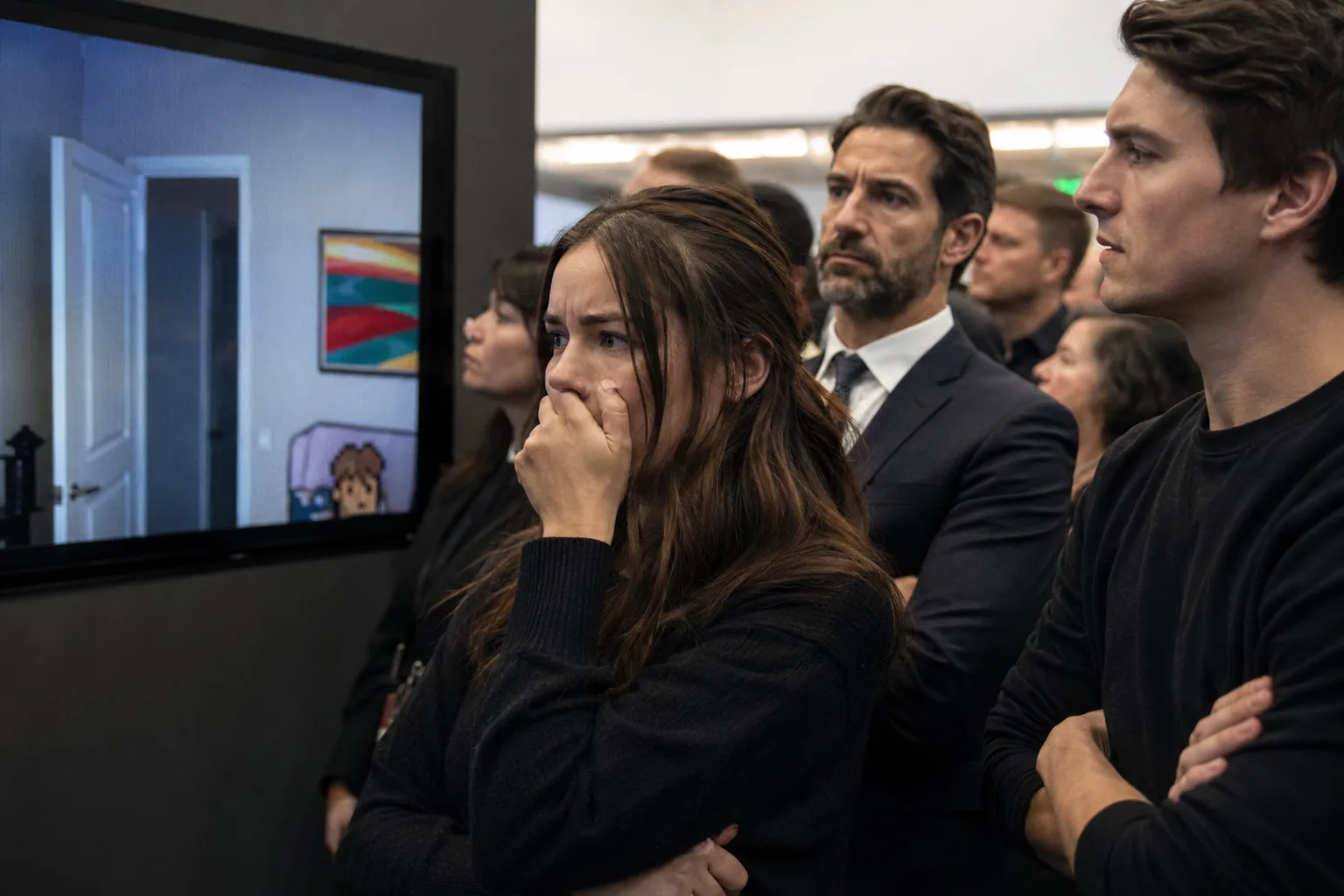
I clicked it open with my hand shaking against the phone. The thumbnail expanded into a short preview: the edge of my bed, the framed print over it, and a slow pan past my closed closet door. No one had asked me if that footage could be used. No one had sent me a message. The auction room kept doing what it was built to do-scrolling bids, little hearts, terse moderator notes-while I stared at the proof that somebody had walked through my private space and packaged it for strangers.
Mason’s username sat beside a polished title and a starting price that made my stomach knot. The description kept calling it part of a “family drop,” like that phrase could cover what was sitting in front of me. The listing included a clean, styled image strip and a clipped line about provenance, but it did not explain why my bedroom showed up inside it. It did not explain why my wall, my doorway, and the things I kept out of public view were being used to dress up a token.
I clicked the seller profile. The account looked active and tidy, with recent activity, a history of fast flips, and the kind of language that makes everything sound routine. Mason knew how to move on platforms. He always had. I could see that much without guessing at anything else. What I could not see was any permission from me, and that gap was the whole problem. The auction site treated the listing like any other object. I did not.
I opened the item details again and read every line twice. The preview time stamp was recent. The upload was recent. The auction clock was already running. People in the chat were asking whether the piece was part of a larger family set, whether the other tokens would go live, whether there was a reserve. Nobody in that thread seemed to notice that the asset being sold crossed a private threshold first and an art threshold second.
I sent Mason a direct message from inside the app: What is this? The message showed delivered. He did not answer. I sent it again with the listing link attached. Still nothing.
Then I checked the public-facing notes one more time and saw a detail that made my throat go tight: the listing did not just show my room, it referenced a source file name that looked like it came from inside my own shared family folder. That meant the access path was close enough to feel wrong in my hand, but the page did not say who had used it or how. The token was live, my private space was already exposed, and the one piece that should have explained it was still missing.
I was standing inside the digital art auction’s live listing feed when a token listing flashed up with a clip of my bedroom doorway, my wall art, and Mason’s name on the seller line. That was the first thing I saw in the nft_family_collection_digital_art_auction_private_boundary_violation space, and it hit before I could even process the chat moving around it, because the object being sold was clearly tied to my home and my body autonomy, not just some random family asset. My cousin Mason had turned our nft_family_collection_collection_flipping_cousin_relationship into a public sale, and the listing sat there in the token_listing_private_boundary_violation texture like it belonged there.
I clicked it open with my hand shaking against the phone. The thumbnail expanded into a short preview: the edge of my bed, the framed print over it, and a slow pan past my closed closet door. No one had asked me if that footage could be used. No one had sent me a message. The auction room kept doing what it was built to do-scrolling bids, little hearts, terse moderator notes-while I stared at the proof that somebody had walked through my private space and packaged it for strangers.
Mason’s username sat beside a polished title and a starting price that made my stomach knot. The description kept calling it part of a “family drop,” like that phrase could cover what was sitting in front of me. The listing included a clean, styled image strip and a clipped line about provenance, but it did not explain why my bedroom showed up inside it. It did not explain why my wall, my doorway, and the things I kept out of public view were being used to dress up a token.
I clicked the seller profile. The account looked active and tidy, with recent activity, a history of fast flips, and the kind of language that makes everything sound routine. Mason knew how to move on platforms. He always had. I could see that much without guessing at anything else. What I could not see was any permission from me, and that gap was the whole problem. The auction site treated the listing like any other object. I did not.
I opened the item details again and read every line twice. The preview time stamp was recent. The upload was recent. The auction clock was already running. People in the chat were asking whether the piece was part of a larger family set, whether the other tokens would go live, whether there was a reserve. Nobody in that thread seemed to notice that the asset being sold crossed a private threshold first and an art threshold second.
I sent Mason a direct message from inside the app: What is this? The message showed delivered. He did not answer. I sent it again with the listing link attached. Still nothing.
Then I checked the public-facing notes one more time and saw a detail that made my throat go tight: the listing did not just show my room, it referenced a source file name that looked like it came from inside my own shared family folder. That meant the access path was close enough to feel wrong in my hand, but the page did not say who had used it or how. The token was live, my private space was already exposed, and the one piece that should have explained it was still missing.