Story code: ST-000842
Part 1: My Mother’s Box Was Crushed at My Door
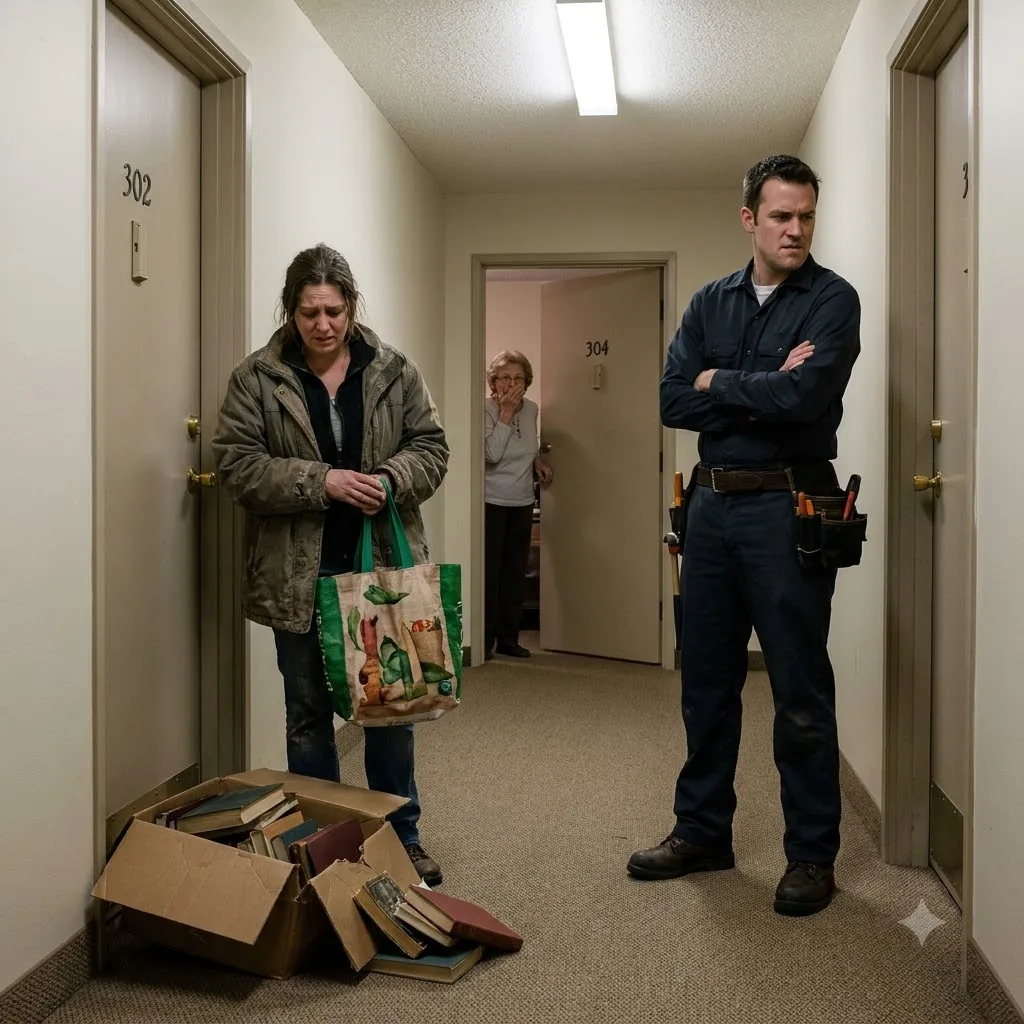
I came off the elevator with a bag of groceries cutting into my fingers and found my mother’s storage box smashed open right outside my apartment door. The lid was split, the latch was broken clean off, and her letters and framed photos were scattered across the third-floor hallway like somebody had set them down, opened them, and decided they had no right to stay whole. Ten minutes later maintenance told me nobody had touched my door, which would have been easier to believe if the damage hadn’t been lined up so neatly against my threshold.
This was not a box I kept in some basement cage or shared storage room. It was one of those clear plastic bins with the blue handles, and I had pulled it out that morning from the coat closet because I was switching a few things around inside my apartment. My mother died three years ago. The box held the things I still hadn’t found a better place for: cards in her handwriting, a little velvet pouch with costume jewelry she wore every day, a stack of small framed drugstore prints, and the folded program from her funeral tucked between two photo albums.
I had left it just inside my apartment while I took down a vacuum and laundry basket. Then I got a call from work, realized I was running late, and moved the box right outside my own door for what I thought would be twenty minutes while I hauled two trash bags to the chute and drove to a meeting. It was a dumb shortcut, and I know people will say not to leave anything in a hallway. Fine. But I know exactly how I left it: lid snapped shut, handles down, pushed tight to the wall on the hinge side of my door so no one had to step over it.
When I got back, the hallway looked wrong before I even reached my unit. One blue handle was several feet away near the baseboard heater. The lid had a white stress line running through it like it had been bent backward too far. My mother’s pearl-looking clip earrings were on the carpet runner beside my welcome mat. A wooden frame had cracked across the glassless front, and one of the photos inside had a shoe print over half of her face.
I did not touch anything at first. I set my groceries down, took out my phone, and photographed the whole stretch of hallway from the elevator corner to my door. Then I crouched down and took close shots of the latch, the split in the lid, the jewelry pouch turned inside out, and the letters that had slipped partly under the edge of my mat. I took a picture of the box in relation to my doorframe because the position bothered me. It wasn’t where hallway traffic would have kicked it by accident. It had been dragged out, opened toward the center of the hall, and shoved back crooked.
Across from me, Maya Torres opened her door with a package under one arm and stopped when she saw me on the floor taking photos.
She said, “Was that yours?”
I said, “Yes. Did you see what happened?”
She shifted the package higher and looked down the hall before answering. “I saw it earlier. It was against your wall then. Not like this.”
“Earlier when?”
She gave me a time by what she had been doing, not by clock. “Around when the grocery delivery came to 3F. Before lunch. It was shut.”
That mattered because I’d left the building just after that.
I asked if she had seen anyone near my door.
She hesitated and said, “I heard a cart wheel rattling over that loose seam in the carpet. I looked out because it always makes that same noise.” She pointed to the middle of the hall where the runner buckled slightly over the concrete joint. “Maintenance cart. I didn’t see the whole thing, just the side and somebody stopped near your place.”
“Who?”
“I didn’t see a face.”
A few minutes later, Daryl Boone came up from the stairwell with a work-order clipboard tucked under one arm and the maintenance cart behind him. He was familiar the way building staff get familiar when you see them changing filters, checking smoke detectors, hauling paint cans. He glanced at the mess, then at me, then at Maya’s half-open door.
I said, “Did you move this box?”
He answered too fast. “Nope. We don’t touch tenant property in hallways.”
I said, “It was closed when I left. Now it’s broken open outside my door.”
He lifted one shoulder. “Could’ve been kids. Delivery guy. Anybody.”
There were no kids on this floor. Deliveries didn’t drag storage bins open and leave funeral programs under welcome mats.
I asked, “Were you working up here today?”
He tapped the clipboard with two fingers. “All over the building.”
Then he gave me the line that locked everything into place for me: “And I never touched your door.”
I had not asked about my door. I had asked about the box.
That should have made the denial feel finished. Instead it made the whole hallway narrower. The box had been left on the hinge side of my apartment, tucked where only someone already working close to my threshold would bother moving it instead of stepping around it. And the only person who answered me as if the issue was the door, not the smashed keepsakes at my feet, was the maintenance man standing there with a cart that Maya recognized by sound.
I was still staring at that broken latch when I realized the thing that made his denial even worse: if he had really never touched my door, why was he defending access I hadn’t accused him of using yet?
I came off the elevator with a bag of groceries cutting into my fingers and found my mother’s storage box smashed open right outside my apartment door. The lid was split, the latch was broken clean off, and her letters and framed photos were scattered across the third-floor hallway like somebody had set them down, opened them, and decided they had no right to stay whole. Ten minutes later maintenance told me nobody had touched my door, which would have been easier to believe if the damage hadn’t been lined up so neatly against my threshold.
This was not a box I kept in some basement cage or shared storage room. It was one of those clear plastic bins with the blue handles, and I had pulled it out that morning from the coat closet because I was switching a few things around inside my apartment. My mother died three years ago. The box held the things I still hadn’t found a better place for: cards in her handwriting, a little velvet pouch with costume jewelry she wore every day, a stack of small framed drugstore prints, and the folded program from her funeral tucked between two photo albums.
I had left it just inside my apartment while I took down a vacuum and laundry basket. Then I got a call from work, realized I was running late, and moved the box right outside my own door for what I thought would be twenty minutes while I hauled two trash bags to the chute and drove to a meeting. It was a dumb shortcut, and I know people will say not to leave anything in a hallway. Fine. But I know exactly how I left it: lid snapped shut, handles down, pushed tight to the wall on the hinge side of my door so no one had to step over it.
When I got back, the hallway looked wrong before I even reached my unit. One blue handle was several feet away near the baseboard heater. The lid had a white stress line running through it like it had been bent backward too far. My mother’s pearl-looking clip earrings were on the carpet runner beside my welcome mat. A wooden frame had cracked across the glassless front, and one of the photos inside had a shoe print over half of her face.
I did not touch anything at first. I set my groceries down, took out my phone, and photographed the whole stretch of hallway from the elevator corner to my door. Then I crouched down and took close shots of the latch, the split in the lid, the jewelry pouch turned inside out, and the letters that had slipped partly under the edge of my mat. I took a picture of the box in relation to my doorframe because the position bothered me. It wasn’t where hallway traffic would have kicked it by accident. It had been dragged out, opened toward the center of the hall, and shoved back crooked.
Across from me, Maya Torres opened her door with a package under one arm and stopped when she saw me on the floor taking photos.
She said, “Was that yours?”
I said, “Yes. Did you see what happened?”
She shifted the package higher and looked down the hall before answering. “I saw it earlier. It was against your wall then. Not like this.”
“Earlier when?”
She gave me a time by what she had been doing, not by clock. “Around when the grocery delivery came to 3F. Before lunch. It was shut.”
That mattered because I’d left the building just after that.
I asked if she had seen anyone near my door.
She hesitated and said, “I heard a cart wheel rattling over that loose seam in the carpet. I looked out because it always makes that same noise.” She pointed to the middle of the hall where the runner buckled slightly over the concrete joint. “Maintenance cart. I didn’t see the whole thing, just the side and somebody stopped near your place.”
“Who?”
“I didn’t see a face.”
A few minutes later, Daryl Boone came up from the stairwell with a work-order clipboard tucked under one arm and the maintenance cart behind him. He was familiar the way building staff get familiar when you see them changing filters, checking smoke detectors, hauling paint cans. He glanced at the mess, then at me, then at Maya’s half-open door.
I said, “Did you move this box?”
He answered too fast. “Nope. We don’t touch tenant property in hallways.”
I said, “It was closed when I left. Now it’s broken open outside my door.”
He lifted one shoulder. “Could’ve been kids. Delivery guy. Anybody.”
There were no kids on this floor. Deliveries didn’t drag storage bins open and leave funeral programs under welcome mats.
I asked, “Were you working up here today?”
He tapped the clipboard with two fingers. “All over the building.”
Then he gave me the line that locked everything into place for me: “And I never touched your door.”
I had not asked about my door. I had asked about the box.
That should have made the denial feel finished. Instead it made the whole hallway narrower. The box had been left on the hinge side of my apartment, tucked where only someone already working close to my threshold would bother moving it instead of stepping around it. And the only person who answered me as if the issue was the door, not the smashed keepsakes at my feet, was the maintenance man standing there with a cart that Maya recognized by sound.
I was still staring at that broken latch when I realized the thing that made his denial even worse: if he had really never touched my door, why was he defending access I hadn’t accused him of using yet?