Story code: ST-000902
Part 3: I Asked for the Full Copy
I said, “I want everything I’m allowed to see from my own file. Not a summary. Not later. Now.”
Dr. Patel folded her hands over the tablet for a second, then stood. “I’ll print the patient-accessible report history and the consent fields attached to today’s visit.”
“And the access trail you said you needed to verify.”
“What I can release to you is narrower than the full internal log,” she said.
“Then give me the narrow version.”
She nodded once and left the room with the paper packet.
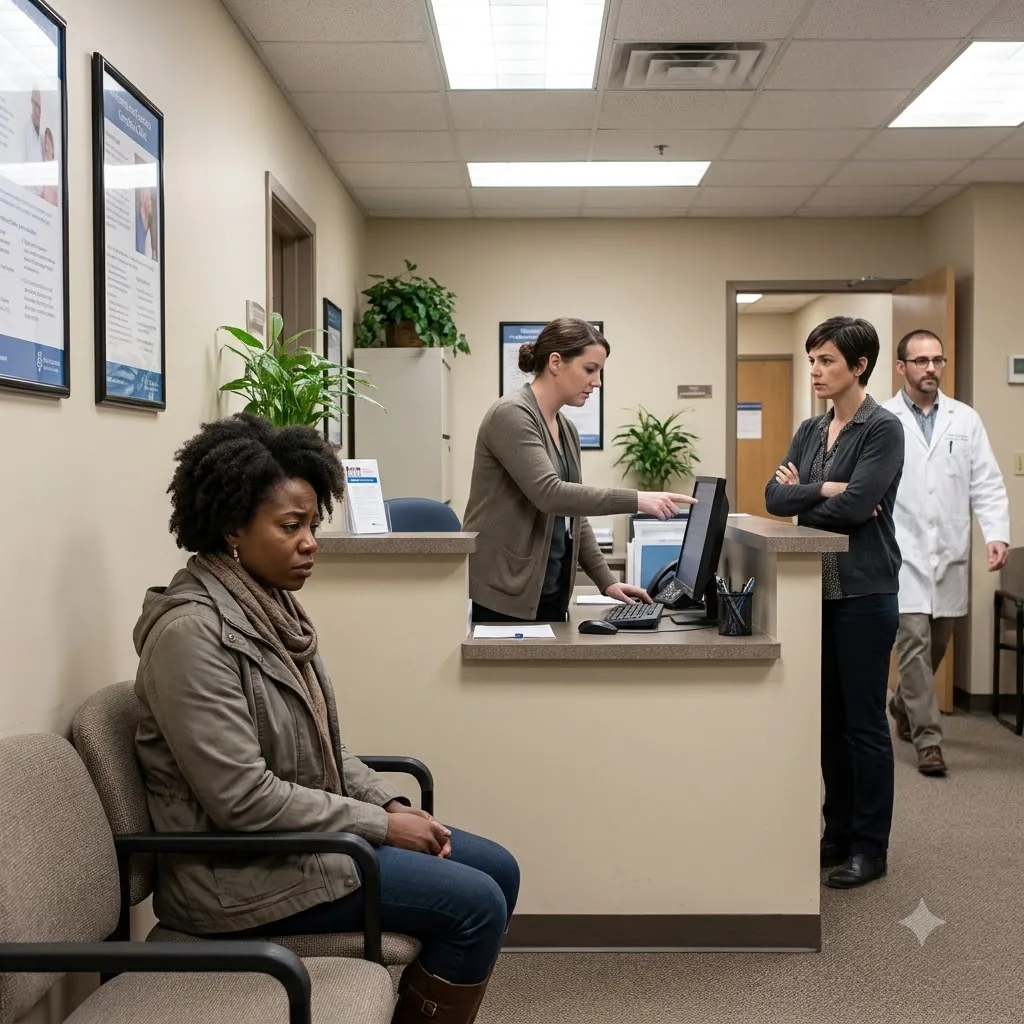
Mara stayed by the counter, not pretending anymore that this was still a normal follow-up. She peeled the visitor sticker off her sleeve and stuck it to the edge of the trash can, then smoothed her palms against her scrub top.
“When you said two labels,” I asked, “is that common?”
“Manual routing happens,” she said carefully. “But not usually on straightforward hereditary follow-ups.”
“Was mine straightforward before somebody touched it?”
She looked at the door before answering. “The first page looked routine. The addendum and handoff note were what made it look different.”
That was as close as anyone had come to saying out loud that my file had changed shape around me.
I opened the portal again and took screenshots of the modification notice, the date, the time, every line I could still see. I did it slowly, like I was making myself useful instead of sitting in a room waiting to hear how much of my own medical path had been treated like family property.
My phone buzzed in my hand.
Rachel: You done yet?
Then, before I answered:
Rachel: If they hand you the counseling addendum, don’t sign anything today.
I stared at the screen until the words blurred. She had named the exact page sitting in front of me. Not a follow-up packet. Not a report. The counseling addendum.
Mara saw my face change. “Are you okay?”
I turned the screen toward her, not because she could solve it, but because I needed another pair of eyes in the room. She read the text and went still.
“She knows the term,” I said.
Mara didn’t touch the phone. “I can’t speak to your family.”
“You don’t have to. You can read.”
The knock came before she answered. Dr. Patel returned with three stapled sets and a tightness around her mouth that had not been there earlier. She sat down and placed one packet in front of me.
“This is the patient copy of your report history, including the addendum release status,” she said. “This is the consent and communication field sheet attached to your profile. And this”-she tapped the third set-“is a visit workflow printout with identifying staff information removed where required.”
I pulled the communication sheet first.
My name was at the top. Under it, in plain block text, was the line that made my chest lock: FAMILY COMMUNICATION STATUS: MODIFIED TO CONDITIONAL VIA PHONE REQUEST, then a date from last week. On the next line: DIRECT PATIENT RELEASE HOLD UNTIL CONSULT CONFIRMED.
Phone request.
Not portal correction. Not auto-fill. A phone request.
I looked up. “Who made the phone request?”
Dr. Patel held my gaze this time. “The patient copy does not include the caller identity.”
“But it exists.”
A pause. “There is a linked note in the workflow.”
That was answer enough.
I reached for the report history. The addendum page had a release line at the bottom I had not noticed before because part of it had been covered by the manual routing label. On this cleaner copy it read: COUNSELING ADDENDUM GENERATED AFTER COLLATERAL FAMILY CONTEXT; DIRECT DISCLOSURE PREFERENCE TO BE CONFIRMED WITH PATIENT.
Collateral family context.
My phone was still faceup beside the packet. Rachel’s message sat there like a handprint.
“You can say her name if that’s who called,” I said.
Dr. Patel did not say it.
Instead she slid the third printout half an inch toward me. Most of it was coded scheduling language, but one line had been left visible because it tied to my release status: CALLER STATED RELATIONSHIP: SISTER. Below that, another line: CALLER EXPRESSED PROFESSIONAL CONCERN REGARDING INTERPRETATION OF RESULTS.
Sister.
No full name. No dramatic confession. Just the role, typed into my file by somebody who had accepted the call as part of my testing path.
I heard myself laugh once, sharp and low, because Rachel always used that exact tone with me-professional concern-as if concern became harmless when dressed in the right vocabulary.
“She called before I came in,” I said.
Neither woman corrected me.
I picked up my phone and opened Rachel’s text thread. My thumb hovered, then typed: Did you call my clinic about my file?
The three dots appeared almost immediately.
Rachel: I was trying to keep them from alarming you.
Then another message.
Rachel: Please don’t do this in front of strangers.
That second text told me more than the first one. Not that I knew every step she had taken. I didn’t. But I knew enough now to stop needing a perfect confession. The report, the modified communication field, the hold on direct release, the line marked sister, and her live attempt to manage my reaction all fit together too tightly to be anything else.
I set the phone down between us. Dr. Patel read the screen. Mara read it too from where she stood by the counter.
Nobody in the room said Rachel’s name, but it was there anyway.
I asked for one more thing. “Print whatever form I need to revoke every family contact option and lock direct release to me only.”
Dr. Patel gave a small nod. “I can do that now.”
As she reached for the printer request on her tablet, my phone lit up again with Rachel calling me from the parking lot outside the clinic.