Story code: ST-000847
Part 1: She Said Covering the Table Was Me Taking Over
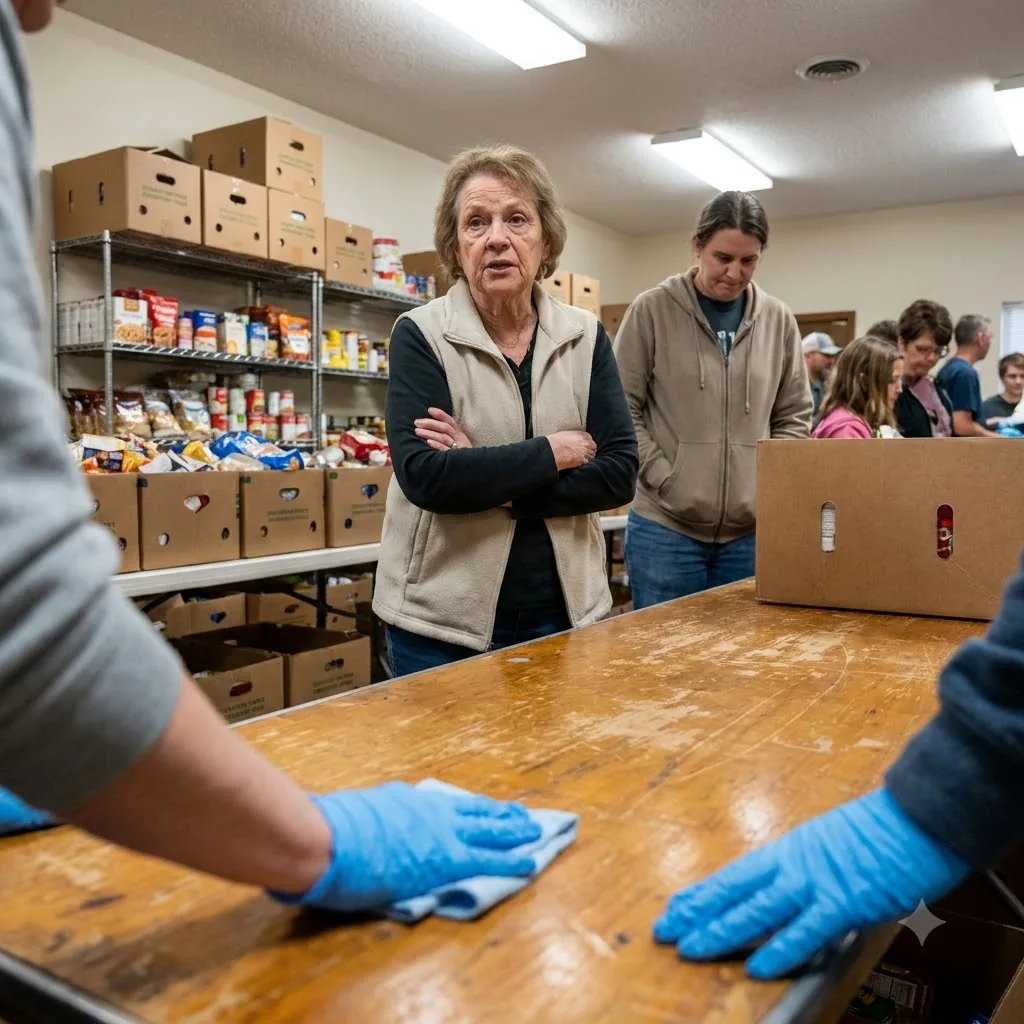
Darlene Pike waited until I was wiping down the pantry table and restacking the last three donation totes before family pickup, then said, loud enough for the whole room, that I was “making everyone else look bad again.” She said it in the middle of the main room, right by the sorting table, while Tina was labeling bags and Leon was carrying a tote toward the back corner. Then she added that me covering for people all the time was selfish, controlling, and “disrupting how we share care here.”
I kept the spray bottle in one hand and the rag in the other. “I’m just getting this table cleared before the 4:30 pickups,” I said.
Darlene gave that calm committee voice she used when visitors were around. “That’s exactly what I mean, Mara. You decide you know best, you jump in, and then nobody else gets a chance to help. This is a group pantry, not your personal system.”
A couple of volunteers went quiet without looking up. The room kept moving the way it does when people want the work to hide the argument. Plastic totes scraped against metal chair legs. A box cutter clicked shut. Someone at check-in asked for the Rivera pickup.
I set the rag down and slid one of the green totes onto the lower shelf. The tag read DRY-4. We got the same church donation run every Tuesday, same colored totes, same routine. Arrivals got marked at the coordinator station. Sorted items got initialed. If a tote got split between family bags, I wrote it down in the handoff notes on the clipboard by the log.
Darlene stepped closer to the table but did not touch the wet spot I had just sprayed. “You keep rushing to do the hard parts,” she said, still in that smooth voice, “and then acting like the rest of us are careless if we don’t do them your way.”
Tina looked up at that. “I mean, we all want to help,” she said, fast, like she was trying to close a lid on something.
“Exactly,” Darlene said. “And when one person keeps grabbing tasks, it creates confusion. Families see it too. It changes the tone.”
That got a few faces turned my way. Not because anybody had seen me stop a family or argue at the door. Just because Darlene said it cleanly, like she was reading a policy off a card.
I pulled the tote log closer with one finger so it wouldn’t slide off the station. “What task did I grab?”
Darlene folded her hands. “Today? The pantry table, the dry-goods handoff, the baby item tote, and check-in notes. Last week you were still here after closing moving things around after everyone had already done their share.”
Leon came in from the back with another tote against his hip. “Need this by canned goods or by cleanup?” he asked nobody in particular.
“By canned goods,” I said.
Darlene turned her head toward him without answering his question. “See? That. Mara answering for the room.”
Leon set the tote down where I pointed anyway and went back toward storage.
I picked up the clipboard. I did not wave it. I just looked at the page because the page was there. Today’s entries were mine and Leon’s block print, easy to read. Arrival time for the Tuesday church run: 2:12 p.m. DRY-4 opened at 2:19. Baby items handed off at 2:41 after Tina asked where diapers had gone. Surface wiped and reset at 3:58 because a jar of applesauce had leaked through one tote seam. Family pickups started at 4:30.
Darlene was still talking. “It sends a message when one volunteer always has to rescue everyone else. That is not kindness. That is control.”
The thing about pantry work is that there is always a visible mess somewhere. Spilled rice. Labels curling off. A tote handle half torn. It makes a clean accusation sound stronger than the work that fixes the mess.
Tina pressed labels onto two paper sacks and said, “We’re just trying to keep things fair.”
I looked at her. “Did you ask me at 2:40 where the diaper packs were?”
She paused with the marker cap in her teeth, then took it out. “I asked where baby stuff got moved, yeah.”
“And who brought that tote to the side table?”
She glanced at Darlene before answering. “You did.”
Darlene lifted one hand. “This is not about one tote. It’s about the pattern.”
At check-in, the next family signed the sheet. A little boy leaned against the folding table, watching Leon stack cans into a box. I moved the spray bottle aside and flattened the top page of the tote log with my palm.
“Then let’s do the pattern,” I said. “Because the log is right here.”
For the first time, Darlene stopped speaking over the room and looked directly at the clipboard. Her fingers touched the handle of the nearest tote for a second and dropped away.
There was a yellow sticky note clipped to the back, one I had written when I took over the applesauce mess: TABLE RESET 3:58 – DP SAID SHE HAD TO STEP OUT – M.J. The initials were plain. The time was plain. And Darlene had just told the whole room she’d been managing the table while I kept inserting myself.
She saw the note at the same time I did, and the room got very still around one cheap clipboard.
Darlene Pike waited until I was wiping down the pantry table and restacking the last three donation totes before family pickup, then said, loud enough for the whole room, that I was “making everyone else look bad again.” She said it in the middle of the main room, right by the sorting table, while Tina was labeling bags and Leon was carrying a tote toward the back corner. Then she added that me covering for people all the time was selfish, controlling, and “disrupting how we share care here.”
I kept the spray bottle in one hand and the rag in the other. “I’m just getting this table cleared before the 4:30 pickups,” I said.
Darlene gave that calm committee voice she used when visitors were around. “That’s exactly what I mean, Mara. You decide you know best, you jump in, and then nobody else gets a chance to help. This is a group pantry, not your personal system.”
A couple of volunteers went quiet without looking up. The room kept moving the way it does when people want the work to hide the argument. Plastic totes scraped against metal chair legs. A box cutter clicked shut. Someone at check-in asked for the Rivera pickup.
I set the rag down and slid one of the green totes onto the lower shelf. The tag read DRY-4. We got the same church donation run every Tuesday, same colored totes, same routine. Arrivals got marked at the coordinator station. Sorted items got initialed. If a tote got split between family bags, I wrote it down in the handoff notes on the clipboard by the log.
Darlene stepped closer to the table but did not touch the wet spot I had just sprayed. “You keep rushing to do the hard parts,” she said, still in that smooth voice, “and then acting like the rest of us are careless if we don’t do them your way.”
Tina looked up at that. “I mean, we all want to help,” she said, fast, like she was trying to close a lid on something.
“Exactly,” Darlene said. “And when one person keeps grabbing tasks, it creates confusion. Families see it too. It changes the tone.”
That got a few faces turned my way. Not because anybody had seen me stop a family or argue at the door. Just because Darlene said it cleanly, like she was reading a policy off a card.
I pulled the tote log closer with one finger so it wouldn’t slide off the station. “What task did I grab?”
Darlene folded her hands. “Today? The pantry table, the dry-goods handoff, the baby item tote, and check-in notes. Last week you were still here after closing moving things around after everyone had already done their share.”
Leon came in from the back with another tote against his hip. “Need this by canned goods or by cleanup?” he asked nobody in particular.
“By canned goods,” I said.
Darlene turned her head toward him without answering his question. “See? That. Mara answering for the room.”
Leon set the tote down where I pointed anyway and went back toward storage.
I picked up the clipboard. I did not wave it. I just looked at the page because the page was there. Today’s entries were mine and Leon’s block print, easy to read. Arrival time for the Tuesday church run: 2:12 p.m. DRY-4 opened at 2:19. Baby items handed off at 2:41 after Tina asked where diapers had gone. Surface wiped and reset at 3:58 because a jar of applesauce had leaked through one tote seam. Family pickups started at 4:30.
Darlene was still talking. “It sends a message when one volunteer always has to rescue everyone else. That is not kindness. That is control.”
The thing about pantry work is that there is always a visible mess somewhere. Spilled rice. Labels curling off. A tote handle half torn. It makes a clean accusation sound stronger than the work that fixes the mess.
Tina pressed labels onto two paper sacks and said, “We’re just trying to keep things fair.”
I looked at her. “Did you ask me at 2:40 where the diaper packs were?”
She paused with the marker cap in her teeth, then took it out. “I asked where baby stuff got moved, yeah.”
“And who brought that tote to the side table?”
She glanced at Darlene before answering. “You did.”
Darlene lifted one hand. “This is not about one tote. It’s about the pattern.”
At check-in, the next family signed the sheet. A little boy leaned against the folding table, watching Leon stack cans into a box. I moved the spray bottle aside and flattened the top page of the tote log with my palm.
“Then let’s do the pattern,” I said. “Because the log is right here.”
For the first time, Darlene stopped speaking over the room and looked directly at the clipboard. Her fingers touched the handle of the nearest tote for a second and dropped away.
There was a yellow sticky note clipped to the back, one I had written when I took over the applesauce mess: TABLE RESET 3:58 – DP SAID SHE HAD TO STEP OUT – M.J. The initials were plain. The time was plain. And Darlene had just told the whole room she’d been managing the table while I kept inserting myself.
She saw the note at the same time I did, and the room got very still around one cheap clipboard.