Story code: ST-000247
Part 3: The Permission Trail Was Worse
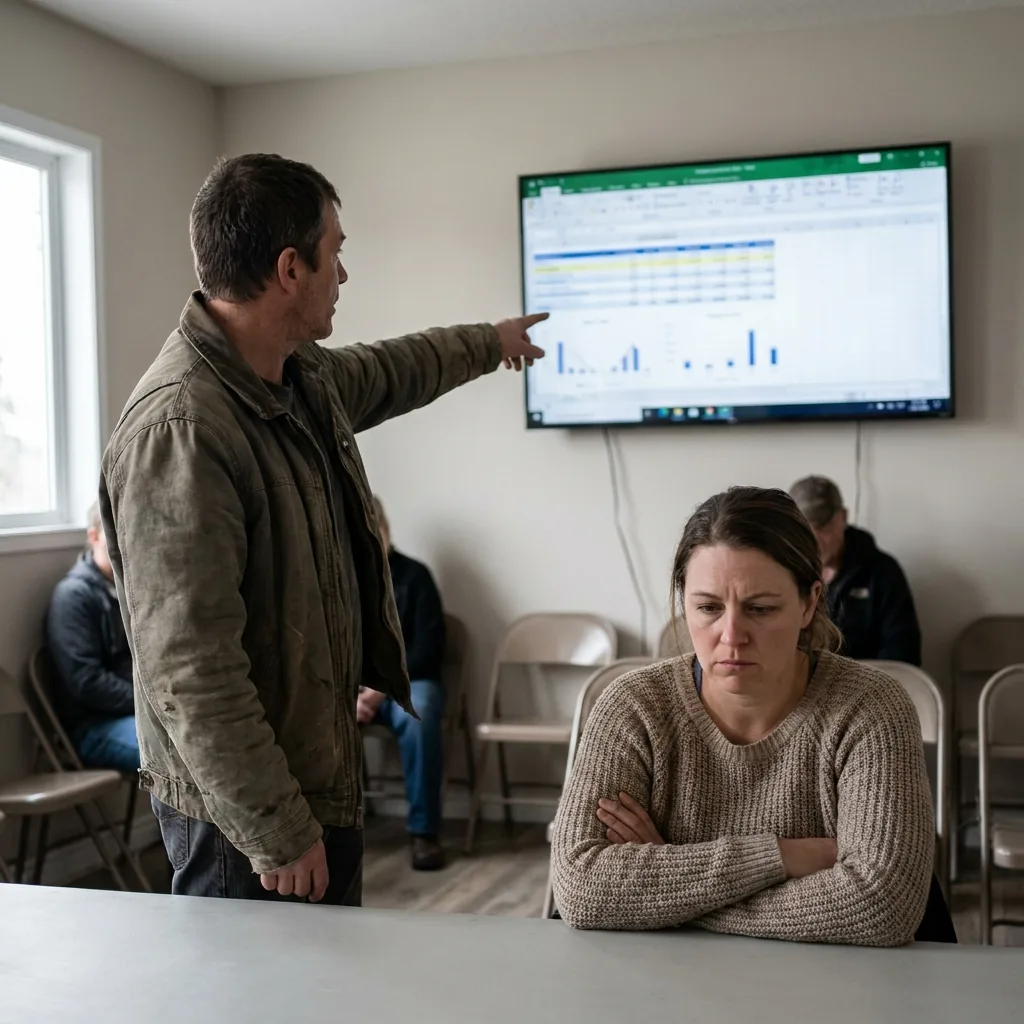
Hector Ruiz left the care log open and pulled the access-permission panel over it like tracing paper. That was where Darren Pike’s argument stopped sounding broad and started running into timestamps. The courthouse display split into three clean columns: care action, permission request, and deed-linked authority change. Once those sat next to each other, the pattern got harder to talk around.
Hector read from the first cluster. “April 6, emergency utility restoration completed by Maya Bennett under temporary caretaker sub-access. April 7, temporary access expired automatically. April 8, landlord review request submitted by Darren Pike seeking restriction of caretaker tools.”
He moved to the next cluster.
“April 11, resident lockout reported. April 11, support grants emergency restoration access to Maya Bennett for ninety minutes. April 12, restriction request submitted by Darren Pike.”
Then the third.
“April 14, wall-collapse glitch escalated by Maya Bennett. April 14, parcel stabilization completed. April 15, deed-note filed by Darren Pike alleging unauthorized interference.”
No one needed the pattern explained after the third sequence. The requests to cut Maya back were not arriving before the work, or instead of the work. They were arriving after the work was already done.
Darren tried to break in anyway. “Because repeated access creates dependency. I was trying to restore proper boundaries.”
Hector kept his eyes on the feed. “Proper boundaries after which completed care action by you?”
Darren’s deed tab stayed pinned. Nothing new appeared beside it.
Maya did not rush to fill the silence. She waited, then slid in one more archive pane. It was a support reply from the platform, stamped with an automatic note that temporary caretaker access had been granted because the resident account had not completed required response prompts inside the repair window. Beneath that sat a second support reply. Same basis. Same temporary language. Same automatic expiration.
“The system never gave me standing control,” Maya said. “It gave me timed access because the parcel kept breaking and Lena couldn’t clear every tool prompt in time.”
Lena’s avatar flickered once beside her restricted-account icons. Hector turned toward her window.
“Ms. Bennett, when these requests to limit Ms. Bennett were filed, were your home functions stable?”
“No,” Lena said. “That was during the lockouts. The kitchen zone vanished one night. My guest list reset twice.”
“Did you ask that Maya be blocked from emergency upkeep?”
“No. I asked that the home keep working.”
That answer landed with more weight than a longer speech would have. It put the issue back where Darren had tried not to keep it: on the actual use of the home.
Nia was called again for one narrow question.
“When permission restrictions increased,” Hector asked, “what changed in the family routine?”
Nia answered without decoration. “Everything got slower. Maya had to wait for approvals. Lena lost rooms while tickets sat open. We started taking screenshots because every fix turned into an argument later.”
Hector marked that line for the record and opened the maintenance ticket history in full. The entries did not show sabotage, decorative meddling, or unauthorized transfers. They showed a chain of boring rescue work followed by a chain of narrowing restrictions. Darren’s position was still dressed in policy language, but the sequence underneath it had become plain: care happened first, and the effort to recast that care as overreach kept arriving after the fact.
Then Hector found the line that shifted the hearing from contradiction into consequence.
He highlighted a deed-linked request filed by Darren on April 15, the day after Maya stabilized the wall-collapse glitch. It was not just a complaint. It asked the platform to remove caretaker escalation privileges from Maya’s profile while leaving landlord review authority unchanged pending dispute resolution.
Hector read it aloud in the same flat voice he had used for everything else. “Requested action: revoke caretaker emergency pathway; retain landlord supervisory control until final review. Basis asserted: caretaker-created instability.”
He enlarged the support response attached under it. The request had not been fully approved then. It had been parked for courthouse review because the ticket history showed active resident dependence.
That one support note explained why the room still looked the way it did. Darren had not only accused Maya of causing harm. He had tried to cut off the emergency route she used to keep Lena’s parcel running while preserving his own control lane over the deed narrative.
Maya finally made the move that fit the room instead of the argument.
“I’m not asking for a speech about me,” she said. “I’m asking that Lena keep stable access and that emergency upkeep stop being turned into a trap. Remove me if you have to after a real support structure is in place. But don’t leave him with the same review control he used to file against the person doing the work.”
That was the first moment the case stopped being about whether Maya could win cleanly. The better question was what protection could still be built for Lena out of the record already on the screen.
Hector’s hand moved over the clerk controls. “Then the remaining issue is current authority,” he said. “Who should hold which permissions now, and which access position is no longer supportable by the platform history?”
The chamber did not get louder after that. It got narrower. And Darren, who had walked in sounding like the only responsible party in the room, was now one ruling away from losing the control position he had used to make the accusation stick.