Story code: ST-000716
Part 1: He Could Not Close a Box Until I Touched It
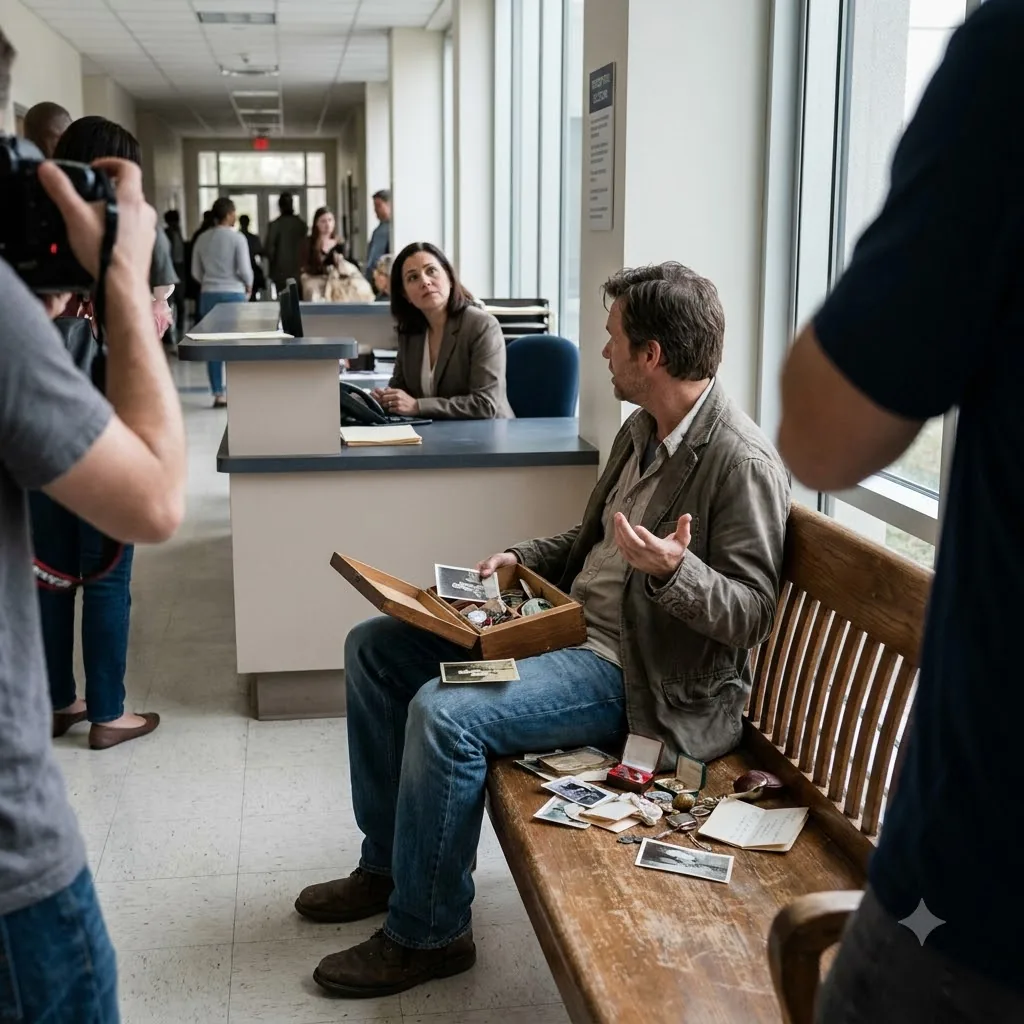
My cousin Drew dropped Nina Vale’s keepsake box right there on the probate hallway bench, spilled half the contents into his lap, and said, loud enough for Marta Ellison at the desk to hear, that I was the one making this harder than it had to be. While people carried file folders past us and the copy machine kept starting and stopping at the end of the hall, he fumbled one simple latch like he had never seen a box before, then pushed the whole mess toward me when the velvet tray inside tipped sideways.
“Can you just do this part?” he said.
He was the executor. The brass visitor sticker was still stuck to his shirt. The box sat between us, walnut with a worn edge at one corner and a stitched lining the color of old green drapes. Nina’s initials were burned into the lid. The latch was not broken. I could see that from where I stood.
I kept my hands at my sides. “You opened it. You can put it back together.”
He gave a short laugh and looked toward Marta, like he needed an audience for how patient he was being. “I said I don’t know how this stuff was packed. Iris always handled Aunt Nina’s little projects. If something goes missing, that’s on her, not me.”
That got Marta to look up from the stack she was sorting. She did not come over. She just looked at the bench, the tray hanging halfway out, and Drew’s open palms.
The box held the kind of things people call little until they are gone. A ring box with no ring in it. Two folded handkerchiefs. A packet of recipe cards tied with faded blue ribbon. A square velvet insert with narrow slots cut into it. A small leather roll, tied shut. Drew had let the leather roll slide under the bench with the rest of the spill, and when he bent to grab it, he knocked the tray farther crooked.
“See?” he said. “This is what I mean. It falls apart.”
Nothing had fallen apart until he put both thumbs in the wrong place and pressed down.
I crouched and picked up the leather roll because it was about to get stepped on. He held out his hand for it, then stopped and switched the motion into a shrug, like he had meant for me to keep it.
“You already touched it,” he said. “So now you may as well finish.”
He said it lightly. The hallway was too quiet for how light he said it.
I set the roll on the bench beside the box instead of handing it back. “Marta saw it hit the floor. Marta saw you open it.”
Marta did not say anything. She only slid one file under another and kept her eyes on us a second too long before looking back down.
Drew leaned over the box and jabbed at the tray again. He missed the side grooves completely, scraped the velvet against the wood, and made that rough sound that comes when somebody forces a fit that is already obvious. Then he let go at the exact moment the tray tilted and a packet of old photos slid against the inner wall.
“Great,” he said. “Now they’re bent.”
He said it to me.
I reached in before the photos could crease. That was the opening he wanted. He stepped back half a pace and spread his hands again. The move was so smooth it barely looked like movement unless you were watching for it.
I slid the tray out, squared the photos, and set them flat on the bench. The grooves inside the box were clean and straight. The tray had little brass pins at the corners. It only went in one way.
“There,” I said. “Line the pins with the grooves and lower it evenly.”
He stared at the box. “I don’t do antiques.”
“It’s not an antique. It’s a box.”
He gave me that same public-patient tone. “Not everybody spent years playing house with Aunt Nina’s stuff.”
I looked at his hands. They were resting on the lid now, not clumsy anymore, just waiting.
Marta stood and crossed to the copier with three pages in one hand. On the way back, she glanced at the bench and said, plain and neutral, “If you’re repacking property, keep the contents together.”
Drew nodded as if the reminder had been for both of us. Then he lifted the tray, turned it the wrong direction, paused, turned it back, and made another show of not finding the grooves.
I could feel people moving past us without stopping. Shoes on tile. Copier hum. Somebody laughing too loudly at the far end of the hall.
“Iris,” he said, softer now, “just slide it in. We both know you’re better at this.”
It was the first honest sentence he had given me, except for the part where he dressed it up like praise.
I took the tray from him because if I did not, he was going to grind velvet against walnut until something really did tear. I lined up the pins and lowered it. The fit was exact. The tray settled with one quiet click.
Drew watched my hands, then reached past me and flipped a narrow strip of lining at the back corner up with one finger.
He did it fast, like he knew it was there.
Under the lining, something stiff and flat was tucked into the wood channel.
He snatched his hand away and went back to his helpless voice. “Wait. What’s that?”
My cousin Drew dropped Nina Vale’s keepsake box right there on the probate hallway bench, spilled half the contents into his lap, and said, loud enough for Marta Ellison at the desk to hear, that I was the one making this harder than it had to be. While people carried file folders past us and the copy machine kept starting and stopping at the end of the hall, he fumbled one simple latch like he had never seen a box before, then pushed the whole mess toward me when the velvet tray inside tipped sideways.
“Can you just do this part?” he said.
He was the executor. The brass visitor sticker was still stuck to his shirt. The box sat between us, walnut with a worn edge at one corner and a stitched lining the color of old green drapes. Nina’s initials were burned into the lid. The latch was not broken. I could see that from where I stood.
I kept my hands at my sides. “You opened it. You can put it back together.”
He gave a short laugh and looked toward Marta, like he needed an audience for how patient he was being. “I said I don’t know how this stuff was packed. Iris always handled Aunt Nina’s little projects. If something goes missing, that’s on her, not me.”
That got Marta to look up from the stack she was sorting. She did not come over. She just looked at the bench, the tray hanging halfway out, and Drew’s open palms.
The box held the kind of things people call little until they are gone. A ring box with no ring in it. Two folded handkerchiefs. A packet of recipe cards tied with faded blue ribbon. A square velvet insert with narrow slots cut into it. A small leather roll, tied shut. Drew had let the leather roll slide under the bench with the rest of the spill, and when he bent to grab it, he knocked the tray farther crooked.
“See?” he said. “This is what I mean. It falls apart.”
Nothing had fallen apart until he put both thumbs in the wrong place and pressed down.
I crouched and picked up the leather roll because it was about to get stepped on. He held out his hand for it, then stopped and switched the motion into a shrug, like he had meant for me to keep it.
“You already touched it,” he said. “So now you may as well finish.”
He said it lightly. The hallway was too quiet for how light he said it.
I set the roll on the bench beside the box instead of handing it back. “Marta saw it hit the floor. Marta saw you open it.”
Marta did not say anything. She only slid one file under another and kept her eyes on us a second too long before looking back down.
Drew leaned over the box and jabbed at the tray again. He missed the side grooves completely, scraped the velvet against the wood, and made that rough sound that comes when somebody forces a fit that is already obvious. Then he let go at the exact moment the tray tilted and a packet of old photos slid against the inner wall.
“Great,” he said. “Now they’re bent.”
He said it to me.
I reached in before the photos could crease. That was the opening he wanted. He stepped back half a pace and spread his hands again. The move was so smooth it barely looked like movement unless you were watching for it.
I slid the tray out, squared the photos, and set them flat on the bench. The grooves inside the box were clean and straight. The tray had little brass pins at the corners. It only went in one way.
“There,” I said. “Line the pins with the grooves and lower it evenly.”
He stared at the box. “I don’t do antiques.”
“It’s not an antique. It’s a box.”
He gave me that same public-patient tone. “Not everybody spent years playing house with Aunt Nina’s stuff.”
I looked at his hands. They were resting on the lid now, not clumsy anymore, just waiting.
Marta stood and crossed to the copier with three pages in one hand. On the way back, she glanced at the bench and said, plain and neutral, “If you’re repacking property, keep the contents together.”
Drew nodded as if the reminder had been for both of us. Then he lifted the tray, turned it the wrong direction, paused, turned it back, and made another show of not finding the grooves.
I could feel people moving past us without stopping. Shoes on tile. Copier hum. Somebody laughing too loudly at the far end of the hall.
“Iris,” he said, softer now, “just slide it in. We both know you’re better at this.”
It was the first honest sentence he had given me, except for the part where he dressed it up like praise.
I took the tray from him because if I did not, he was going to grind velvet against walnut until something really did tear. I lined up the pins and lowered it. The fit was exact. The tray settled with one quiet click.
Drew watched my hands, then reached past me and flipped a narrow strip of lining at the back corner up with one finger.
He did it fast, like he knew it was there.
Under the lining, something stiff and flat was tucked into the wood channel.
He snatched his hand away and went back to his helpless voice. “Wait. What’s that?”