Story code: ST-000740
Part 1: The Tote on the Porch
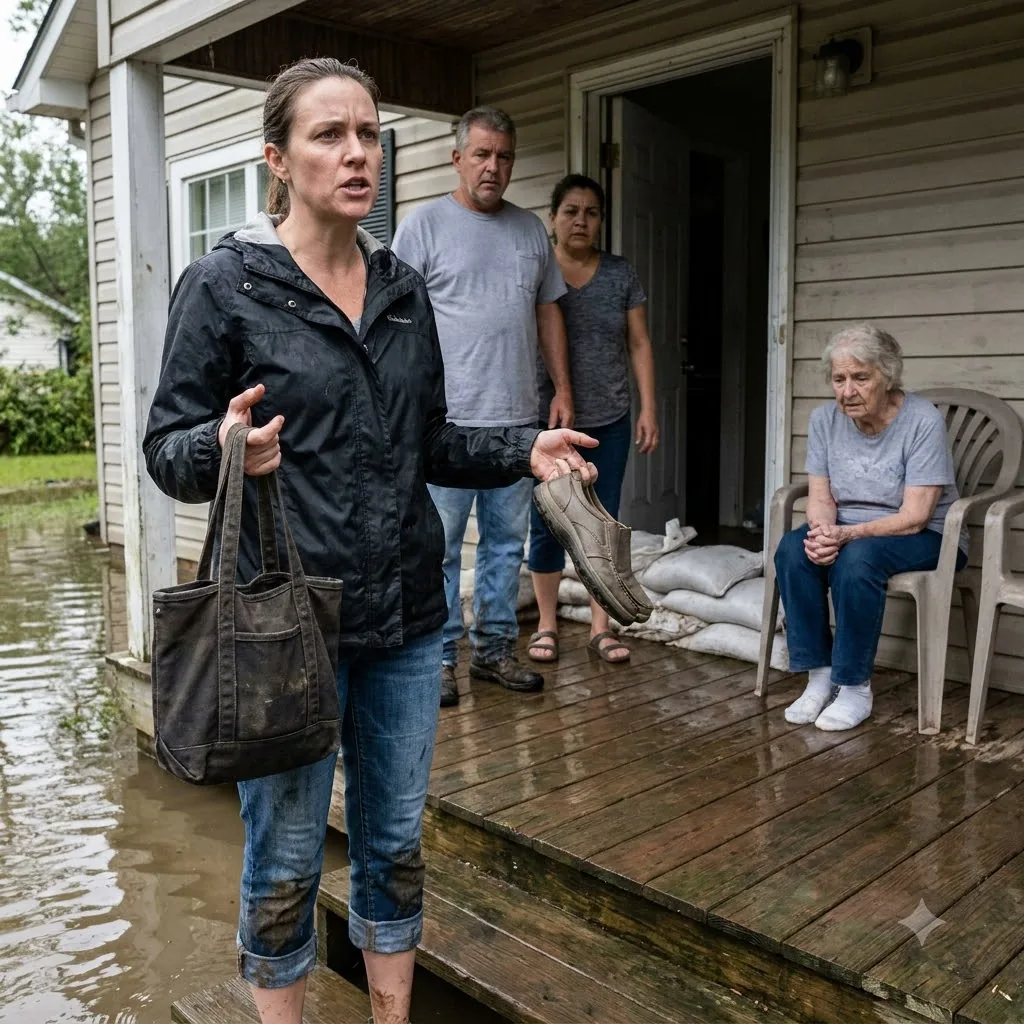
Tara Bell stood on my flooded porch with an evacuation tote in one hand and my mother’s dry shoes in the other, and she said, loud enough for Rosa and Darius to hear, that help like this did not come free. The tote was navy canvas with her name written across the front in black marker, and her fingers kept tapping the handle while the water slapped the porch steps below us. She had come up the walkway like she owned the route, talking fast and practical, as if she were sorting boxes instead of my family’s life.
I had already pulled the screen door closed behind me, but I left it unlocked because Rosa was still limping from the back room and Darius was standing at the top step with his hands full. Tara glanced at the tote, then at me, then back at the tote, and said she had “gone out on a limb” to get us moving before the next surge. She said it like a favor, but she said it twice, which made it sound like a bill.
“We’re not leaving anything behind,” I told her.
“That’s fine,” she said, and tipped the tote toward me. “Just remember who got this together.”
The tote was not empty. I could see the corner of a plastic pouch, a roll of tape, two bottled waters, and the orange tag the shelter had handed out at the church gym three weeks ago. Tara had added her own things too, little neat bundles that looked better than ours: a charger wrapped in a rubber band, a travel-size kit, folded copies of a map with the route highlighted in yellow. Every time she mentioned one of them, she pressed the tote flat with her palm, like she was smoothing out evidence.
Rosa shuffled up one step and looked at the bag. “Who said it was owed?” she asked.
Tara turned toward her with the same calm smile she used on everybody. “I said I drove through waist-deep water to bring supplies. I said I found the room key when the phones were going down. I said I kept this tote ready so nobody would panic.”
Darius looked at me, then at Tara. He shifted the second shoe in his grip. Nobody spoke for a beat except the water under the porch, pushing trash against the lattice.
Tara lifted the tote handle and set it beside my foot. “I’m just making sure we’re square,” she said. “That’s all. I helped. Now I need you to do the next part right.”
There it was again. Square. Next part. Right.
She had not asked if we needed help when she first showed up earlier that morning. She had already carried the tote up the steps, already handed out the bottled water, already told Darius where to park the truck so it would not get boxed in by the rising water. She had done each piece fast enough that it looked useful. Now every piece came back with a label.
I watched her thumb rub the marker name on the tote front. The letters were thick and dark, impossible to miss. She had put her own name there before she ever came inside.
“Why is your name on our bag?” I asked.
Tara did not answer right away. She just looked at the tote, then at me, and said, “Because I’m the one who had to carry it.”
That was the first time the porch got quiet enough for me to hear the pump in the neighbor’s yard kicking on and off. Rosa had gone still. Darius had lowered the shoe to the deck without putting it down. Tara kept her hand on the tote like she was waiting for somebody to agree with her.
Then she said the line that changed the air between us.
“If I hadn’t stepped in,” she said, “none of this would be moving.”
I looked at the tote, at the name on the front, at the way she was standing between my mother and the stairs, and I could not tell which part she was calling help and which part she was calling debt. Why did she need my silence if all she had done was a favor?
Tara Bell stood on my flooded porch with an evacuation tote in one hand and my mother’s dry shoes in the other, and she said, loud enough for Rosa and Darius to hear, that help like this did not come free. The tote was navy canvas with her name written across the front in black marker, and her fingers kept tapping the handle while the water slapped the porch steps below us. She had come up the walkway like she owned the route, talking fast and practical, as if she were sorting boxes instead of my family’s life.
I had already pulled the screen door closed behind me, but I left it unlocked because Rosa was still limping from the back room and Darius was standing at the top step with his hands full. Tara glanced at the tote, then at me, then back at the tote, and said she had “gone out on a limb” to get us moving before the next surge. She said it like a favor, but she said it twice, which made it sound like a bill.
“We’re not leaving anything behind,” I told her.
“That’s fine,” she said, and tipped the tote toward me. “Just remember who got this together.”
The tote was not empty. I could see the corner of a plastic pouch, a roll of tape, two bottled waters, and the orange tag the shelter had handed out at the church gym three weeks ago. Tara had added her own things too, little neat bundles that looked better than ours: a charger wrapped in a rubber band, a travel-size kit, folded copies of a map with the route highlighted in yellow. Every time she mentioned one of them, she pressed the tote flat with her palm, like she was smoothing out evidence.
Rosa shuffled up one step and looked at the bag. “Who said it was owed?” she asked.
Tara turned toward her with the same calm smile she used on everybody. “I said I drove through waist-deep water to bring supplies. I said I found the room key when the phones were going down. I said I kept this tote ready so nobody would panic.”
Darius looked at me, then at Tara. He shifted the second shoe in his grip. Nobody spoke for a beat except the water under the porch, pushing trash against the lattice.
Tara lifted the tote handle and set it beside my foot. “I’m just making sure we’re square,” she said. “That’s all. I helped. Now I need you to do the next part right.”
There it was again. Square. Next part. Right.
She had not asked if we needed help when she first showed up earlier that morning. She had already carried the tote up the steps, already handed out the bottled water, already told Darius where to park the truck so it would not get boxed in by the rising water. She had done each piece fast enough that it looked useful. Now every piece came back with a label.
I watched her thumb rub the marker name on the tote front. The letters were thick and dark, impossible to miss. She had put her own name there before she ever came inside.
“Why is your name on our bag?” I asked.
Tara did not answer right away. She just looked at the tote, then at me, and said, “Because I’m the one who had to carry it.”
That was the first time the porch got quiet enough for me to hear the pump in the neighbor’s yard kicking on and off. Rosa had gone still. Darius had lowered the shoe to the deck without putting it down. Tara kept her hand on the tote like she was waiting for somebody to agree with her.
Then she said the line that changed the air between us.
“If I hadn’t stepped in,” she said, “none of this would be moving.”
I looked at the tote, at the name on the front, at the way she was standing between my mother and the stairs, and I could not tell which part she was calling help and which part she was calling debt. Why did she need my silence if all she had done was a favor?