Story code: ST-000754
Part 1: He Said The Room Was His Too
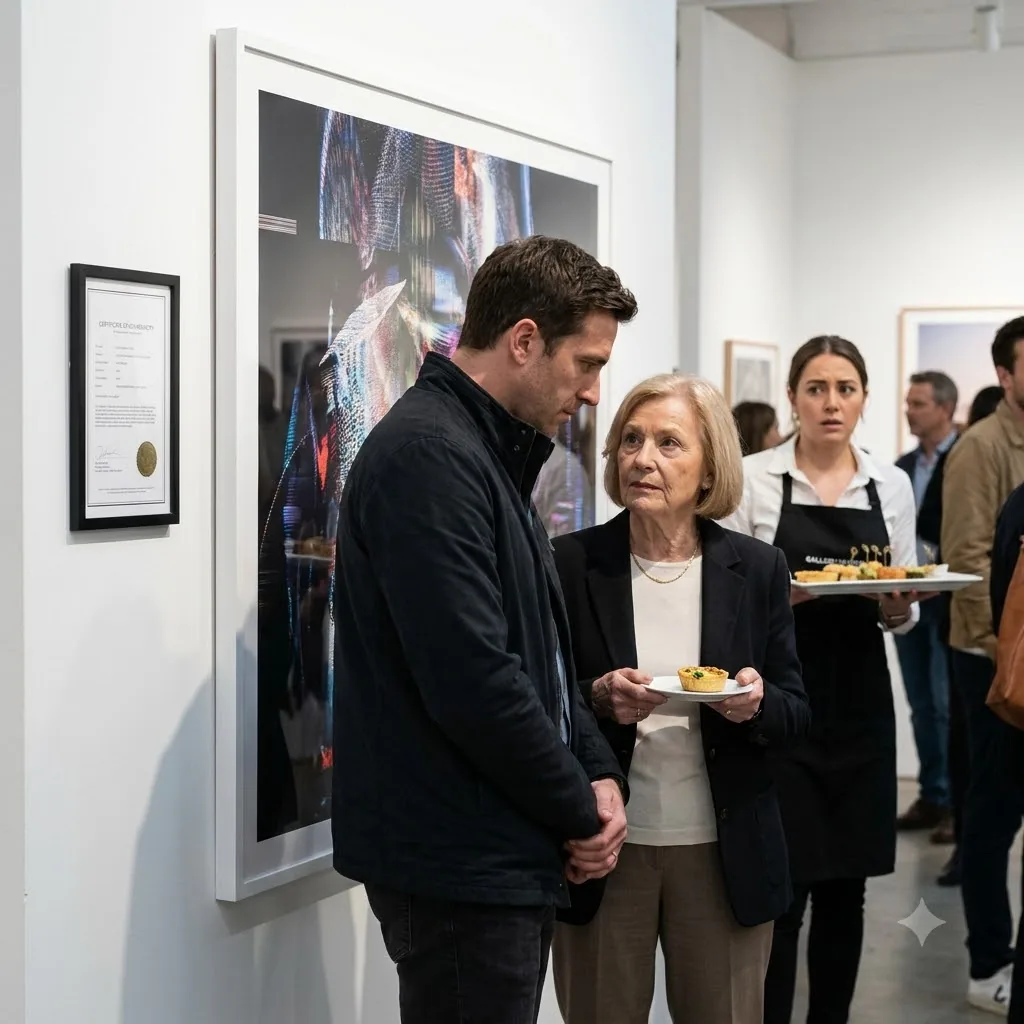
Dylan stepped in front of my largest print while people were still taking mini quiches off the tray and reading the certificates beside the frames, then told a collector, “I practically carried this whole series on my back so Mara could be standing here tonight.” He said it with one hand open toward my wall of AI prints, like my thank-yous from months ago had become a deed, and I had to keep smiling while he stood inches from the ownership certificates with my name on them. When I got close enough to hear the whole story, he was already turning one old favor into a public debt I had apparently never finished paying.
The gallery preview had only been open forty minutes.
People were moving in the ordinary slow way they do at those events, wine in one hand, folded price sheet in the other, stopping in front of each framed piece long enough to read the wall label and the certificate mounted beside it. Nina had the front table under control. Aunt Celia was doing her usual social stitching, pulling family friends toward the strongest work and saying things like, “This one feels like New Mexico and a dream at the same time.”
On the surface, everything still looked fine.
That was the worst part.
Dylan knew how to sound helpful in a room like that. He never raised his voice. He just planted himself near the certificate for my print called Salt Cathedral and said things in the tone people use when they expect to be thanked.
“There were nights she was ready to scrap the whole series,” he told a man in a navy jacket. “I kept her going. I gave up a lot of my own work time for this.”
The man gave me a quick polite smile, the kind people use when they think they are meeting the artist and the artist’s manager at the same time.
I said, “Hi. I’m Mara.”
Dylan glanced at me like he was inviting me into his version of my life. “I was just telling him how much went into getting this show ready.”
He left out that the “help” he always liked to cite was a short stretch last year when I had stupidly let him sit in on some prompt testing because I thought we were friends. He had pushed for access fast, acted casual about it, then started talking as if being in the room while I worked made him part owner of whatever came after. I had already pulled back from him over that. I had already learned to be careful with what I thanked him for.
But the dangerous thing about politeness is that it leaves quotes behind.
I could hear one coming before he said it.
“Mara used to tell everybody she couldn’t have done this without me,” Dylan said, smiling at the collector. “I’m not looking for applause. I just think people should know the full story.”
Aunt Celia appeared at my elbow almost on cue. “Well, that is sweet,” she said softly, not softly enough. “He really did show up for you early on.”
“Celia,” I said, keeping my eyes on Dylan, “not now.”
She gave me the warning look family gives when they think professionalism means swallowing your own pulse. “Just be gracious, honey. It’s your night.”
That word again. Gracious. As if being polite and handing somebody your credit were neighboring acts.
The collector in the navy jacket shifted his attention to the certificate mounted beside Salt Cathedral. It was simple, gallery style: title, edition number, artist name, production details, my signature already printed into the certificate layout the gallery used for the preview display. He read it, then looked back at Dylan.
Dylan touched the acrylic edge of the frame near the certificate without quite touching the certificate itself. “We built all of this from scratch,” he said.
We.
I said, very evenly, “I built the series.”
He laughed like I was being overly formal. “Of course. I’m saying I was there when no one else was.”
The collector asked, “Are you listed anywhere in the production notes?”
It was a clean question, but it landed hard.
Dylan answered before I could. “That’s not really how the creative process works with this kind of art.”
I watched Nina from across the room speaking with a couple by the front desk, and for one second I considered waving her over. I didn’t. Not yet. I could still feel the pressure of every family friend in the room who would turn this into a personality issue if I moved too fast.
So I said, “The artist label and certificate identify the work correctly.”
Dylan tipped his head, smiling with only his mouth. “Mara, come on. After everything I took on for you, this is how you’re going to do this? In front of buyers?”
There it was. Not a favor. A leash.
He said it quietly, but not so quietly that the people nearest us missed it. Two women standing by the next print stopped talking. Aunt Celia’s face tightened into that fixed social smile people wear when they wish a scene would stay invisible.
I realized then that Dylan was not just retelling the past. He was testing whether I would still accept the debt in public. If I corrected him too hard, I risked looking unstable at my own preview. If I let him keep talking, he got to stand beside my certificates and act like the room was confirming him.
Then Owen Park, whose name I recognized from Nina’s buyer list, stepped closer to the wall and looked from the certificate to Dylan to me.
He asked, calm as a knife laid flat on a table, “Before I ask about a purchase, who exactly controls the edition rights on this series?”
And Dylan answered, “That depends what Mara wants to admit tonight.”
Dylan stepped in front of my largest print while people were still taking mini quiches off the tray and reading the certificates beside the frames, then told a collector, “I practically carried this whole series on my back so Mara could be standing here tonight.” He said it with one hand open toward my wall of AI prints, like my thank-yous from months ago had become a deed, and I had to keep smiling while he stood inches from the ownership certificates with my name on them. When I got close enough to hear the whole story, he was already turning one old favor into a public debt I had apparently never finished paying.
The gallery preview had only been open forty minutes.
People were moving in the ordinary slow way they do at those events, wine in one hand, folded price sheet in the other, stopping in front of each framed piece long enough to read the wall label and the certificate mounted beside it. Nina had the front table under control. Aunt Celia was doing her usual social stitching, pulling family friends toward the strongest work and saying things like, “This one feels like New Mexico and a dream at the same time.”
On the surface, everything still looked fine.
That was the worst part.
Dylan knew how to sound helpful in a room like that. He never raised his voice. He just planted himself near the certificate for my print called Salt Cathedral and said things in the tone people use when they expect to be thanked.
“There were nights she was ready to scrap the whole series,” he told a man in a navy jacket. “I kept her going. I gave up a lot of my own work time for this.”
The man gave me a quick polite smile, the kind people use when they think they are meeting the artist and the artist’s manager at the same time.
I said, “Hi. I’m Mara.”
Dylan glanced at me like he was inviting me into his version of my life. “I was just telling him how much went into getting this show ready.”
He left out that the “help” he always liked to cite was a short stretch last year when I had stupidly let him sit in on some prompt testing because I thought we were friends. He had pushed for access fast, acted casual about it, then started talking as if being in the room while I worked made him part owner of whatever came after. I had already pulled back from him over that. I had already learned to be careful with what I thanked him for.
But the dangerous thing about politeness is that it leaves quotes behind.
I could hear one coming before he said it.
“Mara used to tell everybody she couldn’t have done this without me,” Dylan said, smiling at the collector. “I’m not looking for applause. I just think people should know the full story.”
Aunt Celia appeared at my elbow almost on cue. “Well, that is sweet,” she said softly, not softly enough. “He really did show up for you early on.”
“Celia,” I said, keeping my eyes on Dylan, “not now.”
She gave me the warning look family gives when they think professionalism means swallowing your own pulse. “Just be gracious, honey. It’s your night.”
That word again. Gracious. As if being polite and handing somebody your credit were neighboring acts.
The collector in the navy jacket shifted his attention to the certificate mounted beside Salt Cathedral. It was simple, gallery style: title, edition number, artist name, production details, my signature already printed into the certificate layout the gallery used for the preview display. He read it, then looked back at Dylan.
Dylan touched the acrylic edge of the frame near the certificate without quite touching the certificate itself. “We built all of this from scratch,” he said.
We.
I said, very evenly, “I built the series.”
He laughed like I was being overly formal. “Of course. I’m saying I was there when no one else was.”
The collector asked, “Are you listed anywhere in the production notes?”
It was a clean question, but it landed hard.
Dylan answered before I could. “That’s not really how the creative process works with this kind of art.”
I watched Nina from across the room speaking with a couple by the front desk, and for one second I considered waving her over. I didn’t. Not yet. I could still feel the pressure of every family friend in the room who would turn this into a personality issue if I moved too fast.
So I said, “The artist label and certificate identify the work correctly.”
Dylan tipped his head, smiling with only his mouth. “Mara, come on. After everything I took on for you, this is how you’re going to do this? In front of buyers?”
There it was. Not a favor. A leash.
He said it quietly, but not so quietly that the people nearest us missed it. Two women standing by the next print stopped talking. Aunt Celia’s face tightened into that fixed social smile people wear when they wish a scene would stay invisible.
I realized then that Dylan was not just retelling the past. He was testing whether I would still accept the debt in public. If I corrected him too hard, I risked looking unstable at my own preview. If I let him keep talking, he got to stand beside my certificates and act like the room was confirming him.
Then Owen Park, whose name I recognized from Nina’s buyer list, stepped closer to the wall and looked from the certificate to Dylan to me.
He asked, calm as a knife laid flat on a table, “Before I ask about a purchase, who exactly controls the edition rights on this series?”
And Dylan answered, “That depends what Mara wants to admit tonight.”