Story code: ST-000022
Part 1: The Tuesday Slot Was Wrong
The first time I knew somebody had crossed into my mother’s apartment without permission, it was not because a drawer was hanging open or because anything big was missing. It was because one Tuesday evening pill was gone from the organizer on her kitchen counter even though my mother was still standing there in her house shoes, touching the lid with two fingers and telling me, very clearly, that she had not taken it. In a senior apartment where aides, carts, and meal trays pass all day like clockwork, that tiny empty compartment was enough to tell me somebody had been in her private space and close enough to put hands on something that controlled her body.
I had come in with groceries, a refill bag from the pharmacy, and the black marker I used to label leftovers for her fridge. My mother, Evelyn Mercer, had already lined up her mail in one neat stack beside the fruit bowl. That was one of her habits. The mail was folded square. The sugar packet bowl stayed centered. The pill organizer sat straight with the days facing the same direction.
That evening, the organizer was turned one notch sideways.
Not much. Barely enough to notice unless you were the one who set it back in the same spot every visit.
I put the grocery bag down and said, “Did you take Tuesday night already?”
She looked at the organizer before she answered. “No. I was waiting.”
I asked her to show me.
She pressed the Tuesday compartment with her thumb. Empty.
The rest of the week still had the pattern I expected. Morning slots full where they should be full. Bedtime slots closed. Nothing scattered, nothing dropped. Just one clean gap, as if the right hand had reached in and done only that one thing.
My mother looked at me and then at the apartment door.
“I told Trina this morning not to fuss with it,” she said.
That was the first time the room changed shape for me.
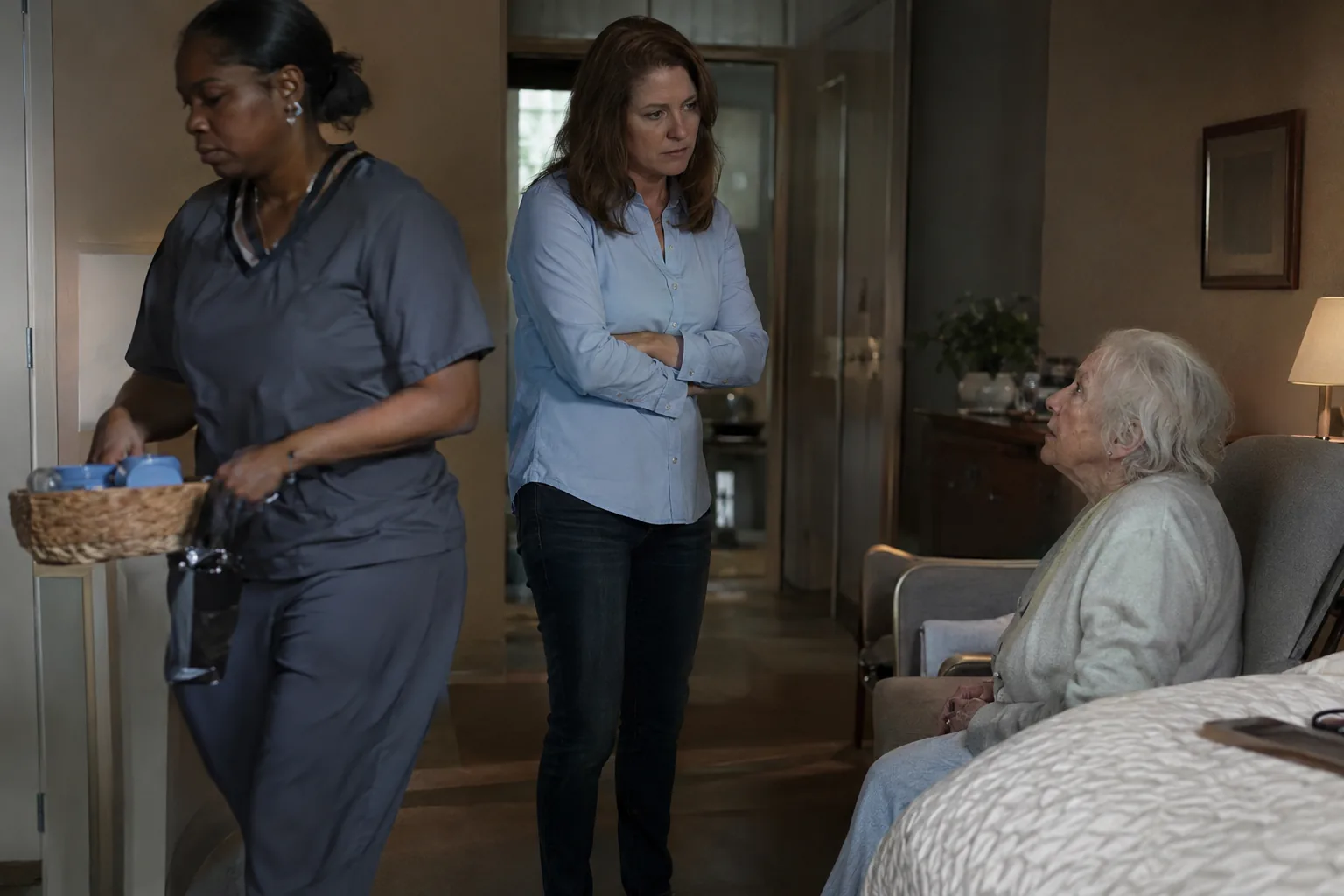
Trina Bell was her home aide. She knew the apartment. She came in carrying wipes or gloves like she was already halfway through a task. She moved around the kitchen without asking where things belonged because after enough mornings in the same place, she did not have to. If she had adjusted the organizer as part of routine care, that was one thing. If she had come in later, or come in when my mother had not asked for her, that was something else.
I kept my voice even. “When was she here?”
“This morning,” my mother said. Then she paused, touched the side of the organizer again, and added, “Or she came back. Something is not right.”
I checked the deadbolt and latch out of habit. No scrape marks. No damage. The door closed smoothly. This was not somebody forcing a door. This was somebody using a key, being let in, or walking through a threshold nobody expected to be defended.
I asked my mother if she had let anyone in after lunch.
She shook her head once. “I napped in the chair. When I woke up, the kitchen towel was folded different.”
That sounds small until you spend enough time in one apartment to know that older people often build order out of repetition. The towel had been looped over the oven handle in a flat, even strip. My mother twisted it once and tucked the corner under. Whoever touched it had folded it the way staff fold linens.
I did not say that out loud yet.
Instead I opened the refill bag. The pharmacy printout showed the dosage change from last month, and the bottle count matched what should have still been in the organizer if Tuesday night had not been touched. I counted twice, saying the days under my breath. My mother stood close enough to watch my finger move compartment to compartment.
“Dana,” she said quietly, “don’t let them say I forgot.”
That sentence stayed with me because she said it before anybody had accused her of anything.
A few minutes later, there was a soft knock at the partly open door. Marcy Lin from across the hall stood there with her watering can and asked if my mother needed anything from downstairs. Marcy was always near her door in the afternoons, tending the hallway plants like they were part of her own apartment.
I asked, “Did you see anyone come by here after lunch?”
She tucked a strand of hair behind her ear and looked toward the hall before she answered. “I saw somebody at your mother’s door around two. I only noticed because there wasn’t any knock.”
“Who?”
Marcy lifted one shoulder. “Blue scrub top. I just saw the back. Could’ve been staff. Could’ve been her aide. I heard the door, then drawers, maybe the counter.”
My mother’s apartment was private space. Everybody in that building said so whenever residents wanted to feel safe. But privacy gets slippery fast when the person crossing the threshold looks ordinary enough.
I reset the organizer, wrote the exact count on the pharmacy sheet, and slid it into my purse. Then I asked my mother one more question.
“Where is the spare key?”
She looked at the hook by the pantry, where it was supposed to hang behind the coupon envelope.
The hook was empty, and neither of us could say when it had last been there.
The first time I knew somebody had crossed into my mother’s apartment without permission, it was not because a drawer was hanging open or because anything big was missing. It was because one Tuesday evening pill was gone from the organizer on her kitchen counter even though my mother was still standing there in her house shoes, touching the lid with two fingers and telling me, very clearly, that she had not taken it. In a senior apartment where aides, carts, and meal trays pass all day like clockwork, that tiny empty compartment was enough to tell me somebody had been in her private space and close enough to put hands on something that controlled her body.
I had come in with groceries, a refill bag from the pharmacy, and the black marker I used to label leftovers for her fridge. My mother, Evelyn Mercer, had already lined up her mail in one neat stack beside the fruit bowl. That was one of her habits. The mail was folded square. The sugar packet bowl stayed centered. The pill organizer sat straight with the days facing the same direction.
That evening, the organizer was turned one notch sideways.
Not much. Barely enough to notice unless you were the one who set it back in the same spot every visit.
I put the grocery bag down and said, “Did you take Tuesday night already?”
She looked at the organizer before she answered. “No. I was waiting.”
I asked her to show me.
She pressed the Tuesday compartment with her thumb. Empty.
The rest of the week still had the pattern I expected. Morning slots full where they should be full. Bedtime slots closed. Nothing scattered, nothing dropped. Just one clean gap, as if the right hand had reached in and done only that one thing.
My mother looked at me and then at the apartment door.
“I told Trina this morning not to fuss with it,” she said.
That was the first time the room changed shape for me.
Trina Bell was her home aide. She knew the apartment. She came in carrying wipes or gloves like she was already halfway through a task. She moved around the kitchen without asking where things belonged because after enough mornings in the same place, she did not have to. If she had adjusted the organizer as part of routine care, that was one thing. If she had come in later, or come in when my mother had not asked for her, that was something else.
I kept my voice even. “When was she here?”
“This morning,” my mother said. Then she paused, touched the side of the organizer again, and added, “Or she came back. Something is not right.”
I checked the deadbolt and latch out of habit. No scrape marks. No damage. The door closed smoothly. This was not somebody forcing a door. This was somebody using a key, being let in, or walking through a threshold nobody expected to be defended.
I asked my mother if she had let anyone in after lunch.
She shook her head once. “I napped in the chair. When I woke up, the kitchen towel was folded different.”
That sounds small until you spend enough time in one apartment to know that older people often build order out of repetition. The towel had been looped over the oven handle in a flat, even strip. My mother twisted it once and tucked the corner under. Whoever touched it had folded it the way staff fold linens.
I did not say that out loud yet.
Instead I opened the refill bag. The pharmacy printout showed the dosage change from last month, and the bottle count matched what should have still been in the organizer if Tuesday night had not been touched. I counted twice, saying the days under my breath. My mother stood close enough to watch my finger move compartment to compartment.
“Dana,” she said quietly, “don’t let them say I forgot.”
That sentence stayed with me because she said it before anybody had accused her of anything.
A few minutes later, there was a soft knock at the partly open door. Marcy Lin from across the hall stood there with her watering can and asked if my mother needed anything from downstairs. Marcy was always near her door in the afternoons, tending the hallway plants like they were part of her own apartment.
I asked, “Did you see anyone come by here after lunch?”
She tucked a strand of hair behind her ear and looked toward the hall before she answered. “I saw somebody at your mother’s door around two. I only noticed because there wasn’t any knock.”
“Who?”
Marcy lifted one shoulder. “Blue scrub top. I just saw the back. Could’ve been staff. Could’ve been her aide. I heard the door, then drawers, maybe the counter.”
My mother’s apartment was private space. Everybody in that building said so whenever residents wanted to feel safe. But privacy gets slippery fast when the person crossing the threshold looks ordinary enough.
I reset the organizer, wrote the exact count on the pharmacy sheet, and slid it into my purse. Then I asked my mother one more question.
“Where is the spare key?”
She looked at the hook by the pantry, where it was supposed to hang behind the coupon envelope.
The hook was empty, and neither of us could say when it had last been there.